Singapore Immunology Network, A*STAR, Singapore, 138648, Singapore.
Department of Microbiology and Immunology, University of Otago, Dunedin, 9054, New Zealand.
Nat Commun. 2019 Aug 12;10(1):3635. doi: 10.1038/s41467-019-11332-4.
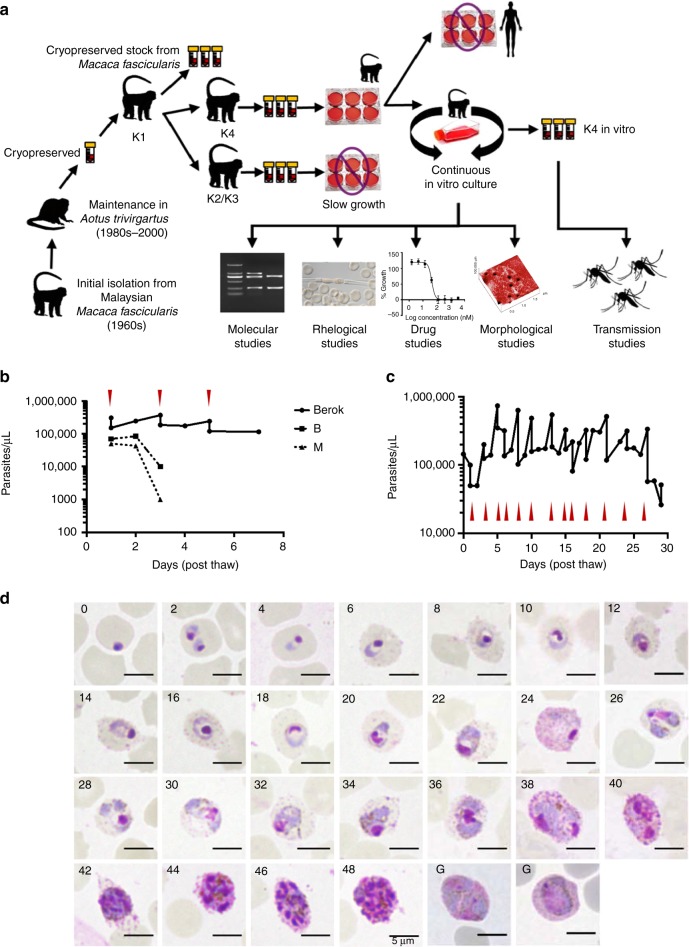
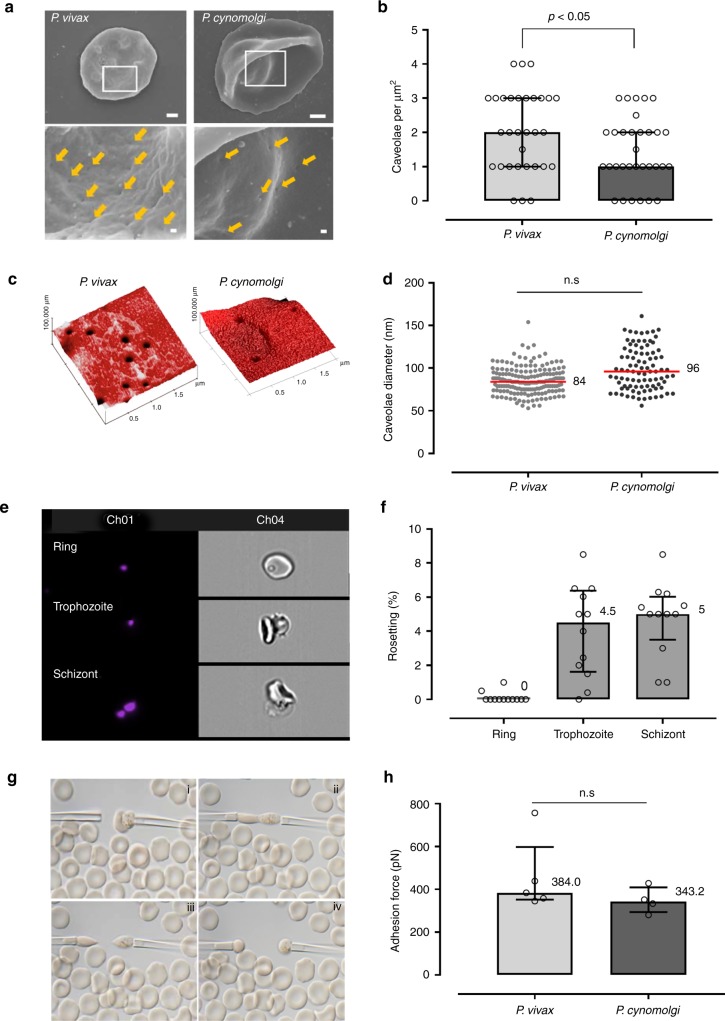
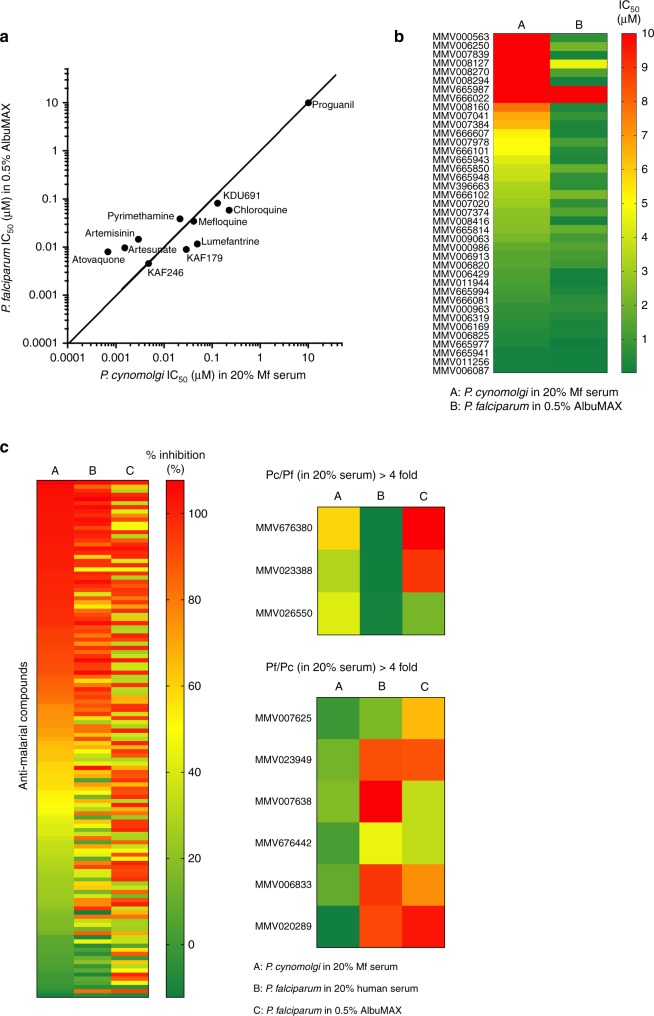
The ability to culture pathogenic organisms substantially enhances the quest for fundamental knowledge and the development of vaccines and drugs. Thus, the elaboration of a protocol for the in vitro cultivation of the erythrocytic stages of Plasmodium falciparum revolutionized research on this important parasite. However, for P. vivax, the most widely distributed and difficult to treat malaria parasite, a strict preference for reticulocytes thwarts efforts to maintain it in vitro. Cultivation of P. cynomolgi, a macaque-infecting species phylogenetically close to P. vivax, was briefly reported in the early 1980s, but not pursued further. Here, we define the conditions under which P. cynomolgi can be adapted to long term in vitro culture to yield parasites that share many of the morphological and phenotypic features of P. vivax. We further validate the potential of this culture system for high-throughput screening to prime and accelerate anti-P. vivax drug discovery efforts.
培养致病生物的能力大大增强了对基础知识的探索以及疫苗和药物的研发。因此,制定了一种体外培养疟原虫红细胞阶段的方案,这一方案彻底改变了对这种重要寄生虫的研究。然而,对于分布最广且难以治疗的疟原虫——间日疟原虫,其对网织红细胞的严格偏好阻碍了将其在体外维持的努力。20 世纪 80 年代初曾有报道简要介绍了用猕猴疟原虫(一种与间日疟原虫亲缘关系密切的猕猴感染种)进行培养,但未进一步深入研究。在这里,我们确定了将疟原虫适应长期体外培养的条件,从而获得具有许多间日疟原虫形态和表型特征的寄生虫。我们进一步验证了该培养系统在高通量筛选中的潜力,以启动和加速抗间日疟原虫药物发现的努力。