Ying Yung-Hsiang, Linn George, Chang Koyin
College of Management, National Taiwan Normal University, Taipei 116, Taiwan.
Department of Obstetrics and Gynecology, Show Chwan Memorial Hospital, Changhua City 500, Taiwan.
J Clin Med. 2019 Aug 12;8(8):1203. doi: 10.3390/jcm8081203.
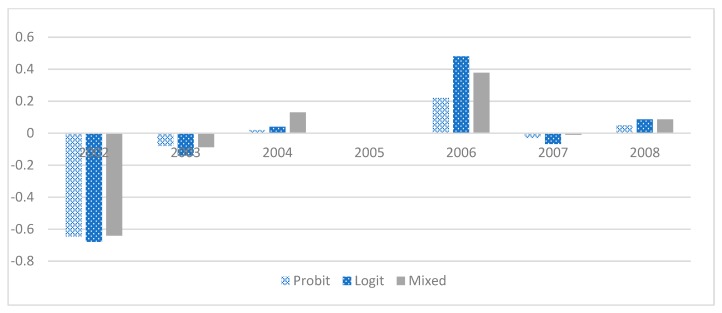
The rate of vaginal birth after cesarean section (VBAC) is extremely low in Taiwan probably due to the high perceived risk of trial of labor after a cesarean (TOLAC). To promote the benefits associated with vaginal birth, this study provides evidence to potentially assist relevant public authorities adopt appropriate guidelines or optimize health insurance reimbursement policies to achieve a higher VBAC rate. Employing the National Health Insurance (NHI) Claim Data, this study analyzes women's adoptions of birth-giving methods for those who had previous cesarean section (CS) experiences. Empirical methods include logit, probit, and hierarchical regression models controlling women's demographics, incentive indicators, as well as hospital and obstetrician characteristics. Taiwan continues to have a decreasing trend in VBAC rate even with an increase in NHI payment for vaginal birth delivery in 2005, which stimulated a surge in VBAC rate only temporarily. Factors that significantly influence women's adoption of VBAC include institution-specific random effects, weekend admission, comorbidities during pregnancy, and income and fertility of women. Change in service payment from National Health Insurance (NHI) to healthcare providers constitutes an effective policy in directing clinical practices in the short term. Constant and systematic policy review should be undertaken to promote safe and beneficial medical practices. The results of the study suggest that women's adoption of birth-giving method is dominated by non-medical considerations. Significant institution-specific effects imply that women might not be well-informed regarding their optimal birth-giving choice. Health education and training programs for hospital personnel should be kept up to date to better serve society.
在台湾,剖宫产术后阴道分娩(VBAC)的比例极低,这可能是由于人们普遍认为剖宫产术后试产(TOLAC)的风险很高。为了推广阴道分娩的益处,本研究提供了证据,可能有助于相关公共部门采用适当的指导方针或优化医疗保险报销政策,以实现更高的VBAC比例。本研究利用国民健康保险(NHI)理赔数据,分析了有过剖宫产(CS)经历的女性对分娩方式的选择。实证方法包括逻辑回归、概率回归和分层回归模型,这些模型控制了女性的人口统计学特征、激励指标以及医院和产科医生的特征。即使2005年国民健康保险提高了阴道分娩的支付费用,台湾的VBAC比例仍呈下降趋势,这只是暂时刺激了VBAC比例的激增。显著影响女性选择VBAC的因素包括特定机构的随机效应、周末入院、孕期合并症以及女性的收入和生育情况。国民健康保险(NHI)向医疗服务提供者支付方式的改变在短期内构成了指导临床实践的有效政策。应持续进行系统的政策审查,以促进安全有益的医疗实践。研究结果表明,女性对分娩方式的选择主要受非医学因素的影响。显著的特定机构效应意味着女性可能对最佳分娩选择了解不足。医院工作人员的健康教育和培训项目应与时俱进,以更好地服务社会。