Escuela de Ciencias de la Ingeniería y Tecnología, Universidad Autónoma de Baja California, Unidad Valle de las Palmas, Tijuana, Baja California, México.
Facultad de Ciencias Químicas e Ingeniería, Universidad Autónoma de Baja California, Calzada Universidad 14418 Parque Industrial Internacional, Tijuana, Baja California 22390, México.
Int J Nanomedicine. 2019 Jul 15;14:5271-5285. doi: 10.2147/IJN.S193328. eCollection 2019.
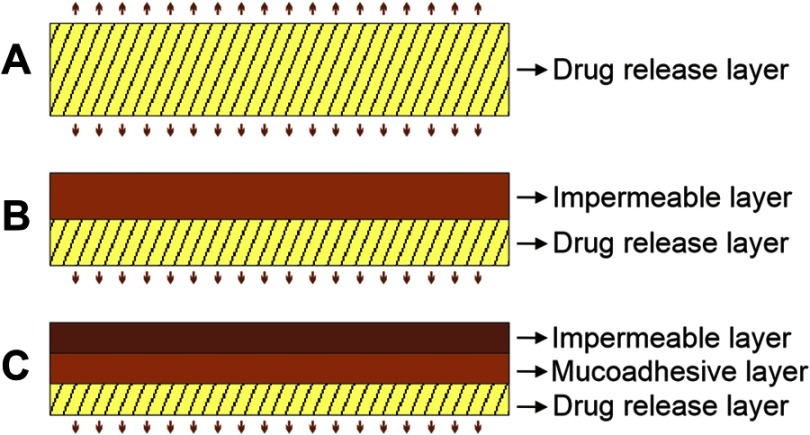
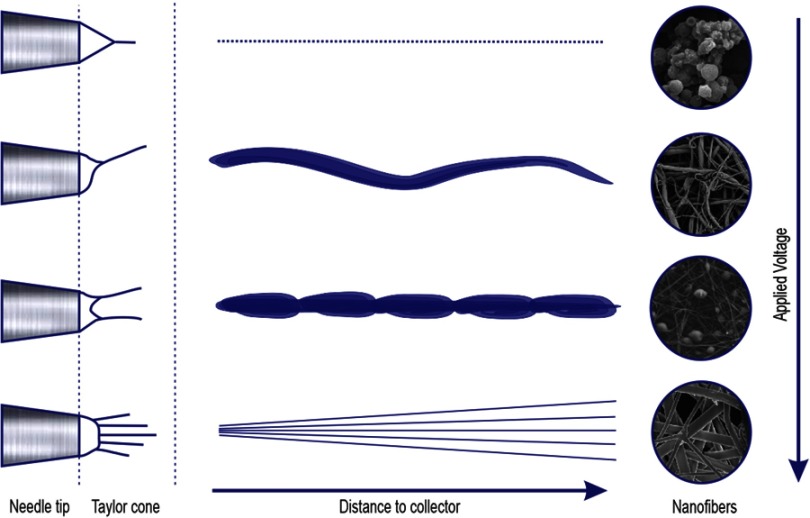
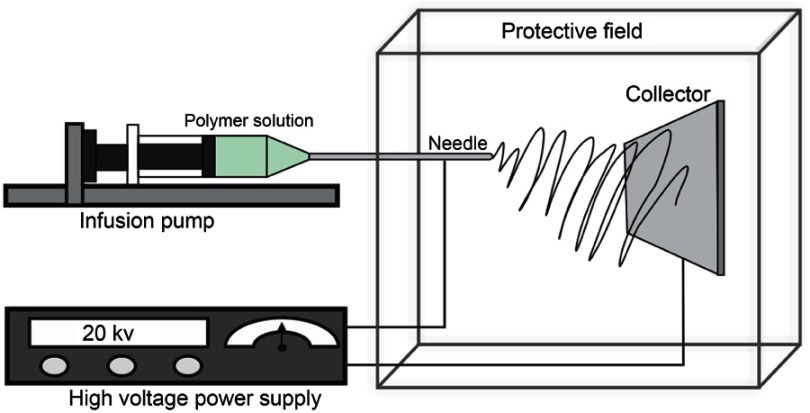
Electrospun nanofibers have been widely studied for many medical applications. They can be designed with specific features, including mucoadhesive properties. This review summarizes the polymeric scaffolds obtained by the electrospinning process that has been applied for drug release in different mucosal sites such as oral, ocular, gastroenteric, vaginal, and nasal. We analyzed the electrospinning parameters that have to be optimized to create reproducible and efficient mucoadhesive nanofibers, among them are: electrical field, polymer concentration, viscosity, flow rate, needle-collector distance, solution conductivity, solvent, environmental parameters, and electrospinning setup. We also revised the mucoadhesive theories as well as the mucoadhesive properties of the polymers used. This review shows that the most studied mucosal site is the oral cavity, because it is accessible and easy to evaluate, while the rest are uncomfortable for the patient and difficult to assess in vivo. We found problems that need to be solved for mucoadhesive electrospun nanofibers, such as improving adhesion strength and mucosal permanence time, and the design of unidirectional release, multilayer systems for the treatment of several pathologies, to ensure the drug concentration in the tissue or target organ.
静电纺丝纳米纤维在许多医学应用中得到了广泛的研究。它们可以设计具有特定的特性,包括粘膜粘附性能。本综述总结了通过静电纺丝工艺获得的聚合物支架,该工艺已应用于不同的粘膜部位,如口腔、眼部、胃肠道、阴道和鼻腔的药物释放。我们分析了为了创造可重复和有效的粘膜粘附纳米纤维,必须优化的静电纺丝参数,其中包括:电场、聚合物浓度、粘度、流速、针-收集器距离、溶液电导率、溶剂、环境参数和静电纺丝装置。我们还回顾了粘膜粘附理论以及所使用的聚合物的粘膜粘附特性。本综述表明,研究最多的粘膜部位是口腔,因为它易于接近且易于评估,而其他部位则对患者不舒服,并且难以在体内评估。我们发现了粘膜粘附静电纺丝纳米纤维需要解决的问题,例如提高粘附强度和粘膜持久性时间,以及设计单向释放、用于治疗多种疾病的多层系统,以确保组织或靶器官中的药物浓度。