Department of Dermatology, Affiliated Hospital of Shandong University of Traditional Chinese Medicine, Jinan, 250011, Shandong, China.
Department of Nephrology, Qilu Children's Hospital of Shandong University, Jinan, 250022, China.
BMC Microbiol. 2019 Aug 19;19(1):191. doi: 10.1186/s12866-019-1552-1.
Gut microbiota has been suggested to play a role in stroke patients. Nevertheless, little is known about gut microbiota and the clinical indexes in stroke patients.
Total of 30 cerebral ischemic stroke (CI) patients and 30 healthy control were enrolled in this study and the fecal gut microbiota was profiled via Illumina sequencing of the 16S rRNA V1-V2. The National Institutes of Health Stroke Scale (NIHSS) were used to quantify stroke severity and modified Rankin scale (mRS) to assess outcome for CI patients. The correlations between the clinical indexes and microbiota were evaluated.
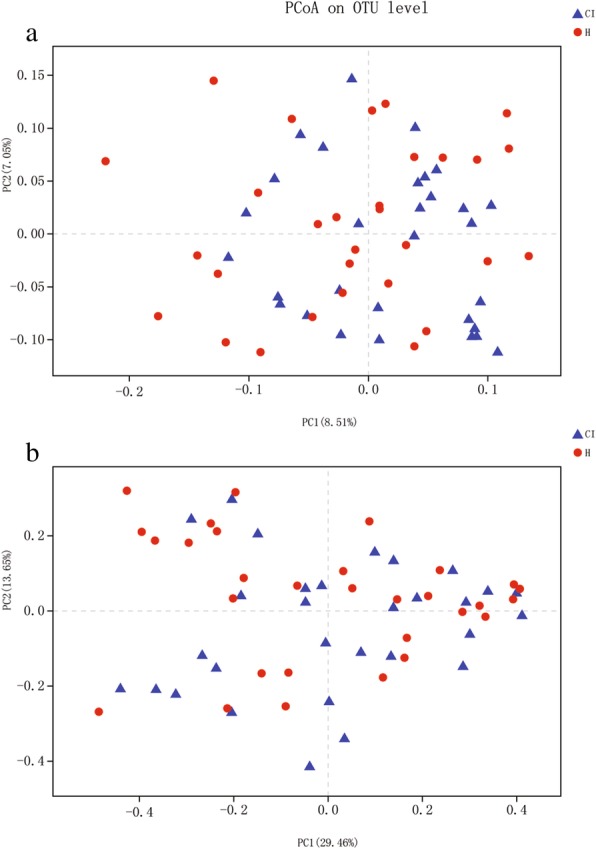
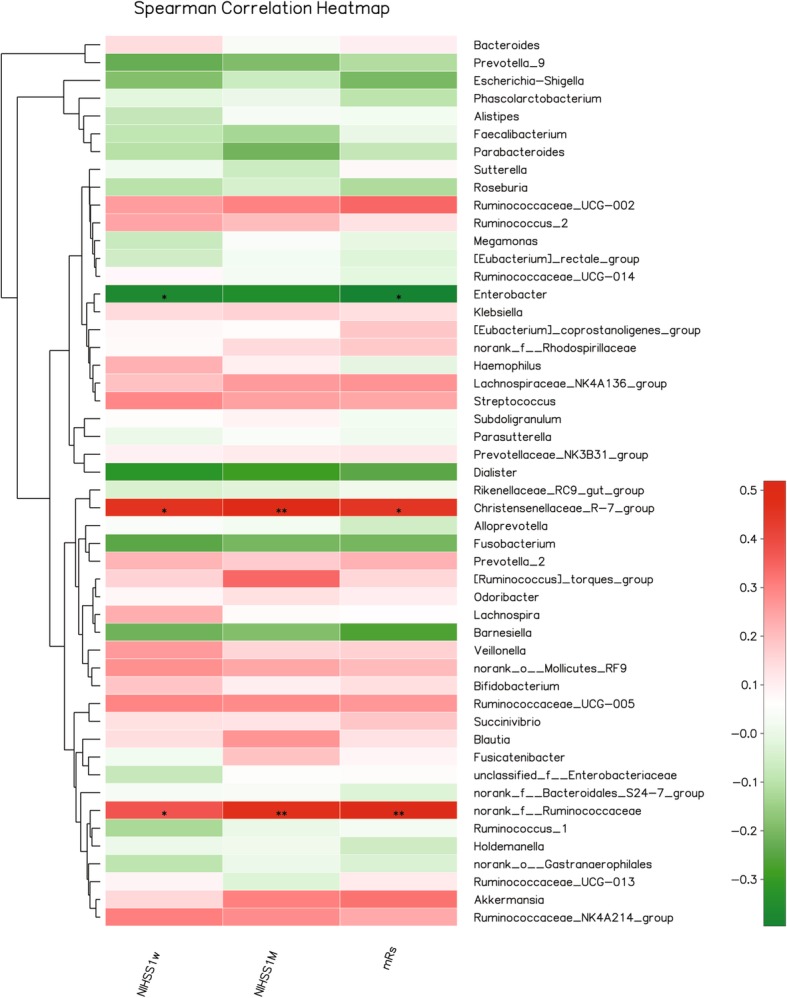
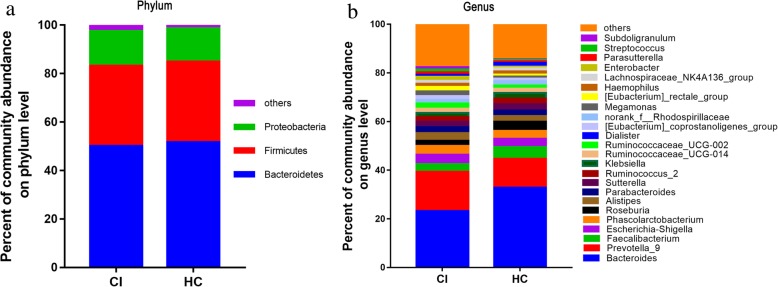
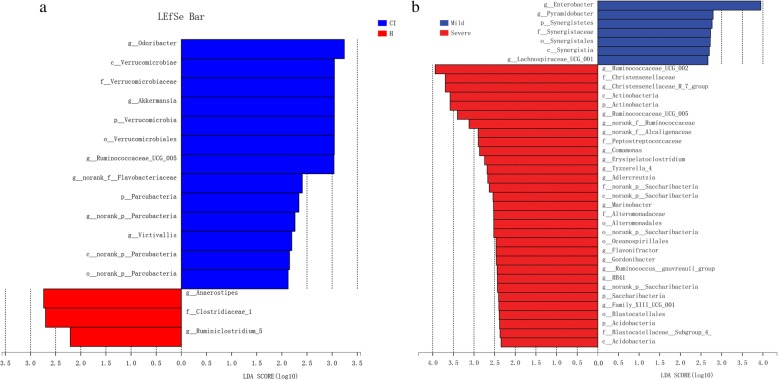
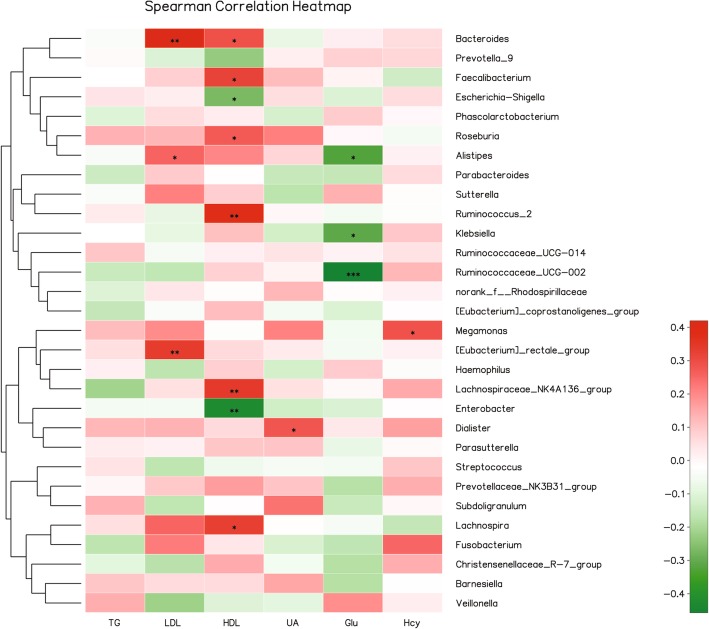
Though the microbial α-diversity and structure is similar between CI patients and healthy controls, the gut microbiota of CI patients had more short chain fatty acids producer including Odoribacter, Akkermansia, Ruminococcaceae_UCG_005 and Victivallis. We also found that the special microbes were correlation with serum index, such as norank_O_ _Mollicutes_RF9, Enterobacter, Ruminococcaceae_UCG-002 were negative correlation with LDL (r = - 0.401, P < 0.01), HDL (r = - 0.425, P < 0.01) and blood glucose (r = - 0.439, P < 0.001), while the HDL was significantly positive correlation with the genus Ruminococcus_1 (r = 0.443, P < 0.001). The Christensenellaceae_R-7_group and norank_f_Ruminococcaceae was significantly positive correlation with NIHSS1M (r = 0.514, P < 0.05; r = 0.449, P < 0.05) and mRS (r = 0.471, P < 0.05, r = 0.503, P < 0.01), respectively. On the other hand, the genus Enterobacter was significantly negative correlation with NIHSS1M (r = 0.449, P < 0.05) and mRS (r = 0.503, P < 0.01).
This study suggests that CI patients showed significant dysbiosis of the gut microbiota with enriched short chain fatty acids producer, including Odoribacter, Akkermansia. This dysbiosis was correlation with the outcomes and deserves further study.
肠道微生物群被认为在中风患者中发挥作用。然而,关于中风患者的肠道微生物群和临床指标知之甚少。
本研究共纳入 30 名脑缺血性中风(CI)患者和 30 名健康对照者,并通过 Illumina 测序对 16S rRNA V1-V2 进行粪便肠道微生物群分析。采用美国国立卫生研究院中风量表(NIHSS)评估中风严重程度,采用改良 Rankin 量表(mRS)评估 CI 患者的预后。评估临床指标与微生物群之间的相关性。
尽管 CI 患者和健康对照组的微生物 α 多样性和结构相似,但 CI 患者的肠道微生物群中具有更多的短链脂肪酸产生菌,包括 Odoribacter、Akkermansia、Ruminococcaceae_UCG_005 和 Victivallis。我们还发现,特殊微生物与血清指标相关,例如 norank_O_ _Mollicutes_RF9、Enterobacter、Ruminococcaceae_UCG-002 与 LDL(r=-0.401,P<0.01)、HDL(r=-0.425,P<0.01)和血糖(r=-0.439,P<0.001)呈负相关,而 HDL 与 Ruminococcus_1 属呈显著正相关(r=0.443,P<0.001)。Christensenellaceae_R-7_group 和 norank_f_Ruminococcaceae 与 NIHSS1M(r=0.514,P<0.05;r=0.449,P<0.05)和 mRS(r=0.471,P<0.05,r=0.503,P<0.01)呈显著正相关,另一方面,肠杆菌属与 NIHSS1M(r=0.449,P<0.05)和 mRS(r=0.503,P<0.01)呈显著负相关。
本研究表明,CI 患者肠道微生物群存在明显的失调,富含短链脂肪酸产生菌,包括 Odoribacter、Akkermansia。这种失调与结局相关,值得进一步研究。