Seidel Sarah R T, Vendruscolo Cynthia P, Moreira Juliana J, Fülber Joice, Ottaiano Tatiana F, Oliva Maria L V, Michelacci Yara M, Baccarin Raquel Y A
Departamento de Clínica Médica, Faculdade de Medicina Veterinária e Zootecnia, Universidade de São Paulo, São Paulo 05508-270, Brazil.
Departamento de Bioquímica, Escola Paulista de Medicina, UNIFESP, São Paulo 04023-062, Brazil.
Vet Sci. 2019 Aug 21;6(3):68. doi: 10.3390/vetsci6030068.
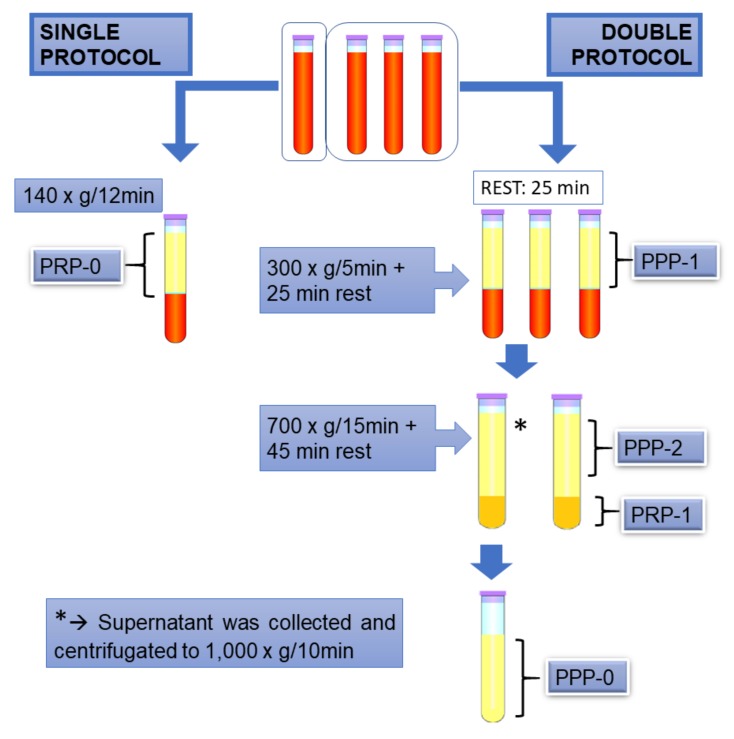
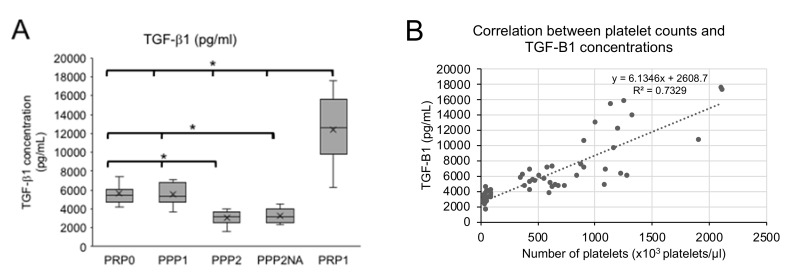
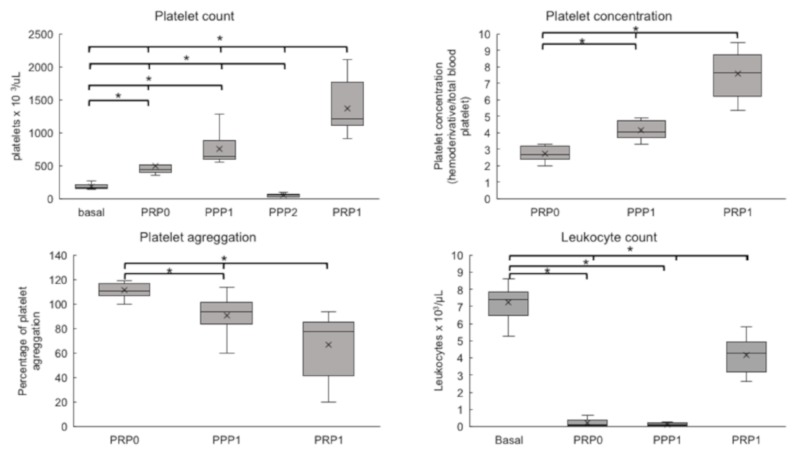
Blood-derived autologous products are frequently used in both human and equine medicine to treat musculoskeletal disorders. These products, especially the platelet-rich plasma (PRP), may contain high concentrations of growth factors (GFs), and thus improve healing in several tissues. Nevertheless, the procedures for preparation of PRP are currently non-standardized. Several protocols, which are based on distinct centrifugation patterns (rotation speed and time), result in PRPs with different characteristics, concerning platelet and GFs concentrations, as well as platelet activation. The aim of the present study was to compare two different protocols for PRP preparation: protocol (A) that is based on a single-centrifugation step; protocol (B), which included two sequential centrifugation steps (double-centrifugation). The results here reported show that the double-centrifugation protocol resulted in higher platelet concentration, while leukocytes were not concentrated by this procedure. Although platelet activation and aggregation were increased in this protocol in comparison to the single-centrifugation one, the TGF-β1 concentration was also higher. Pearson's correlation coefficients gave a significant, positive correlation between the platelet counts and TGF-β1 concentration. In conclusion, although the double-centrifugation protocol caused premature platelet aggregation, it seems to be an effective method for preparation of PRP with high platelet and TGF-β1 concentrations.
血液来源的自体产品在人类和马医学中都经常用于治疗肌肉骨骼疾病。这些产品,尤其是富含血小板的血浆(PRP),可能含有高浓度的生长因子(GFs),从而促进多种组织的愈合。然而,目前PRP的制备程序尚未标准化。几种基于不同离心模式(转速和时间)的方案,会产生具有不同特性的PRP,涉及血小板和GFs浓度以及血小板活化情况。本研究的目的是比较两种不同的PRP制备方案:方案(A)基于单步离心;方案(B)包括两个连续的离心步骤(双步离心)。此处报告的结果表明,双步离心方案产生的血小板浓度更高,而该程序不会浓缩白细胞。尽管与单步离心方案相比,此方案中血小板的活化和聚集有所增加,但转化生长因子-β1(TGF-β1)的浓度也更高。皮尔逊相关系数显示血小板计数与TGF-β1浓度之间存在显著的正相关。总之,尽管双步离心方案会导致血小板过早聚集,但它似乎是制备高血小板和TGF-β1浓度PRP的有效方法。