Fulton Lawrence V, Dolezel Diane, Harrop Jordan, Yan Yan, Fulton Christopher P
Department of Health Administration, Texas State University, 601 University Drive, San Marcos, TX 78666, USA.
Acushnet Holdings Corporation, Acushnet, MA 02743, USA.
Brain Sci. 2019 Aug 22;9(9):212. doi: 10.3390/brainsci9090212.
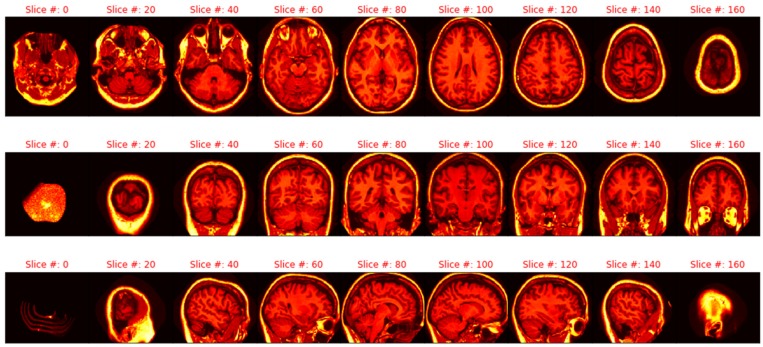
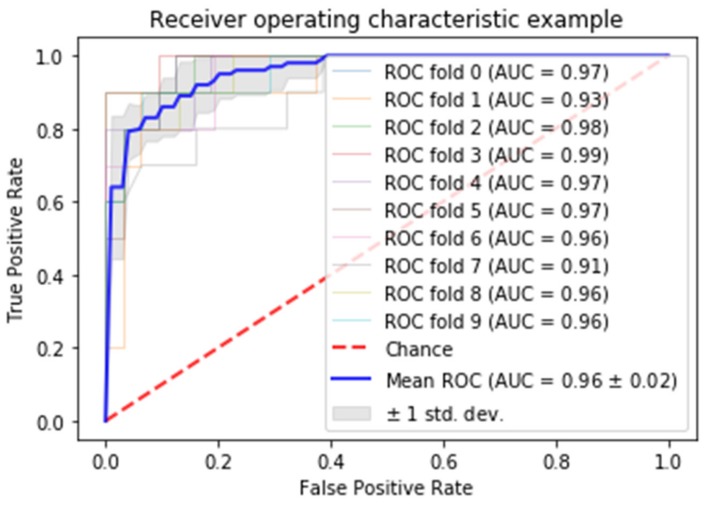
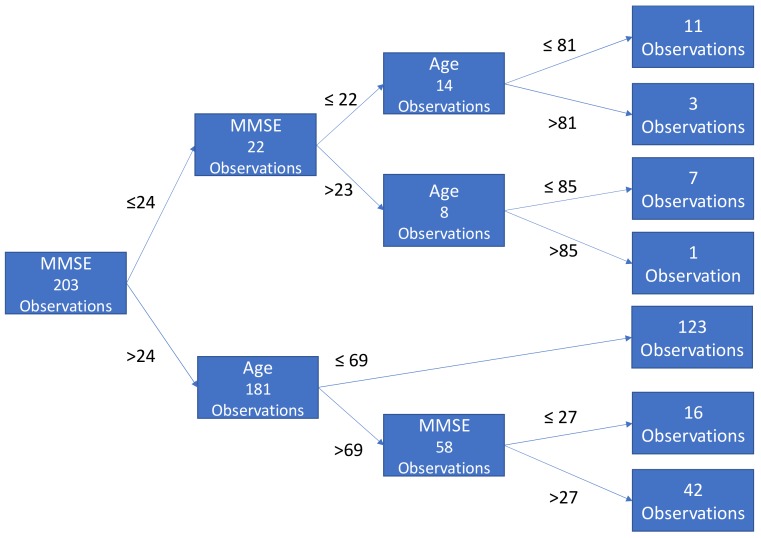
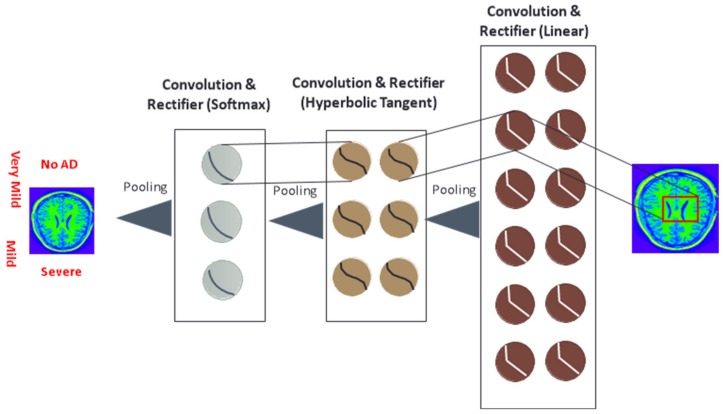
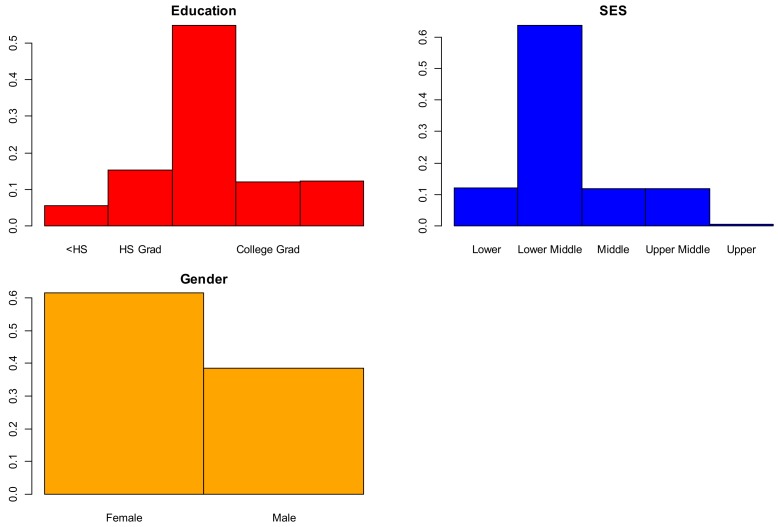
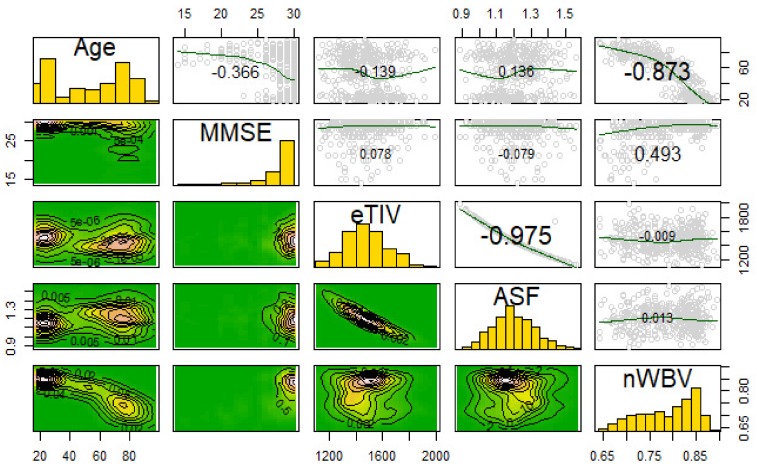
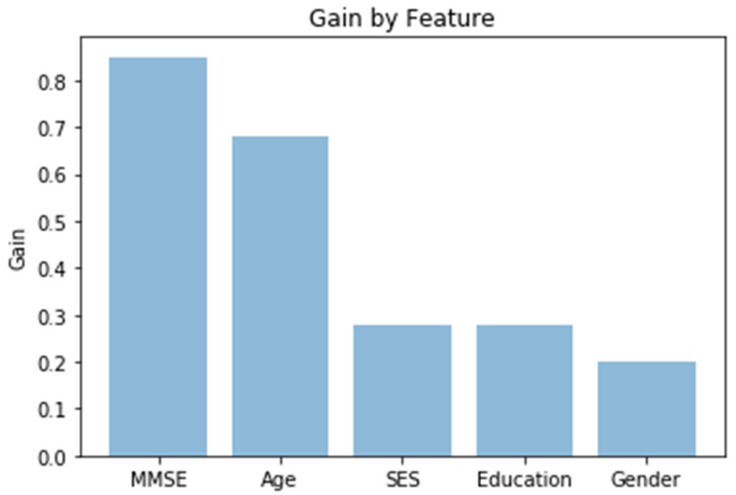
Alzheimer's is a disease for which there is no cure. Diagnosing Alzheimer's disease (AD) early facilitates family planning and cost control. The purpose of this study is to predict the presence of AD using socio-demographic, clinical, and magnetic resonance imaging (MRI) data. Early detection of AD enables family planning and may reduce costs by delaying long-term care. Accurate, non-imagery methods also reduce patient costs. The Open Access Series of Imaging Studies (OASIS-1) cross-sectional MRI data were analyzed. A gradient boosted machine (GBM) predicted the presence of AD as a function of gender, age, education, socioeconomic status (SES), and a mini-mental state exam (MMSE). A residual network with 50 layers (ResNet-50) predicted the clinical dementia rating (CDR) presence and severity from MRI's (multi-class classification). The GBM achieved a mean 91.3% prediction accuracy (10-fold stratified cross validation) for dichotomous CDR using socio-demographic and MMSE variables. MMSE was the most important feature. ResNet-50 using image generation techniques based on an 80% training set resulted in 98.99% three class prediction accuracy on 4139 images (20% validation set) at Epoch 133 and nearly perfect multi-class predication accuracy on the training set (99.34%). Machine learning methods classify AD with high accuracy. GBM models may help provide initial detection based on non-imagery analysis, while ResNet-50 network models might help identify AD patients automatically prior to provider review.
阿尔茨海默病是一种无法治愈的疾病。早期诊断阿尔茨海默病(AD)有助于家庭规划和成本控制。本研究的目的是利用社会人口统计学、临床和磁共振成像(MRI)数据预测AD的存在。AD的早期检测有助于家庭规划,并可能通过延迟长期护理来降低成本。准确的非成像方法也能降低患者成本。对开放获取影像研究系列(OASIS-1)的横断面MRI数据进行了分析。梯度提升机(GBM)根据性别、年龄、教育程度、社会经济地位(SES)和简易精神状态检查表(MMSE)预测AD的存在。一个具有50层的残差网络(ResNet-50)根据MRI(多类分类)预测临床痴呆评定量表(CDR)的存在和严重程度。GBM使用社会人口统计学和MMSE变量对二分法CDR实现了平均91.3%的预测准确率(10倍分层交叉验证)。MMSE是最重要的特征。使用基于80%训练集的图像生成技术的ResNet-50在第133个训练周期时对4139张图像(20%验证集)的三类预测准确率达到98.99%,在训练集上的多类预测准确率接近完美(99.34%)。机器学习方法对AD的分类准确率很高。GBM模型可能有助于基于非成像分析提供初步检测,而ResNet-50网络模型可能有助于在医生检查之前自动识别AD患者。