Department of Psychology, Faculty of Arts and Social Sciences, National University of Singapore, Block AS4, Level 2, 9 Arts Link, Singapore, 117570, Singapore.
Neuropsychol Rev. 2019 Dec;29(4):387-396. doi: 10.1007/s11065-019-09415-6. Epub 2019 Aug 24.
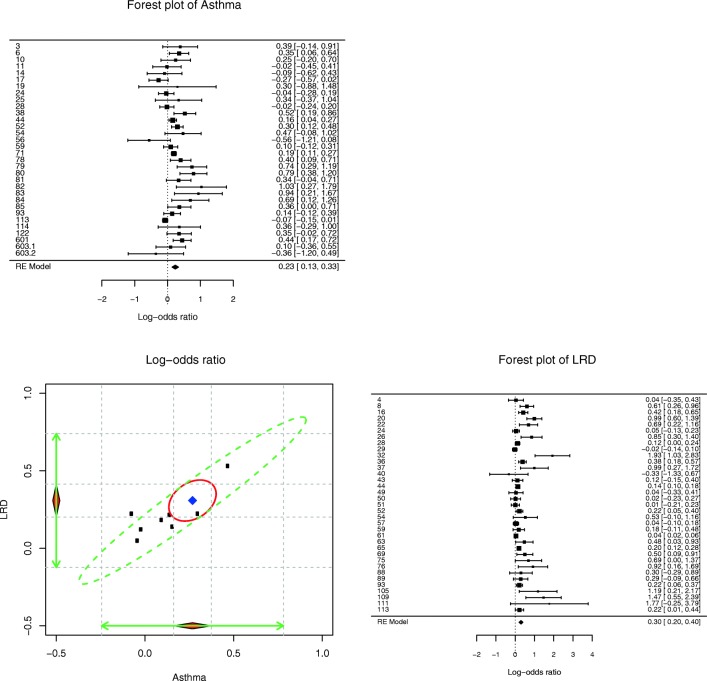
Conventional meta-analytic procedures assume that effect sizes are independent. When effect sizes are not independent, conclusions based on these conventional procedures can be misleading or even wrong. Traditional approaches, such as averaging the effect sizes and selecting one effect size per study, are usually used to avoid the dependence of the effect sizes. These ad-hoc approaches, however, may lead to missed opportunities to utilize all available data to address the relevant research questions. Both multivariate meta-analysis and three-level meta-analysis have been proposed to handle non-independent effect sizes. This paper gives a brief introduction to these new techniques for applied researchers. The first objective is to highlight the benefits of using these methods to address non-independent effect sizes. The second objective is to illustrate how to apply these techniques with real data in R and Mplus. Researchers may modify the sample R and Mplus code to fit their data.
传统的荟萃分析程序假设效应大小是相互独立的。当效应大小不独立时,基于这些传统程序的结论可能会产生误导,甚至是错误的。为了避免效应大小的依赖性,通常采用平均效应大小和为每个研究选择一个效应大小等传统方法。然而,这些临时方法可能会导致错失利用所有可用数据来解决相关研究问题的机会。多元荟萃分析和三级荟萃分析已被提出用于处理非独立的效应大小。本文为应用研究人员简要介绍了这些新技术。第一个目标是强调使用这些方法来解决非独立效应大小的好处。第二个目标是说明如何在 R 和 Mplus 中使用真实数据应用这些技术。研究人员可以修改示例 R 和 Mplus 代码以适应他们的数据。