Gnanakani Princely Ebenezer, Santhanam Perumal, Premkumar Kumpati, Eswar Kumar Kilari, Dhanaraju Magharla Dasaratha
Department of Pharmaceutical Biotechnology, Research Scholar, JNTUK, Andhra Pradesh, India.
Department of Pharmaceutical Sciences, Research Director, GIET School of Pharmacy, Rajahmundry, Andhra Pradesh, India. Email:
Asian Pac J Cancer Prev. 2019 Aug 1;20(8):2353-2364. doi: 10.31557/APJCP.2019.20.8.2353.
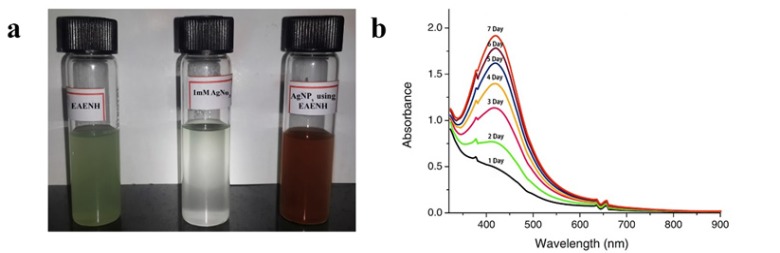
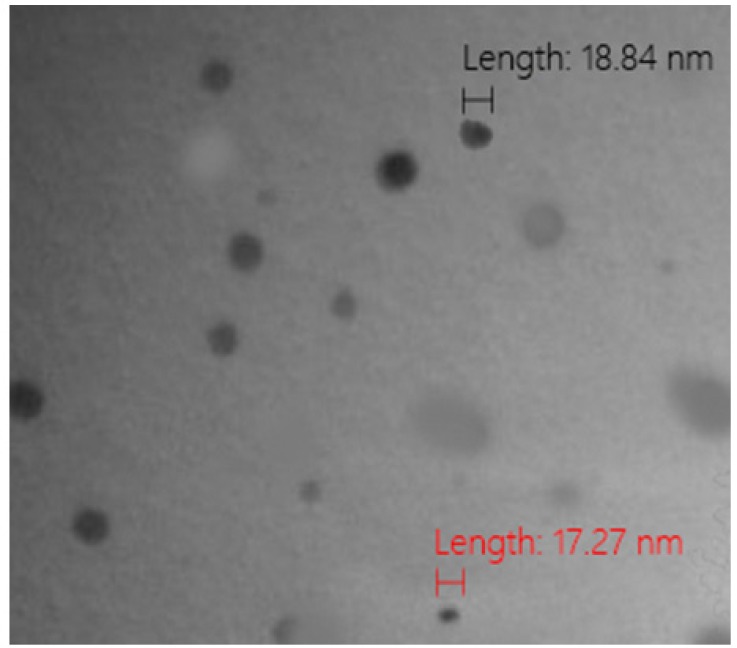
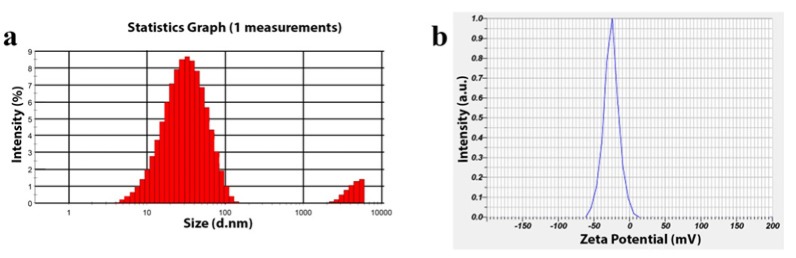
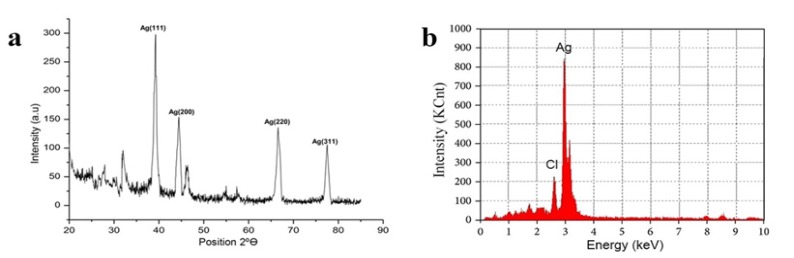
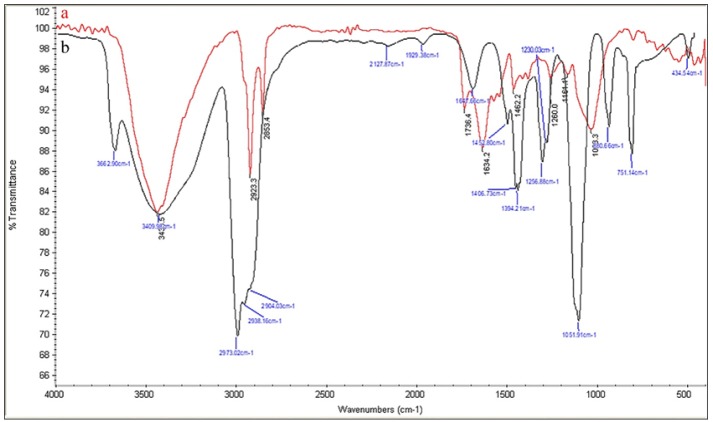
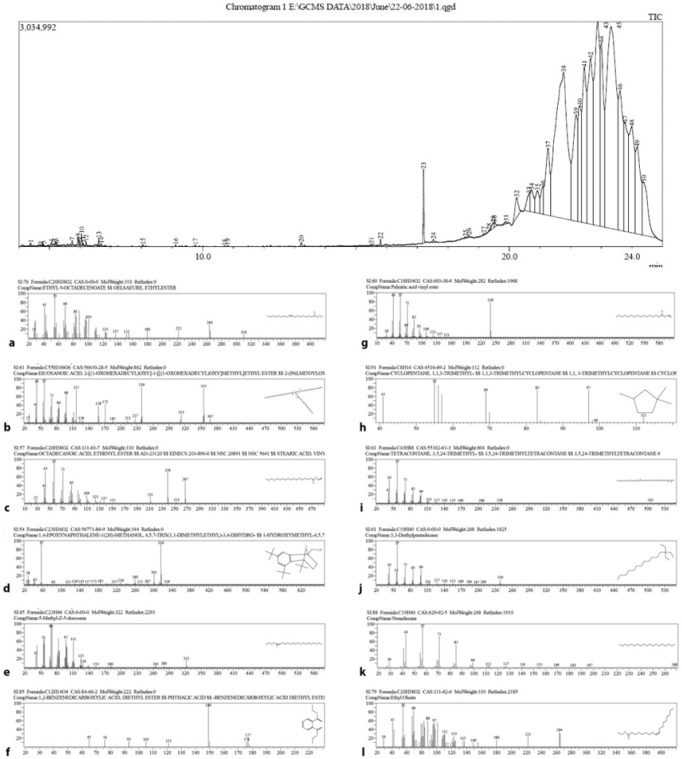
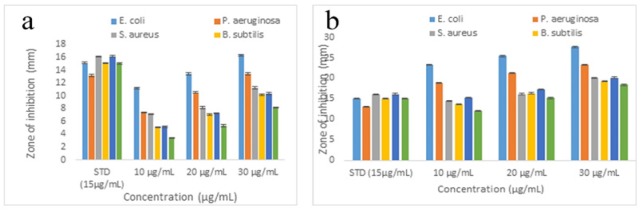
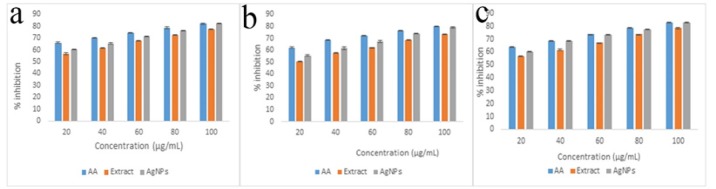
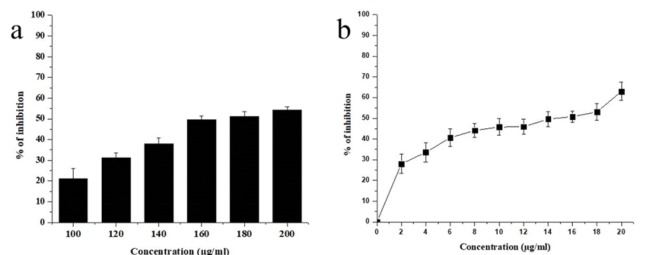
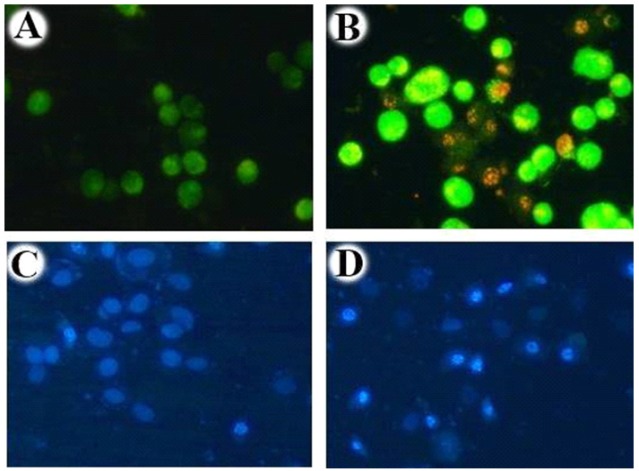
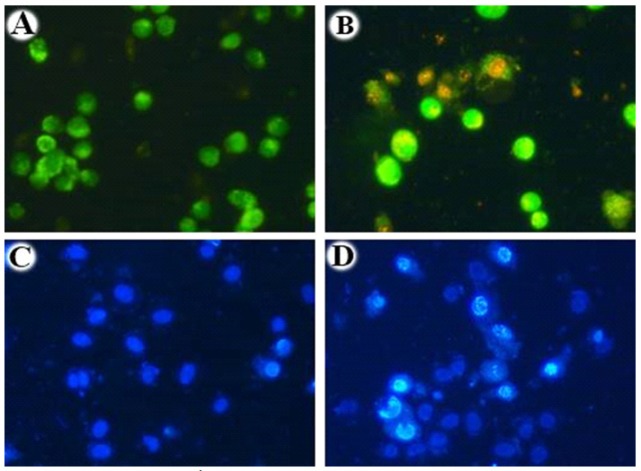
Objective: To investigate the biogenic synthesis of silver nanoparticles (AgNPs) using partially purified ethyl acetate extract of Nannochloropsis sp. hexane (EAENH) fraction of microalga. Methods: The green synthesis of AgNPs was confirmed with UV-Vis spectrum which shows the surface plasmon resonance (SPR) at 421 nm. Fourier Transform Infrared Spectra (FTIR) presented the involvement of functional groups like carboxyl groups of fatty acids, tetraterpenoids of xanthophylls, hydroxyl groups of polyphenols, carbonyl and amide linkage of proteins in the AgNP synthesis. Gas Chromatography-Mass Spectrometry analysis (GCMS) revealed that phytochemicals like octadecanoic acid and hexadecanoic acid imply in capping, bioreduction, and stabilization of AgNps. Result: High-resolution Transmission electron microscope (HRTEM), Dynamic light scattering (DLS), X-ray diffraction (XRD) and EDX analysis showed the crystalline form of the AgNPs with Z-average size 57.25 nm. The zeta potential value of -25.7 mV demonstrated the negative surface charge and colloidal stability of AgNPs. The antimicrobial activity of AgNPs displayed effective inhibition zone against selected bacterial and fungal pathogens. In vitro, antioxidant effects were assessed by 1,1-diphenyl-2-picryl-hydrazyl (DPPH), hydrogen peroxide and reducing power assays which revealed excellent scavenging potential for AgNPs than the extracts. The anti-proliferative potential of biofabricated AgNPs and extracts on Human Non-small lung cancer cell line (A549) was assessed using 3–(4,5-dimethylthiazol-2-yl)-2,5- diphenyl-tetrazolium bromide (MTT) assay with IC50 values of 15 μgmL-1 and 175 μgmL-1 respectively. Conclusion: The study reveals that the microalgae-mediated AgNPs possesses potent antimicrobial and antioxidant activity along with the ability to stimulate apoptosis in A-549 cell line.
研究利用微藻的部分纯化的球等鞭金藻属正己烷乙酸乙酯提取物(EAENH)生物合成银纳米颗粒(AgNPs)。方法:通过紫外可见光谱确认AgNPs的绿色合成,该光谱显示在421nm处有表面等离子体共振(SPR)。傅里叶变换红外光谱(FTIR)表明,脂肪酸的羧基、叶黄素的四萜类化合物、多酚的羟基、蛋白质的羰基和酰胺键等官能团参与了AgNP的合成。气相色谱-质谱分析(GCMS)显示,十八烷酸和十六烷酸等植物化学物质参与了AgNps的封端、生物还原和稳定作用。结果:高分辨率透射电子显微镜(HRTEM)、动态光散射(DLS)、X射线衍射(XRD)和能谱分析(EDX)显示AgNPs为晶体形式,Z平均粒径为57.25nm。ζ电位值为-25.7mV,表明AgNPs表面带负电荷且具有胶体稳定性。AgNPs的抗菌活性对选定的细菌和真菌病原体显示出有效的抑菌圈。在体外,通过1,1-二苯基-2-苦基肼(DPPH)、过氧化氢和还原能力测定评估抗氧化作用,结果显示AgNPs的清除潜力优于提取物。使用3-(4,5-二甲基噻唑-2-基)-2,5-二苯基溴化四氮唑(MTT)测定法评估生物合成的AgNPs和提取物对人非小细胞肺癌细胞系(A549)的抗增殖潜力,IC50值分别为15μg/mL和175μg/mL。结论:该研究表明,微藻介导的AgNPs具有强大的抗菌和抗氧化活性,以及刺激A-549细胞系凋亡的能力。