Babich Olga, Prosekov Alexander, Zaushintsena Alexandra, Sukhikh Andrey, Dyshlyuk Lyubov, Ivanova Svetlana
Laboratory of Biocatalysis, Kemerovo State University, Krasnaya Street 6, Kemerovo, 650043, Russia.
Research Institute of Biotechnology, Kemerovo State University, Krasnaya Street 6, Kemerovo, 650043, Russia.
Heliyon. 2019 Aug 10;5(8):e02245. doi: 10.1016/j.heliyon.2019.e02245. eCollection 2019 Aug.
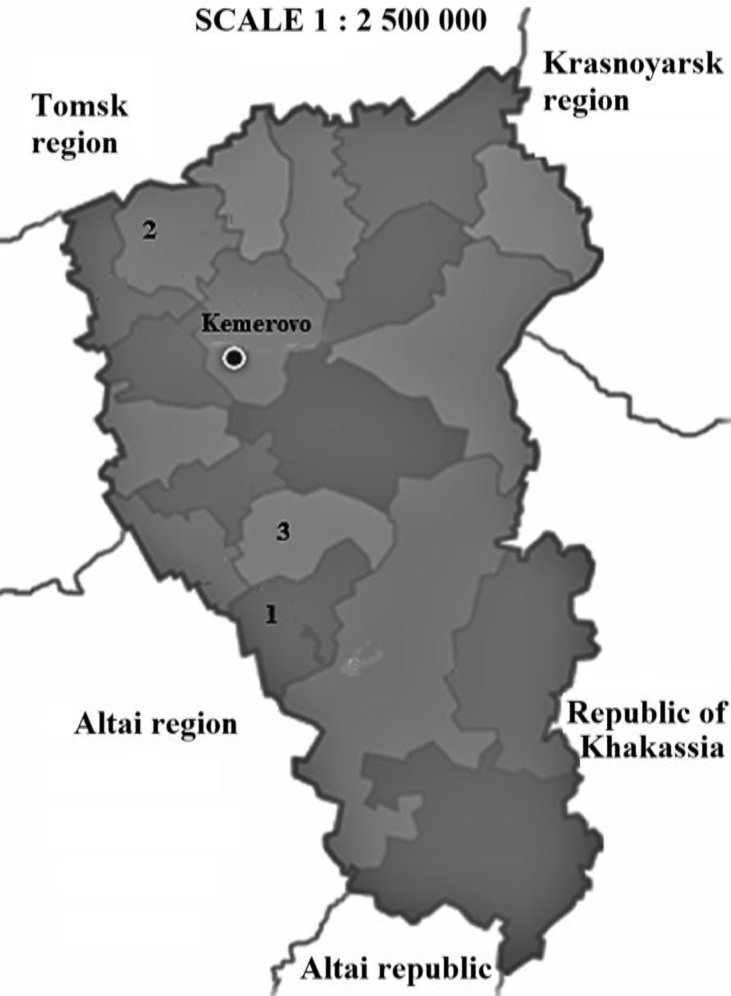
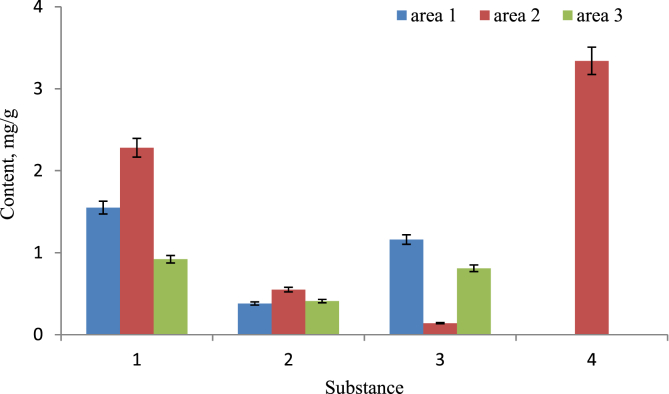
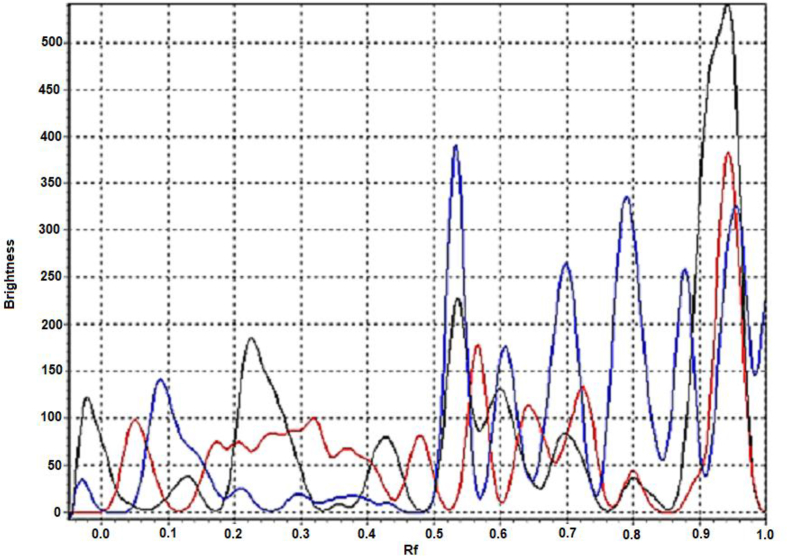
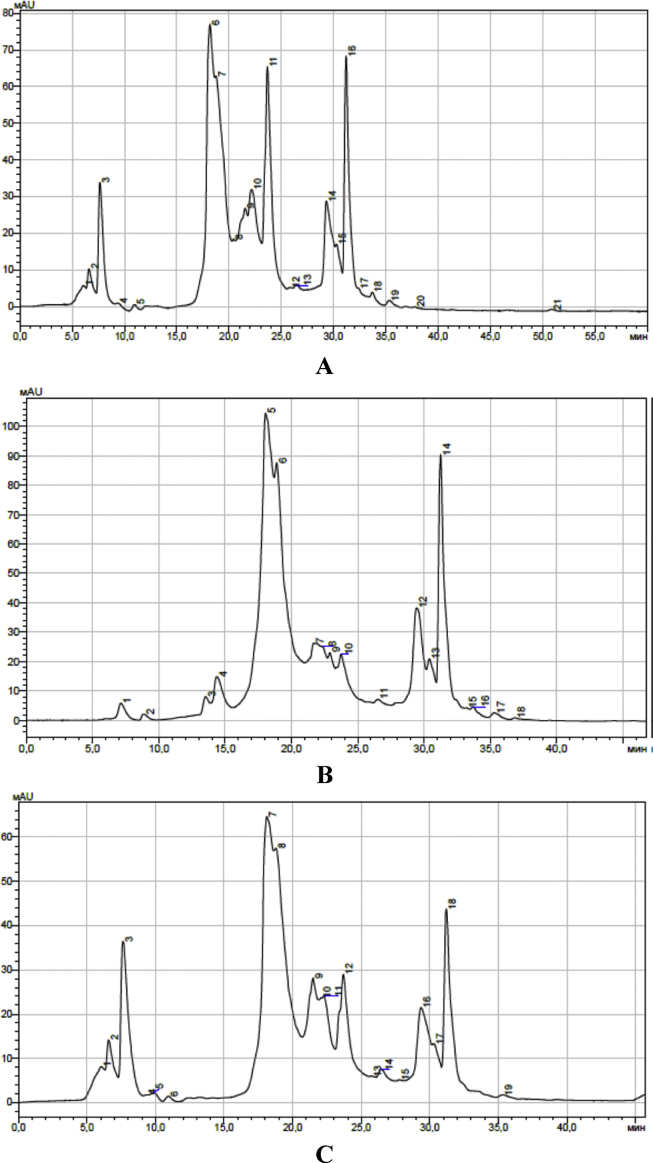
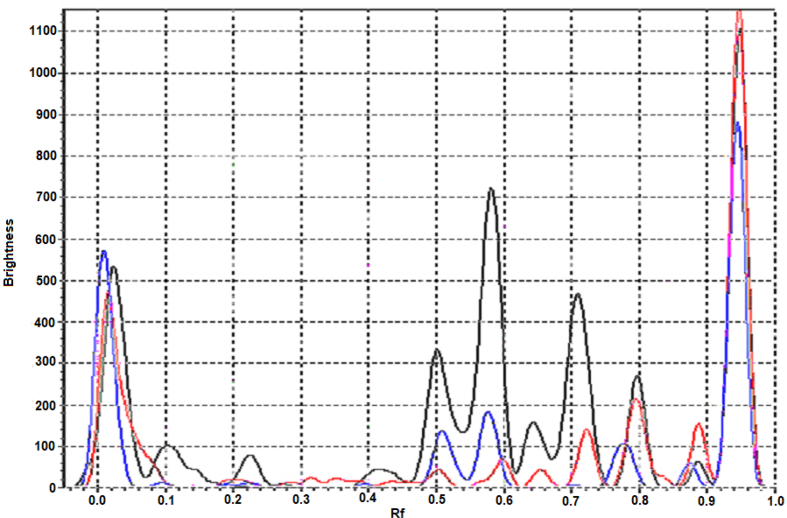
The potential of phenolic compounds of medicinal plants including is determined by but not limited to their antioxidant activity. Their anti-inflammatory, antitumor, and other useful properties are known, which allows using these phytochemicals within preventive activities to reduce the risk of many serious diseases. Chromatographic analysis of the biomaterial from the plant samples collected in three regions of the Kemerovo region (Western Siberia, Russia) established the presence of compounds of flavonols (isorhamnetin glucoside, kaempferol glucoside), flavones (apigenin 7-glucoside), phenylpropanoids (chlorogenic acid) in the aerial part of plants. The total content of phenolic compounds in plant samples ranged from 100.75 ± 3.87 mg/g (Yashkinsky district) to 190.95 ± 7.34 mg/g (Belovsky district). The content of chlorogenic acid in the studied samples was from 0.14 ± 0.01 mg/g to 1.16 ± 0.04 mg/g. Isorhamnetin glucoside was found only in samples of plants from two districts - Prokopievsky (41.39 ± 1.58 mg/g) and Belovsky (95.0 ± 3.66 mg/g). The content of glucosides of kaempferol ranged from 0.38 ± 0.01 mg/g to 0.55 ± 0.02 mg/g. Its content is almost twice as high as the content in the well-known analogues of Apigenin-7-glucoside was isolated in samples for the first time, in a small amount (3.34 ± 0.13 mg/g) in a sample of plants of one growing zone. Studies have confirmed that the content of flavonoids in plants significantly depends not only on the genetic characteristics of plants, but also on the hydrothermal regime, the climatic conditions of different botanical and geographical areas of the habitat. This work shows that growing in Kemerovo region is a promising raw material for pharmacological preparations.
药用植物中酚类化合物的潜力,包括但不限于其抗氧化活性。它们的抗炎、抗肿瘤和其他有益特性是已知的,这使得在预防活动中使用这些植物化学物质以降低许多严重疾病的风险成为可能。对在克麦罗沃地区(俄罗斯西西伯利亚)三个地区采集的植物样本的生物材料进行色谱分析,确定了植物地上部分存在黄酮醇类化合物(异鼠李素糖苷、山奈酚糖苷)、黄酮类化合物(芹菜素7-葡萄糖苷)、苯丙素类化合物(绿原酸)。植物样本中酚类化合物的总含量在100.75±3.87毫克/克(亚什金斯克区)至190.95±7.34毫克/克(别洛沃区)之间。所研究样本中绿原酸的含量为0.14±0.01毫克/克至1.16±0.04毫克/克。仅在两个地区的植物样本中发现了异鼠李素糖苷——普罗科皮耶夫斯基(41.39±1.58毫克/克)和别洛沃(95.0±3.66毫克/克)。山奈酚糖苷的含量在0.38±0.01毫克/克至0.55±0.02毫克/克之间。其含量几乎是著名类似物中含量的两倍。芹菜素-7-葡萄糖苷首次在一个生长区的植物样本中少量分离出来(3.34±0.13毫克/克)。研究证实,植物中黄酮类化合物的含量不仅显著取决于植物的遗传特性,还取决于水热状况、栖息地不同植物地理区域的气候条件。这项工作表明,在克麦罗沃地区生长的植物是制备药理制剂的有前景的原材料。