School of Chemical and Biomedical Engineering, Nanyang Technological University, 62 Nanyang Drive, Singapore 637459, Singapore.
School of Physical and Mathematical Sciences, Nanyang Technological University, 21 Nanyang Link, Singapore 637371, Singapore.
Medicina (Kaunas). 2019 Aug 29;55(9):546. doi: 10.3390/medicina55090546.
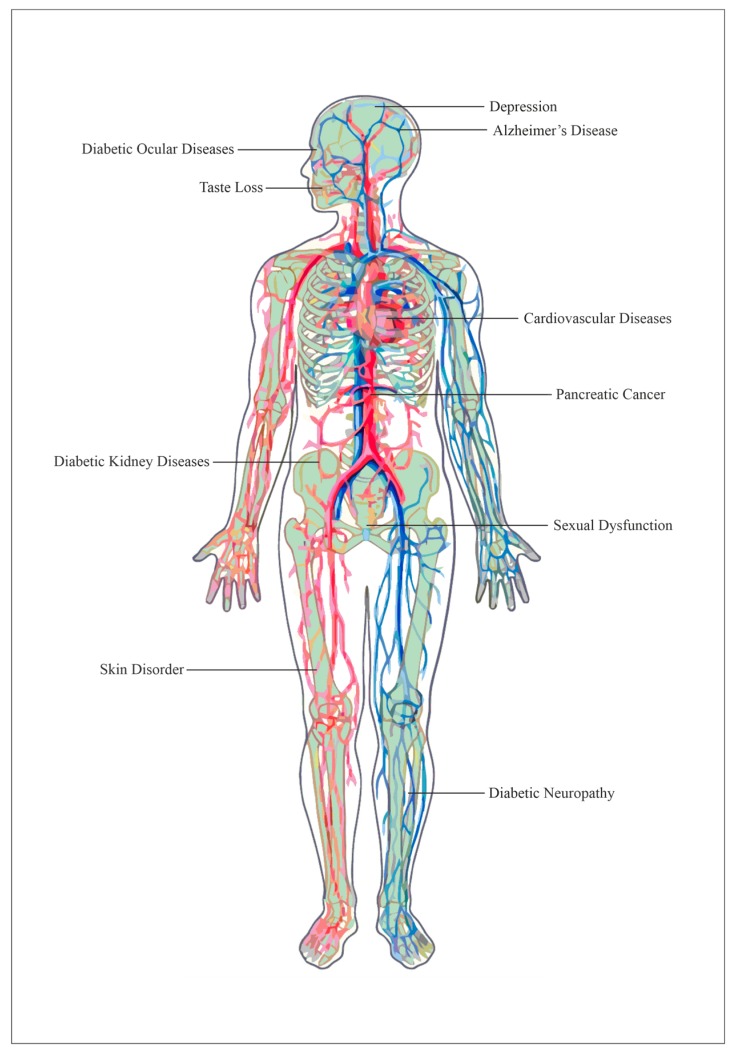
Diabetes, a silent killer, is one of the most widely prevalent conditions of the present time. According to the 2017 International Diabetes Federation (IDF) statistics, the global prevalence of diabetes among the age group of 20-79 years is 8.8%. In addition, 1 in every 2 persons is unaware of the condition. This unawareness and ignorance lead to further complications. Pre-diabetes is the preceding condition of diabetes, and in most of the cases, this ultimately leads to the development of diabetes. Diabetes can be classified into three types, namely type 1 diabetes, type 2 diabetes mellitus (T2DM) and gestational diabetes. The diagnosis of both pre-diabetes and diabetes is based on glucose criteria; the common modalities used are fasting plasma glucose (FPG) test and oral glucose tolerance test (OGTT). A glucometer is commonly used by diabetic patients to measure blood glucose levels with fast and rather accurate measurements. A few of the more advanced and minimally invasive modalities include the glucose-sensing patch, SwEatch, eyeglass biosensor, breath analysis, etc. Despite a considerable amount of data being collected and analyzed regarding diabetes, the actual molecular mechanism of developing type 2 diabetes mellitus (T2DM) is still unknown. Both genetic and epigenetic factors are associated with T2DM. The complications of diabetes can predominantly be classified into two categories: microvascular and macrovascular. Retinopathy, nephropathy, and neuropathy are grouped under microvascular complications, whereas stroke, cardiovascular disease, and peripheral artery disease (PAD) belong to macrovascular complications. Unfortunately, until now, no complete cure for diabetes has been found. However, the treatment of pre-diabetes has shown significant success in preventing the further progression of diabetes. To prevent pre-diabetes from developing into T2DM, lifestyle intervention has been found to be very promising. Various aspects of diabetes, including the aforementioned topics, have been reviewed in this paper.
糖尿病是目前最普遍的疾病之一,是一种无声的杀手。根据 2017 年国际糖尿病联合会(IDF)的统计数据,20-79 岁人群的全球糖尿病患病率为 8.8%。此外,每两个人中就有一个人不知道自己的病情。这种无知和忽视导致了进一步的并发症。糖尿病前期是糖尿病的前期阶段,在大多数情况下,这最终会导致糖尿病的发展。糖尿病可分为三种类型,即 1 型糖尿病、2 型糖尿病(T2DM)和妊娠期糖尿病。糖尿病前期和糖尿病的诊断都基于血糖标准;常用的方法有空腹血糖(FPG)检测和口服葡萄糖耐量试验(OGTT)。糖尿病患者通常使用血糖仪快速、准确地测量血糖水平。一些更先进和微创的方法包括葡萄糖感应贴片、SwEatch、眼镜生物传感器、呼吸分析等。尽管已经收集和分析了相当多的数据,但 2 型糖尿病(T2DM)的实际分子机制仍不清楚。遗传和表观遗传因素都与 T2DM 有关。糖尿病的并发症主要可分为两类:微血管和大血管。视网膜病变、肾病和神经病变属于微血管并发症,而中风、心血管疾病和外周动脉疾病(PAD)属于大血管并发症。不幸的是,到目前为止,还没有找到治疗糖尿病的完全治愈方法。然而,糖尿病前期的治疗已被证明在预防糖尿病的进一步发展方面非常成功。为了防止糖尿病前期发展为 T2DM,生活方式干预已被证明非常有前景。本文综述了糖尿病的各个方面,包括上述内容。