Cell Biology and Cancer Science, Rappaport Faculty of Medicine, Technion-Israel Institute of Technology, Haifa, 31096, Israel.
Department of Biotechnology Engineering, ORT Braude College, Karmiel, 2161002, Israel.
Sci Rep. 2019 Aug 30;9(1):12613. doi: 10.1038/s41598-019-48959-8.
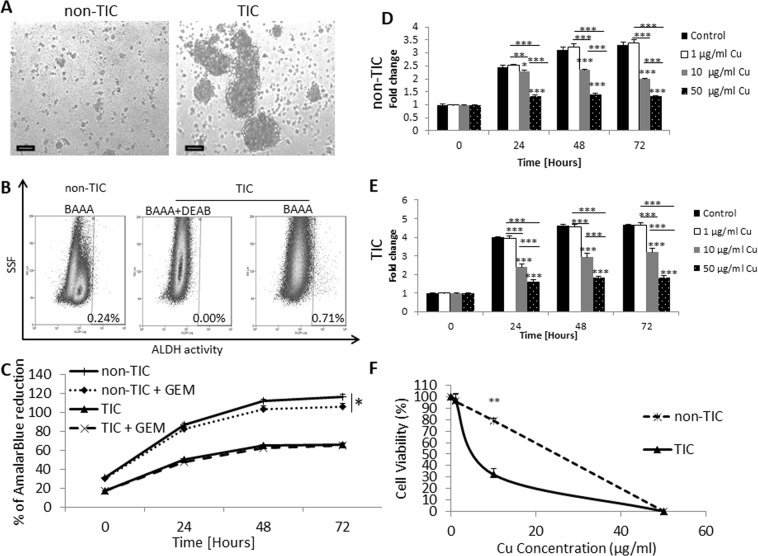
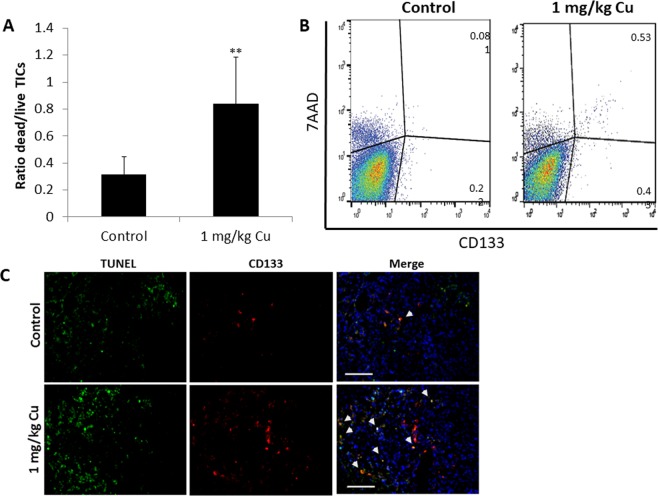
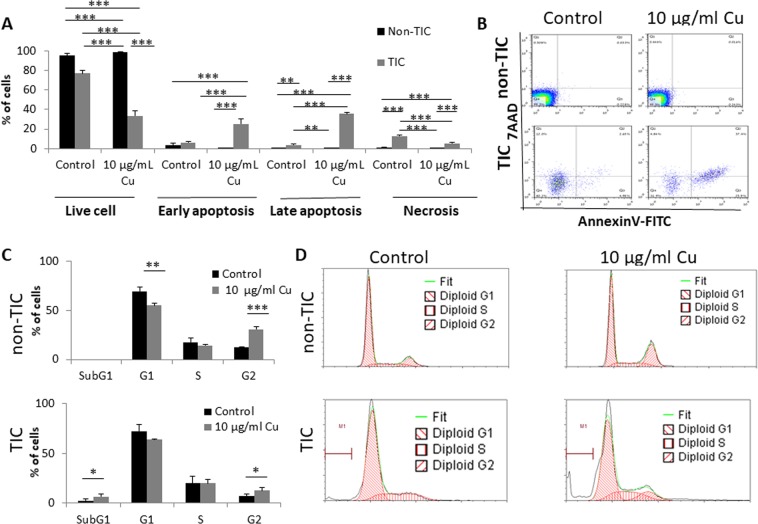
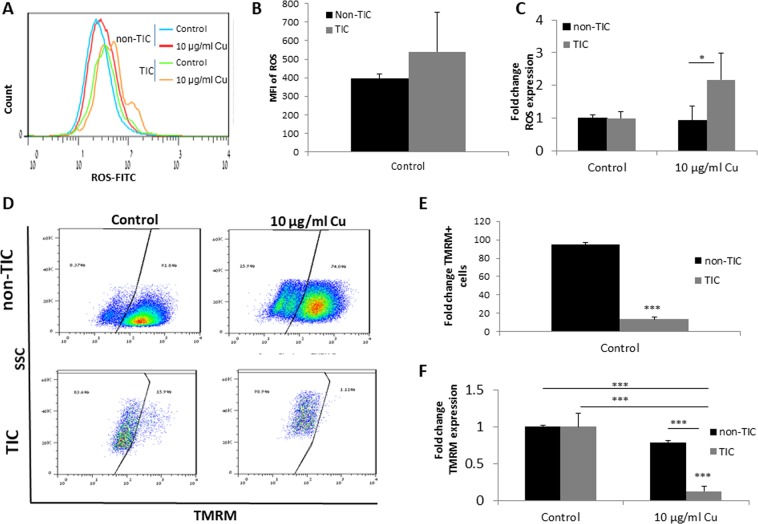
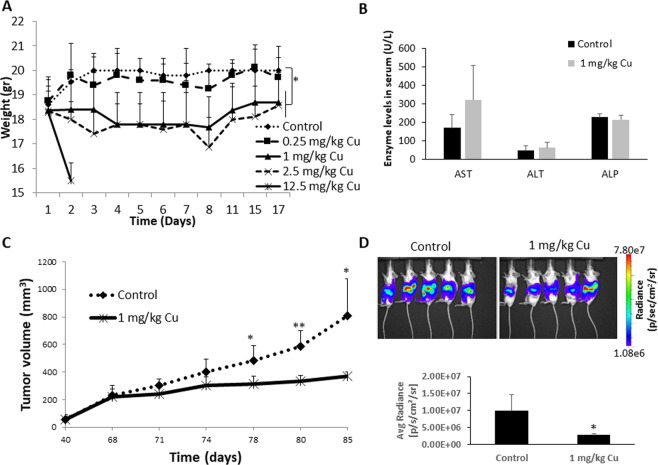
Cancer stem cells, also termed tumor initiating cells (TICs), are a rare population of cells within the tumor mass which initiate tumor growth and metastasis. In pancreatic cancer, TICs significantly contribute to tumor re-growth after therapy, due to their intrinsic resistance. Here we demonstrate that copper oxide nanoparticles (CuO-NPs) are cytotoxic against TIC-enriched PANC1 human pancreatic cancer cell cultures. Specifically, treatment with CuO-NPs decreases cell viability and increases apoptosis in TIC-enriched PANC1 cultures to a greater extent than in standard PANC1 cultures. These effects are associated with increased reactive oxygen species (ROS) levels, and reduced mitochondrial membrane potential. Furthermore, we demonstrate that CuO-NPs inhibit tumor growth in a pancreatic tumor model in mice. Tumors from mice treated with CuO-NPs contain a significantly higher number of apoptotic TICs in comparison to tumors from untreated mice, confirming that CuO-NPs target TICs in vivo. Overall, our findings highlight the potential of using CuO-NPs as a new therapeutic modality for pancreatic cancer.
癌症干细胞,也称为肿瘤起始细胞(TICs),是肿瘤组织中一种罕见的细胞群体,能够引发肿瘤生长和转移。在胰腺癌中,TICs 由于其内在的耐药性,在治疗后显著促进肿瘤的再生长。在这里,我们证明氧化铜纳米颗粒(CuO-NPs)对富含 TIC 的 PANC1 人胰腺癌细胞培养物具有细胞毒性。具体来说,与标准 PANC1 培养物相比,CuO-NPs 处理更能降低富含 TIC 的 PANC1 培养物中的细胞活力并增加细胞凋亡。这些作用与活性氧(ROS)水平升高和线粒体膜电位降低有关。此外,我们证明 CuO-NPs 可抑制小鼠胰腺癌模型中的肿瘤生长。与未治疗的小鼠相比,用 CuO-NPs 治疗的小鼠的肿瘤中含有更多的凋亡 TIC,这证实了 CuO-NPs 在体内靶向 TIC。总的来说,我们的研究结果强调了使用 CuO-NPs 作为治疗胰腺癌的新方法的潜力。