McCance Center for Brain Health, Genetics and Aging Research Unit, Department of Neurology, Massachusetts General Hospital, Harvard Medical School, Boston, MA, USA.
Department of Chemistry and Chemical Biology, Center for Brain Science, and John A. Paulson School of Engineering and Applied Sciences, Harvard University, Cambridge, MA, USA.
Nat Biotechnol. 2019 Sep;37(9):1007-1012. doi: 10.1038/s41587-019-0234-8. Epub 2019 Sep 2.
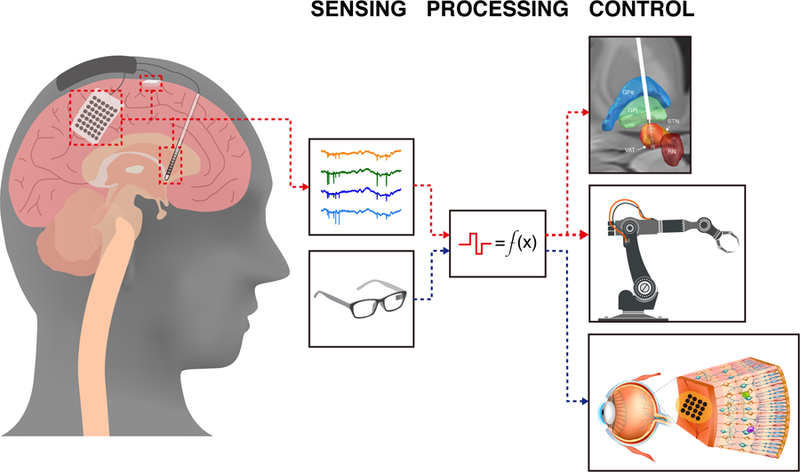
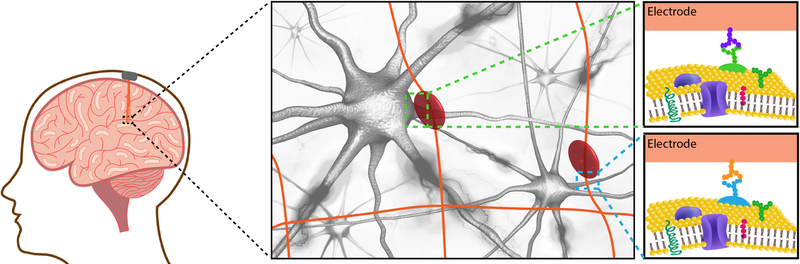
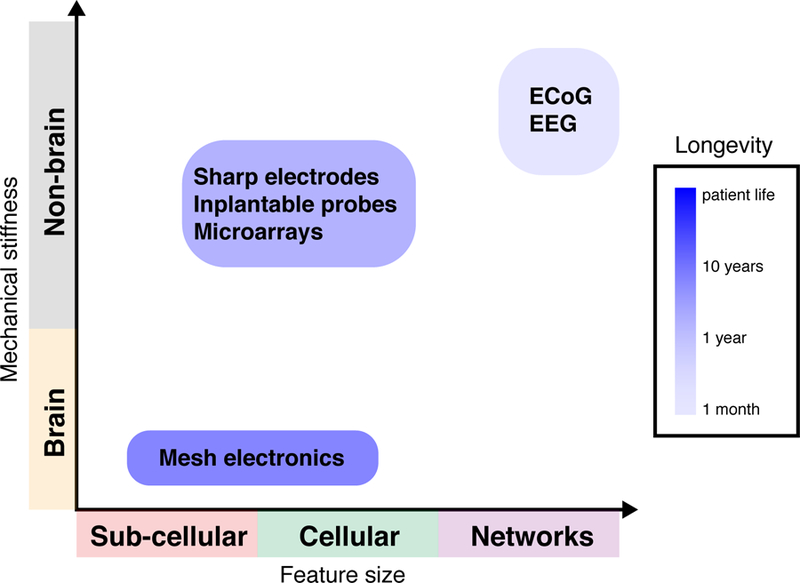
Periodically throughout history developments from adjacent fields of science and technology reach a tipping point where together they produce unparalleled advances, such as the Allen Brain Atlas and the Human Genome Project. Today, research focused at the interface between the nervous system and electronics is not only leading to advances in fundamental neuroscience, but also unlocking the potential of implants capable of cellular-level therapeutic targeting. Ultimately, these personalized electronic therapies will provide new treatment modalities for neurodegenerative and neuropsychiatric illness; powerful control of prosthetics for restorative function in degenerative diseases, trauma and amputation; and even augmentation of human cognition. Overall, we believe that emerging advances in tissue-like electronics will enable minimally invasive devices capable of establishing a stable long-term cellular neural interface and providing long-term treatment for chronic neurological conditions.
纵观历史,科学和技术的相邻领域不断发展,达到一个临界点,它们共同产生了无与伦比的进步,如艾伦脑图谱和人类基因组计划。如今,聚焦于神经系统和电子学之间界面的研究不仅引领了基础神经科学的进步,也挖掘出了植入物的潜力,使其能够实现细胞级别的治疗靶向。最终,这些个性化的电子疗法将为神经退行性和神经精神疾病提供新的治疗方式;为退行性疾病、创伤和截肢的恢复功能提供强大的假肢控制;甚至增强人类认知能力。总的来说,我们相信,类似组织的电子技术的新兴进展将使能够建立稳定的长期细胞神经接口的微创设备成为可能,并为慢性神经疾病提供长期治疗。