
构建类器官-脑计算机接口以实现脑损伤后的神经功能修复。
Constructing organoid-brain-computer interfaces for neurofunctional repair after brain injury.
机构信息
Academy of Medical Engineering and Translational Medicine, Tianjin University, Tianjin, China.
Haihe Laboratory of Brain-Computer Interaction and Human-Machine Integration, Tianjin, China.
出版信息
Nat Commun. 2024 Nov 6;15(1):9580. doi: 10.1038/s41467-024-53858-2.
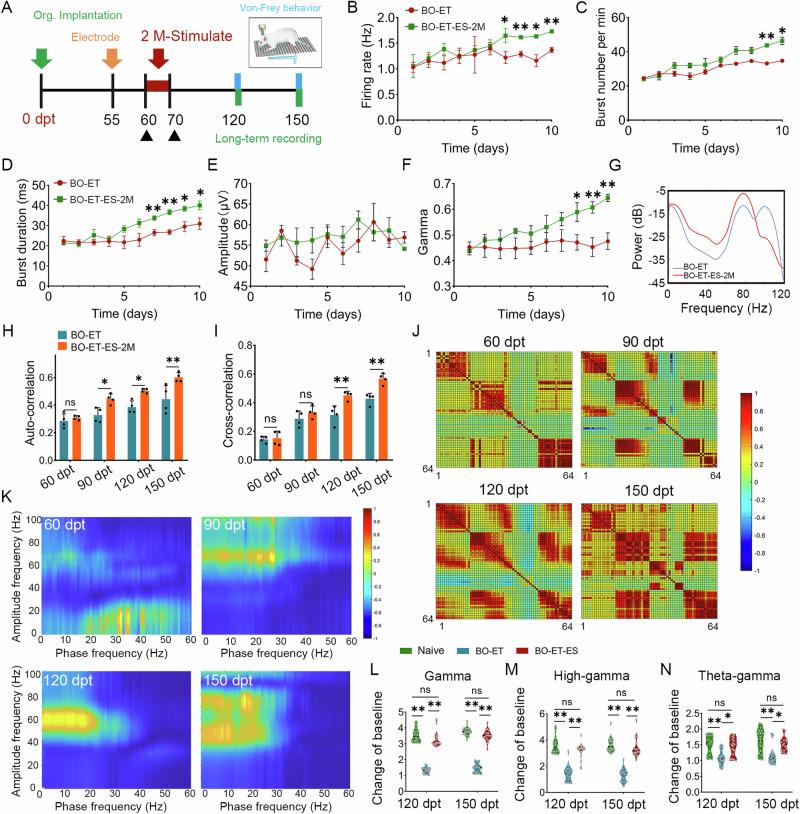
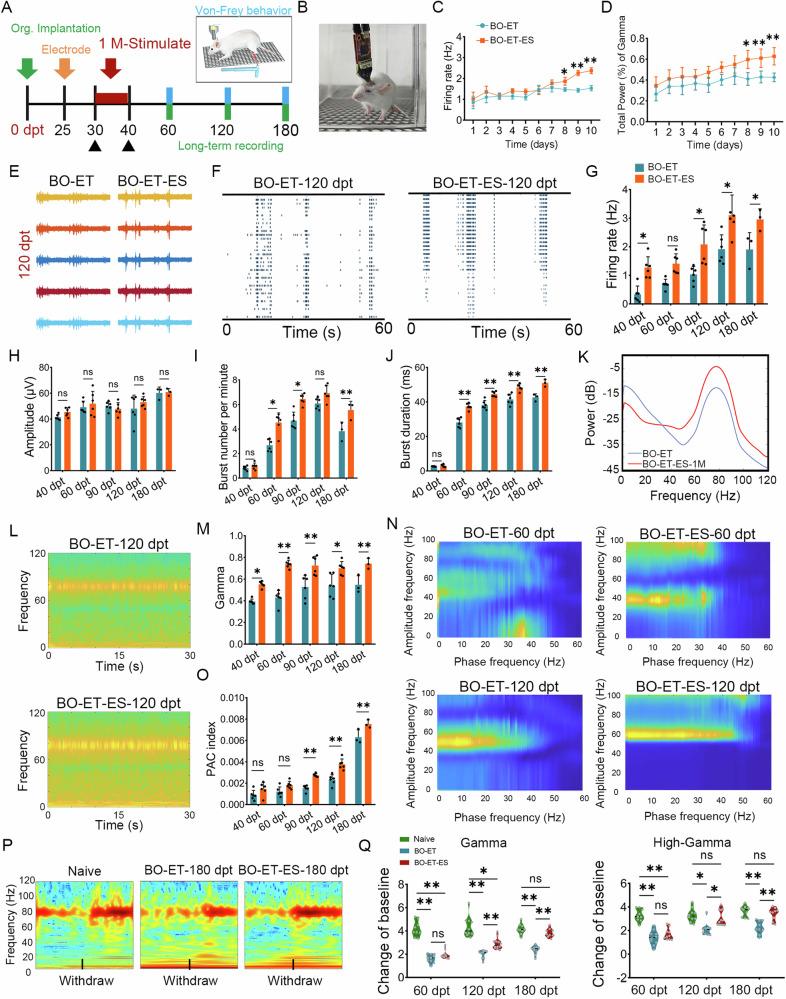
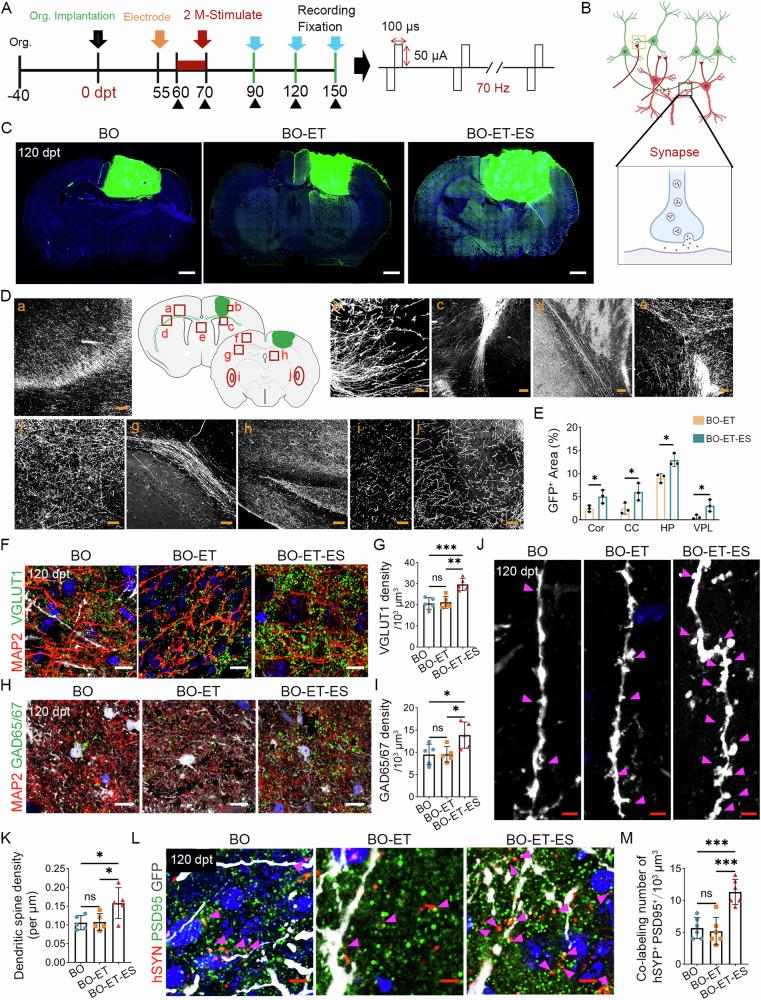
The reconstruction of damaged neural circuits is critical for neurological repair after brain injury. Classical brain-computer interfaces (BCIs) allow direct communication between the brain and external controllers to compensate for lost functions. Importantly, there is increasing potential for generalized BCIs to input information into the brains to restore damage, but their effectiveness is limited when a large injured cavity is caused. Notably, it might be overcome by transplantation of brain organoids into the damaged region. Here, we construct innovative BCIs mediated by implantable organoids, coined as organoid-brain-computer interfaces (OBCIs). We assess the prolonged safety and feasibility of the OBCIs, and explore neuroregulatory strategies. OBCI stimulation promotes progressive differentiation of grafts and enhances structural-functional connections within organoids and the host brain, promising to repair the damaged brain via regenerating and regulating, potentially directing neurons to preselected targets and recovering functional neural networks in the future.
受损神经回路的重建对于脑损伤后的神经修复至关重要。经典的脑机接口(BCI)允许大脑和外部控制器之间进行直接通信,以补偿失去的功能。重要的是,广义的脑机接口有可能将信息输入大脑以恢复损伤,但当出现大的损伤腔时,其效果受到限制。值得注意的是,通过将脑类器官移植到受损区域可能会克服这一限制。在这里,我们构建了由可植入类器官介导的创新脑机接口,称为类器官-脑机接口(OBCI)。我们评估了 OBCI 的长期安全性和可行性,并探索了神经调节策略。OBCI 刺激促进了移植物的渐进分化,并增强了类器官和宿主大脑内的结构-功能连接,有望通过再生和调节来修复受损的大脑,有可能指导神经元到达预选的目标,并在未来恢复功能神经网络。


 Zotero 插件