Department of Bioprocess Development, Genetic Engineering and Biotechnology Research Institute, City of Scientific Research and Technological Applications, Alexandria, 21934, Egypt.
Department of Botany, Faculty of Science, Mansoura University, Mansoura, Egypt.
Sci Rep. 2019 Sep 10;9(1):12971. doi: 10.1038/s41598-019-49201-1.
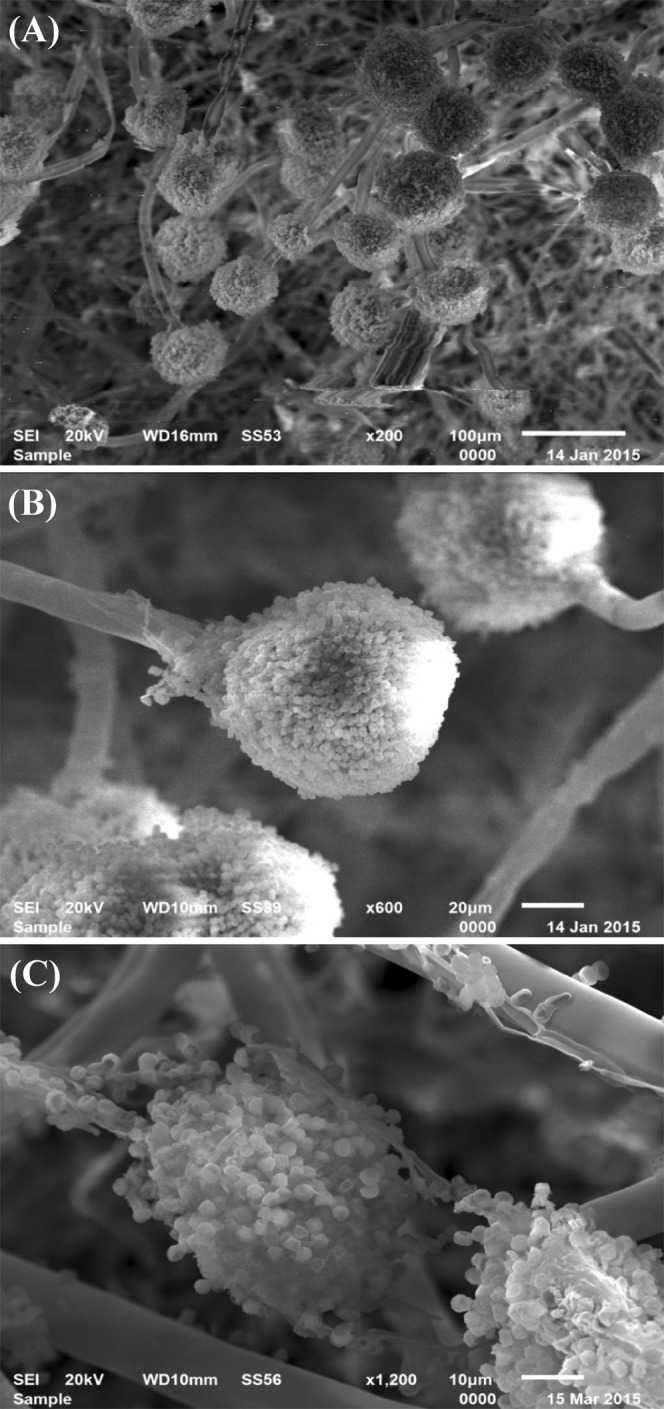
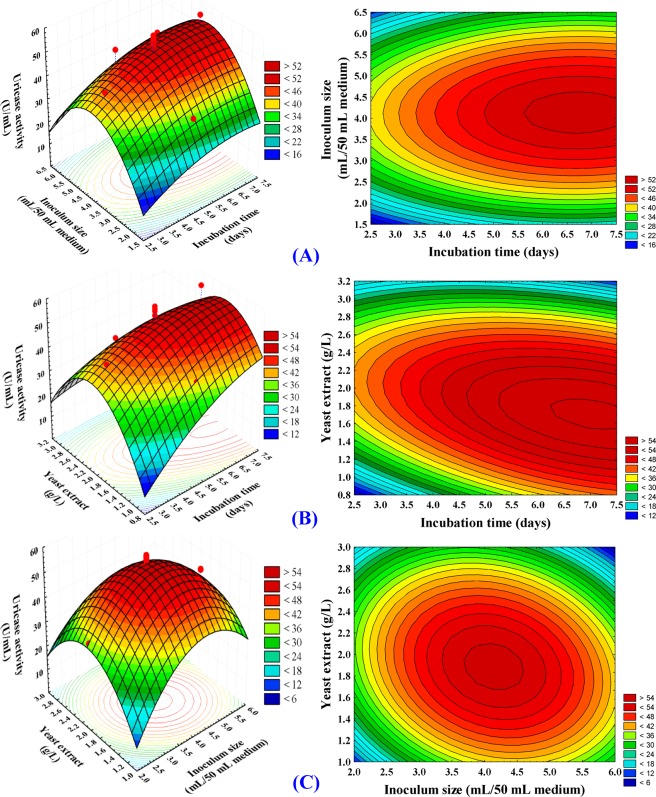
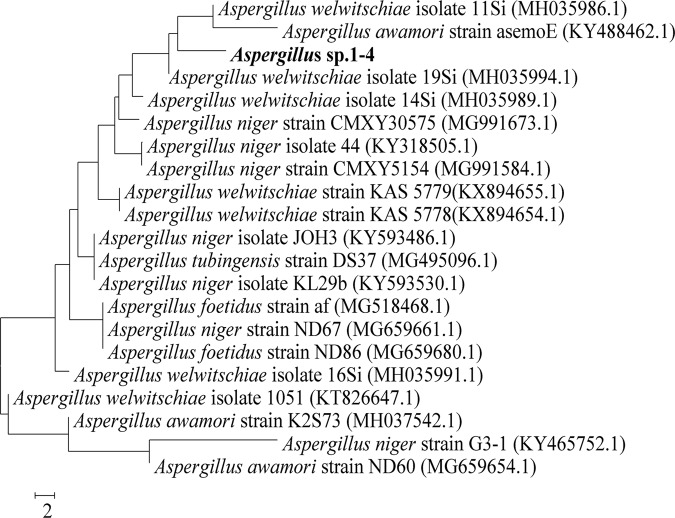
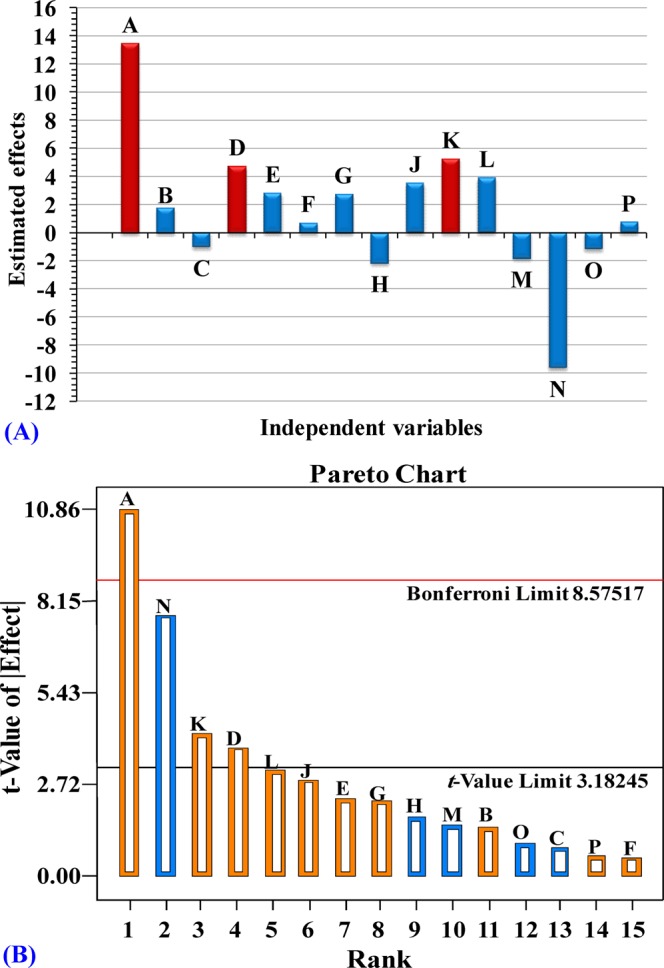
Microbial uricase is effective protein drug used to treat hyperuricemia and its complications, including chronic gout, also in prophylaxis and treatment of tumor lysis and organ transplants hyperuricemia. Uricase is commonly used as diagnostic reagent in clinical analysis for quantification of uric acid in blood and other biological fluids. Also, it can be used as an additive in formulations of hair coloring agents. A newly isolated strain, Aspergillus sp. 1-4, was able to produce extracellular uricase on a medium containing uric acid as inducer. Phylogenetic analysis based on ITS region sequence analysis and phenotypic characteristics showed that Aspergillus sp. strain 1-4 is closely related to Aspergillus welwitschiae and its nucleotide sequence was deposited in the GenBank database and assigned sequence accession number MG323529. Statistical screening using Plackett-Burman design with 20 runs was applied to screen fifteen factors for their significance on uricase production by Aspergillus welwitschiae. Results of statistical analysis indicated that incubation time has the most significant positive effect on uricase production followed by yeast extract and inoculum size with the highest effect values of 13.48, 5.26 and 4.75; respectively. The interaction effects and optimal levels of these factors were evaluated using central composite design. The maximum uricase production was achieved at incubation time (5 days), yeast extract (2 g/L) and inoculum size (4 mL/50 mL medium) are the optimum levels for maximum uricase production (60.03 U/mL). After optimization, uricase production increased by 3.02-folds as compared with that obtained from the unoptimized medium (19.87 U/mL).
微生物尿酸酶是一种有效的蛋白质药物,用于治疗高尿酸血症及其并发症,包括慢性痛风,也可用于预防和治疗肿瘤溶解和器官移植后的高尿酸血症。尿酸酶通常用作临床分析中的诊断试剂,用于定量测定血液和其他生物液中的尿酸。此外,它还可以用作染发剂配方中的添加剂。从含有尿酸作为诱导剂的培养基中,能够生产出尿酸酶的新分离的曲霉属 1-4 菌株。基于 ITS 区序列分析和表型特征的系统发育分析表明,曲霉属 1-4 菌株与 Aspergillus welwitschiae 密切相关,其核苷酸序列已被提交到 GenBank 数据库,并分配了 MG323529 序列注册号。使用 Plackett-Burman 设计进行的统计筛选,共进行了 20 次运行,以筛选出对 Aspergillus welwitschiae 尿酸酶生产有意义的 15 个因素。统计分析结果表明,培养时间对尿酸酶生产的影响最大,其次是酵母提取物和接种量,其最高效应值分别为 13.48、5.26 和 4.75;分别。使用中心组合设计评估这些因素的相互作用效应和最佳水平。在培养时间(5 天)、酵母提取物(2 g/L)和接种量(4 mL/50 mL 培养基)的最佳水平下,尿酸酶的最大产量达到 60.03 U/mL。与未优化培养基(19.87 U/mL)相比,优化后尿酸酶产量增加了 3.02 倍。