Particle Technology Laboratory, Department of Mechanical and Process Engineering, ETH Zurich, 8092, Zurich, Switzerland.
Department of Endocrinology, Diabetes, and Clinical Nutrition, University Hospital Zurich, 8091, Zurich, Switzerland.
Nat Commun. 2019 Sep 16;10(1):4220. doi: 10.1038/s41467-019-12223-4.
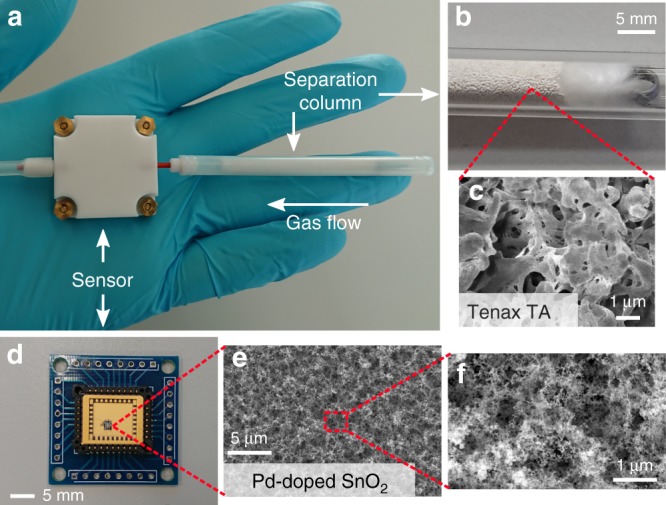
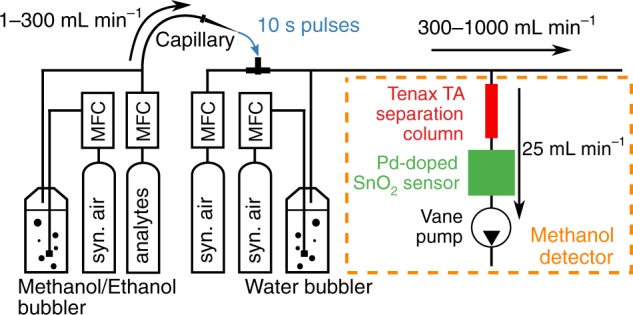
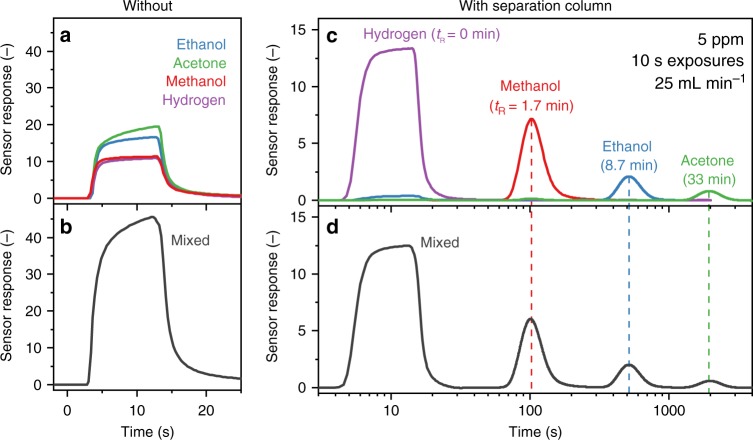
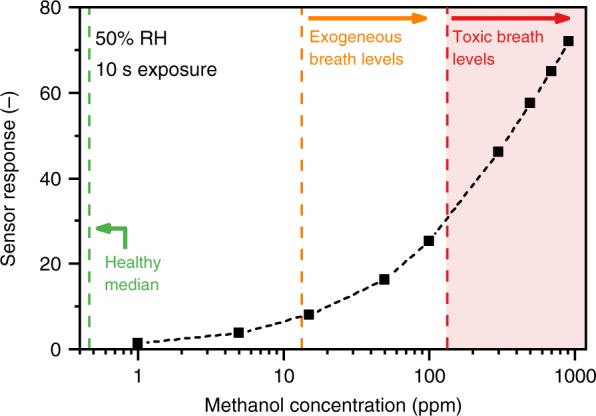
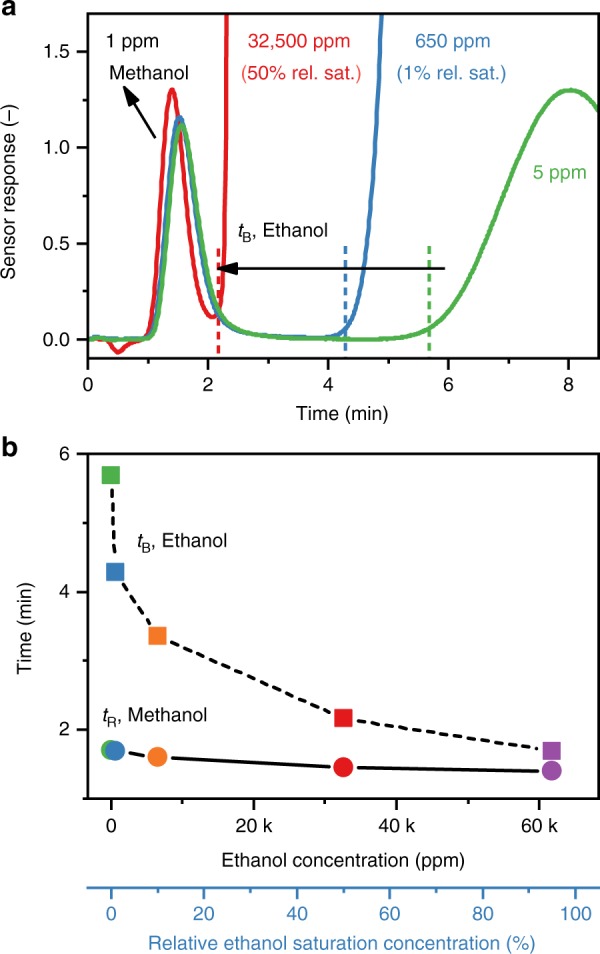
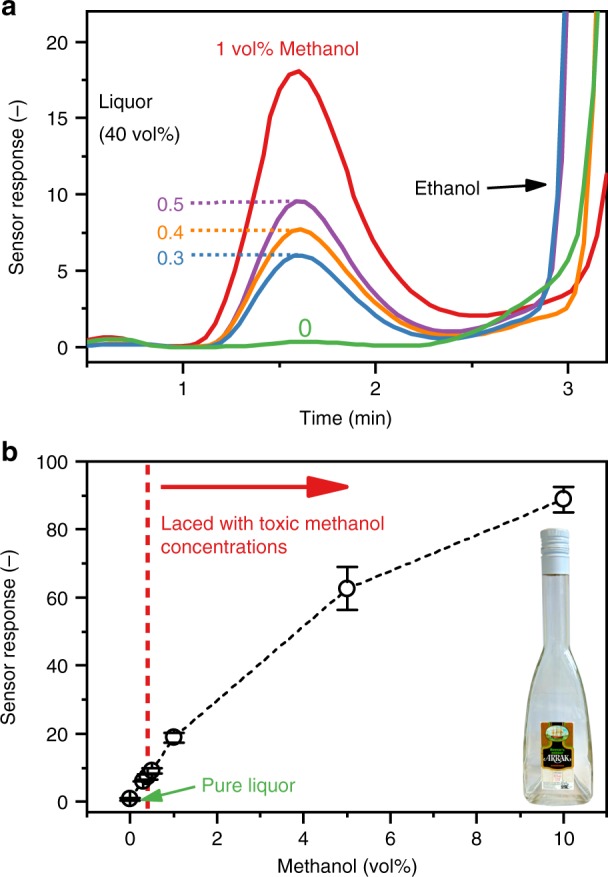
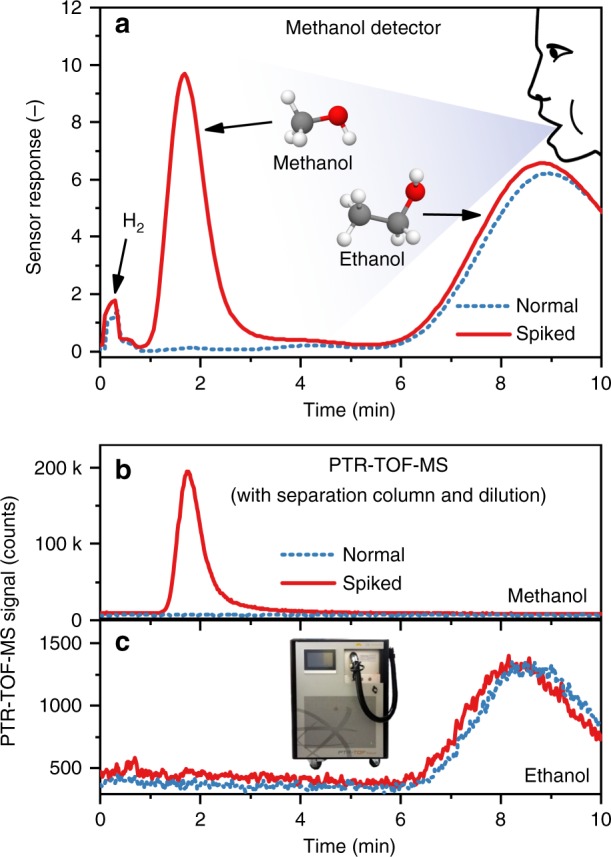
Methanol poisoning causes blindness, organ failure or even death when recognized too late. Currently, there is no methanol detector for quick diagnosis by breath analysis or for screening of laced beverages. Typically, chemical sensors cannot distinguish methanol from the much higher ethanol background. Here, we present an inexpensive and handheld sensor for highly selective methanol detection. It consists of a separation column (Tenax) separating methanol from interferants like ethanol, acetone or hydrogen, as in gas chromatography, and a chemoresistive gas sensor (Pd-doped SnO nanoparticles) to quantify the methanol concentration. This way, methanol is measured within 2 min from 1 to 1000 ppm without interference of much higher ethanol levels (up to 62,000 ppm). As a proof-of-concept, we reliably measure methanol concentrations in spiked breath samples and liquor. This could enable the realization of highly selective sensors in emerging applications such as breath analysis or air quality monitoring.
甲醇中毒如果发现太晚,可导致失明、器官衰竭甚至死亡。目前,还没有用于通过呼吸分析进行快速诊断或用于筛选含甲醇饮料的甲醇检测仪。通常,化学传感器无法将甲醇与背景中浓度高得多的乙醇区分开来。在这里,我们提出了一种用于高度选择性甲醇检测的廉价且手持的传感器。它由一个分离柱(Tenax)组成,用于将甲醇与干扰物(如乙醇、丙酮或氢气)分离,就像在气相色谱中一样,以及一个电阻式气体传感器(掺杂钯的 SnO 纳米颗粒)来定量甲醇浓度。这样,就可以在 2 分钟内从 1 到 1000 ppm 的范围内测量甲醇,而不会受到浓度高得多的乙醇(高达 62000 ppm)的干扰。作为概念验证,我们可靠地测量了加标呼吸样本和酒中的甲醇浓度。这可能会使新兴应用(如呼吸分析或空气质量监测)中的高度选择性传感器的实现成为可能。