Napi Muhammad Luqman Mohd, Sultan Suhana Mohamed, Ismail Razali, How Khoo Wei, Ahmad Mohd Khairul
Computational Nanoelectronic Research Lab, School of Electrical Engineering, Universiti Teknologi Malaysia Johor Bahru, Skudai 81310, Malaysia.
Microelectronics and Nanotechnology-Shamsuddin Research Centre, Universiti Tun Hussein Onn Malaysia, Parit Raja 86400, Malaysia.
Materials (Basel). 2019 Sep 15;12(18):2985. doi: 10.3390/ma12182985.
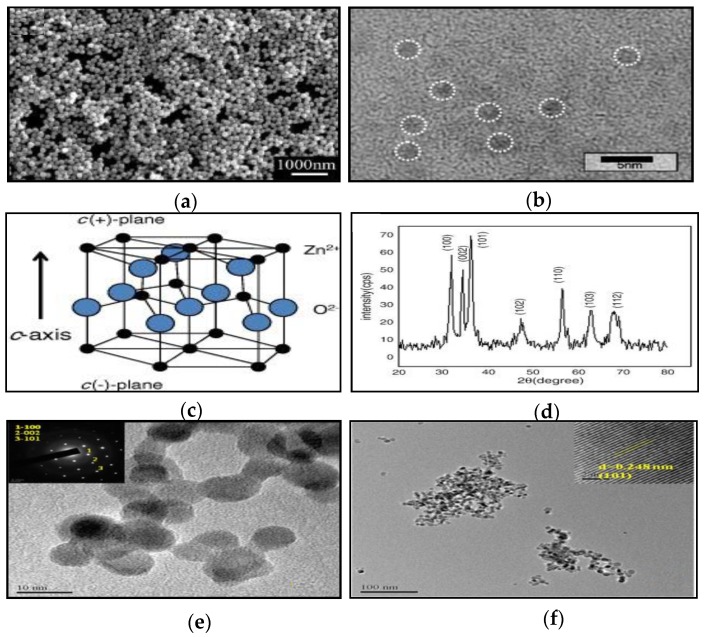
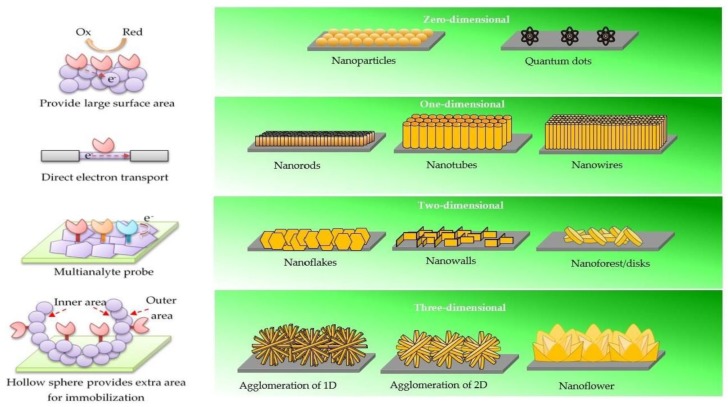
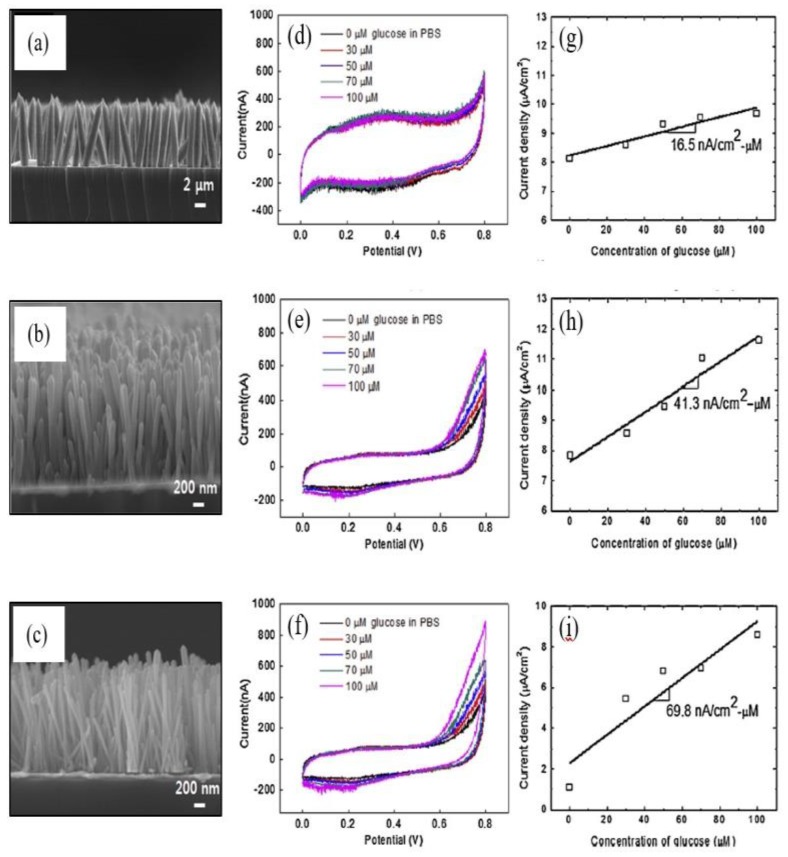
Electrochemical biosensors have shown great potential in the medical diagnosis field. The performance of electrochemical biosensors depends on the sensing materials used. ZnO nanostructures play important roles as the active sites where biological events occur, subsequently defining the sensitivity and stability of the device. ZnO nanostructures have been synthesized into four different dimensional formations, which are zero dimensional (nanoparticles and quantum dots), one dimensional (nanorods, nanotubes, nanofibers, and nanowires), two dimensional (nanosheets, nanoflakes, nanodiscs, and nanowalls) and three dimensional (hollow spheres and nanoflowers). The zero-dimensional nanostructures could be utilized for creating more active sites with a larger surface area. Meanwhile, one-dimensional nanostructures provide a direct and stable pathway for rapid electron transport. Two-dimensional nanostructures possess a unique polar surface for enhancing the immobilization process. Finally, three-dimensional nanostructures create extra surface area because of their geometric volume. The sensing performance of each of these morphologies toward the bio-analyte level makes ZnO nanostructures a suitable candidate to be applied as active sites in electrochemical biosensors for medical diagnostic purposes. This review highlights recent advances in various dimensions of ZnO nanostructures towards electrochemical biosensor applications.
电化学生物传感器在医学诊断领域已展现出巨大潜力。电化学生物传感器的性能取决于所使用的传感材料。氧化锌纳米结构作为生物事件发生的活性位点发挥着重要作用,进而决定了该装置的灵敏度和稳定性。氧化锌纳米结构已被合成出四种不同维度的形态,即零维(纳米颗粒和量子点)、一维(纳米棒、纳米管、纳米纤维和纳米线)、二维(纳米片、纳米薄片、纳米盘和纳米壁)和三维(空心球和纳米花)。零维纳米结构可用于创建具有更大表面积的更多活性位点。同时,一维纳米结构为快速电子传输提供了直接且稳定的途径。二维纳米结构拥有独特的极性表面以增强固定过程。最后,三维纳米结构因其几何体积而创造出额外的表面积。这些形态中的每一种对生物分析物水平的传感性能使氧化锌纳米结构成为适用于医学诊断目的的电化学生物传感器中作为活性位点的候选材料。本综述重点介绍了氧化锌纳米结构在电化学传感器应用的各个维度上的最新进展。