Escuela de Ingeniería de Bilbao, Departamento de Ingeniería Minera, Metalúrgica y Ciencia de Materiales, Universidad del País Vasco (UPV/EHU), 48920 Portugalete, Spain.
BCMaterials, Basque Centre for Materials, Applications and Nanostructures, UPV/EHU Science Park, 48940 Leioa, Spain.
Int J Mol Sci. 2019 Sep 20;20(19):4664. doi: 10.3390/ijms20194664.
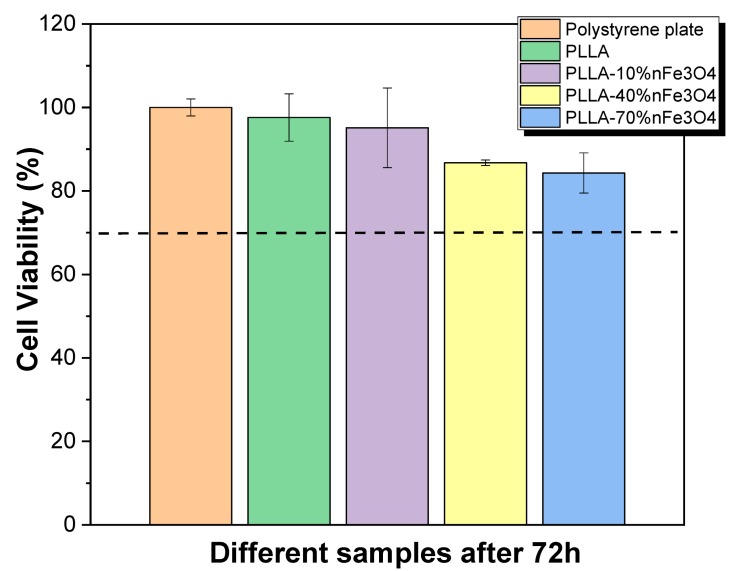
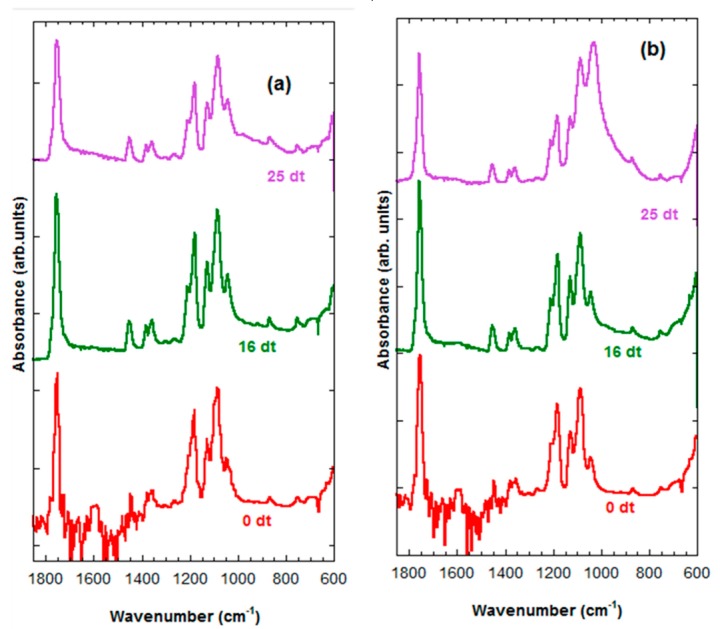
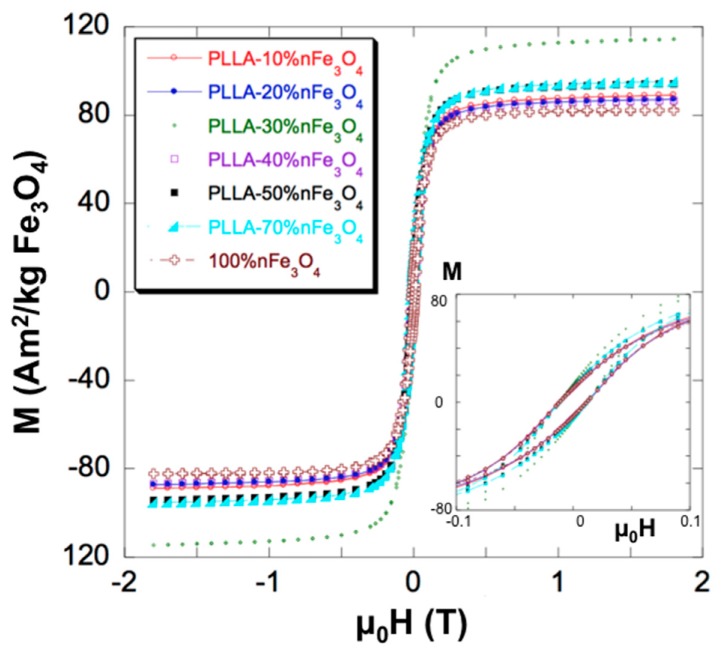
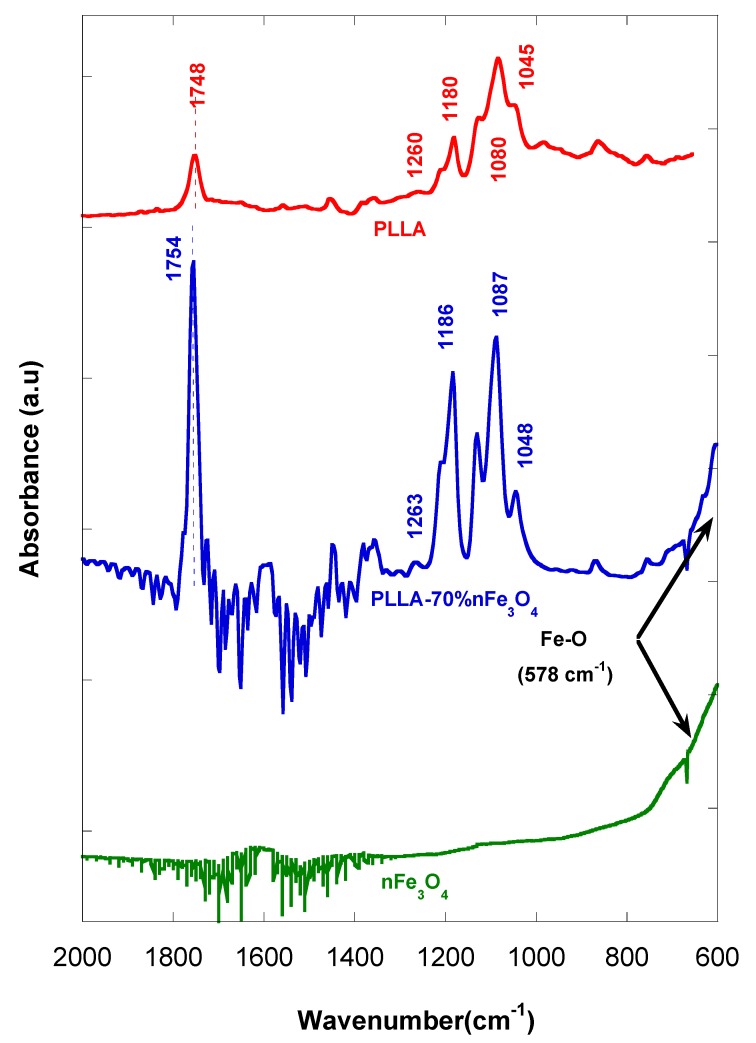
Magnetic biomimetic scaffolds of poly(L-lactide) (PLLA) and nanoparticles of magnetite (nFeO) are prepared in a wide ratio of compositions by lyophilization for bone regeneration. The magnetic properties, cytotoxicity, and the in vitro degradation of these porous materials are closely studied. The addition of magnetite at 50 °C was found to produce an interaction reaction between the ester groups of the PLLA and the metallic cations of the magnetite, causing the formation of complexes. This fact was confirmed by the analysis of the infrared spectroscopy and the gel permeation chromatography test results. They, respectively, showed a displacement of the absorption bands of the carbonyl group (C=O) of the PLLA and a scission of the polymer chains. The iron from the magnetite acted as a catalyser of the macromolecular scission reaction, which determines the final biomedical applications of the scaffolds-it does so because the reaction shortens the degradation process without appearing to influence its toxicity. None of the samples studied in the tests presented cytotoxicity, even at 70% magnetite concentrations.
聚 L-乳酸(PLLA)的磁性仿生支架和磁铁矿纳米颗粒(nFeO)通过冷冻干燥以较宽的比例组合制备,用于骨再生。这些多孔材料的磁性、细胞毒性和体外降解被密切研究。在 50°C 下添加磁铁矿被发现会导致 PLLA 的酯基与磁铁矿的金属阳离子之间发生相互作用反应,从而形成复合物。这一事实通过对红外光谱和凝胶渗透色谱测试结果的分析得到了证实。它们分别显示出 PLLA 的羰基(C=O)吸收带的位移和聚合物链的断裂。磁铁矿中的铁充当了大分子断裂反应的催化剂,这决定了支架的最终生物医学应用——因为该反应缩短了降解过程,而不会影响其毒性。即使在磁铁矿浓度为 70%的情况下,在测试中研究的所有样品均无细胞毒性。