Leong Cheryl, Schmid Bettina, Toi Min Jet, Wang Joyce, Irudayaswamy Antony Sagayaraj, Goh Joleen Peh Zhen, Bosshard Philipp P, Glatz Martin, Dawson Thomas L
Agency for Science, Technology and Research (A∗STAR), Skin Research Institute of Singapore, Singapore, Singapore.
Department of Dermatology, University Hospital Zürich, Zurich, Switzerland.
Front Microbiol. 2019 Aug 27;10:1891. doi: 10.3389/fmicb.2019.01891. eCollection 2019.
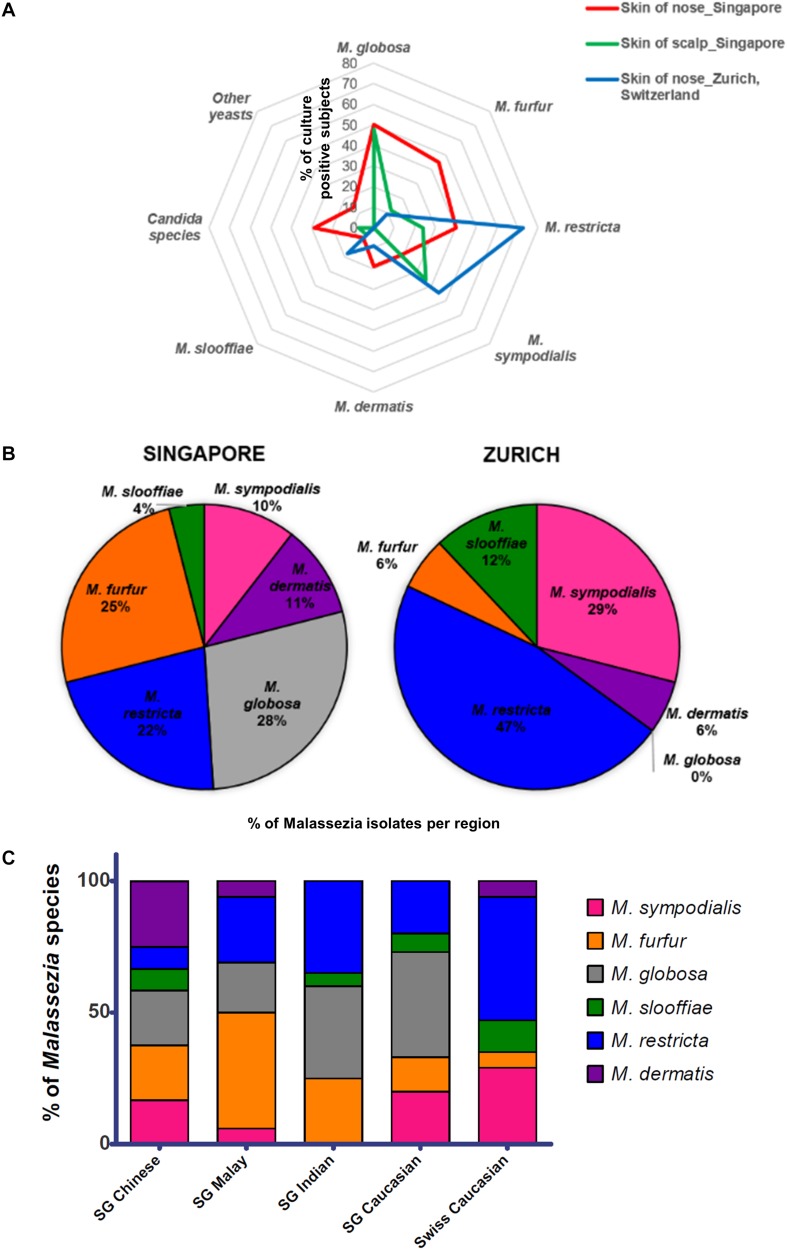
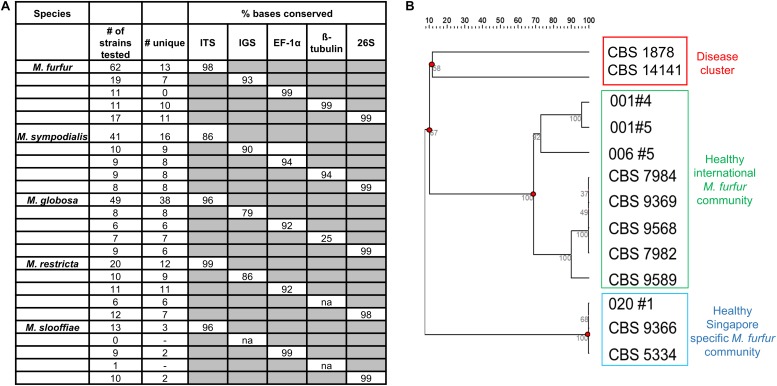
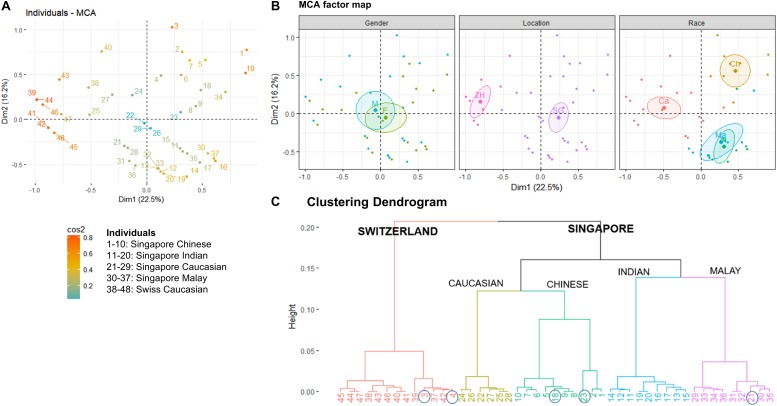
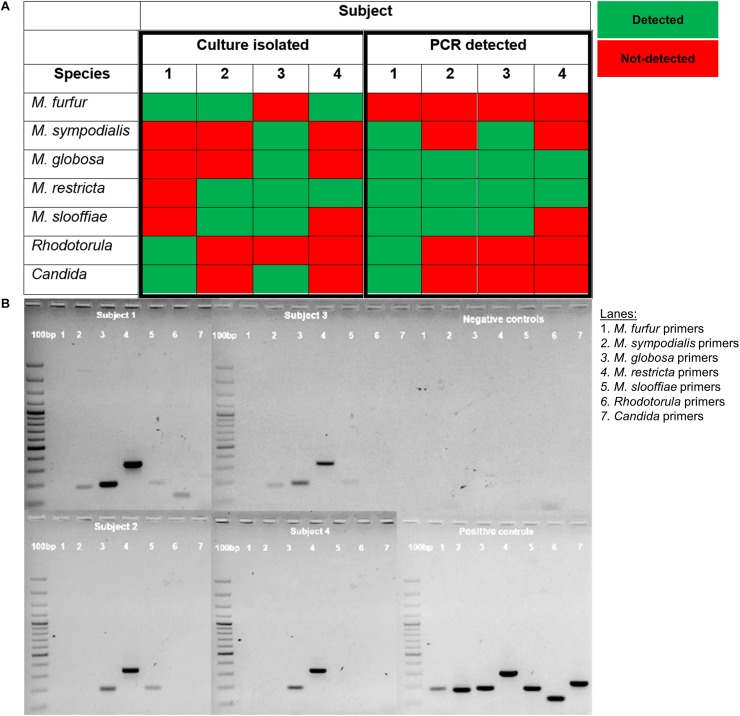
Commensal fungi such as , , and are common on healthy skin but are also associated with opportunistic invasive and superficial infections. Skin microbial community characterization has been extensively performed worldwide, with a focus on the 16S bacterial community. These studies have focused on geographically distinct or targeted cohorts with variable reported species distributions of commensal yeast species. To determine the effects of extrinsic environmental factors such as geography, climate, and ethnicity on detected healthy skin commensal yeast diversity, we compared cohorts from Singapore and Zürich, Switzerland, representative of two geographically and climatically distinct regions comprising multi-ethnic (Chinese, Malay, Indian, Caucasian) and predominantly white Caucasian cohorts, respectively, using identical skin sampling and culture methods. We chose to use a culture-based approach as cultures isolated from patients are still required for studies of pathogenicity and antifungal susceptibility. Detection of yeast species by culture-dependent and independent sequencing-based methods suggest healthy skin diversity reflects a species distribution representative of the geography, climate and ethnic background of their local populations. Culture success and species diversity was also found to be dependent on climate, with warm tropical climates favoring high positive culture rates and greater species diversity. Multilocus sequence typing data suggests some strains are geographically distinct and may be used to segregate potential disease-causing commensals. For accurate collection and characterization of skin microbial communities, it remains recommended to employ a combination of culture-dependent and sequence-based culture-independent methods. Characterization of healthy mycobiomes in geographically distinct local populations will be useful in defining the role of commensal fungi in health and disease.
诸如马拉色菌属、念珠菌属和隐球菌属等共生真菌在健康皮肤上很常见,但也与机会性侵袭性和浅表感染有关。全球范围内已广泛开展皮肤微生物群落特征研究,重点是16S细菌群落。这些研究聚焦于地理上不同或有针对性的队列,报道的共生酵母菌种分布各异。为了确定地理、气候和种族等外在环境因素对检测到的健康皮肤共生酵母多样性的影响,我们使用相同的皮肤采样和培养方法,比较了来自新加坡和瑞士苏黎世的队列,这两个地区分别代表了地理和气候上不同的两个区域,前者包含多民族(华人、马来人、印度人、高加索人)队列,后者主要是白人高加索人队列。我们选择采用基于培养的方法,因为致病性和抗真菌药敏性研究仍需要从患者身上分离培养物。通过基于培养和独立测序的方法检测酵母菌种表明,健康皮肤的多样性反映了当地人群地理、气候和种族背景所代表的物种分布。还发现培养成功率和物种多样性取决于气候,温暖的热带气候有利于高阳性培养率和更丰富的物种多样性。多位点序列分型数据表明,一些菌株在地理上是不同的,可用于区分潜在的致病共生菌。为了准确收集和表征皮肤微生物群落,仍然建议采用基于培养和基于序列的非培养方法相结合。对地理上不同的当地人群中健康真菌群落的表征将有助于确定共生真菌在健康和疾病中的作用。