Department of Materials Science & Engineering, Stanford University, Stanford, CA 94305.
Department of Civil & Environmental Engineering, Stanford University, Stanford, CA 94305.
Proc Natl Acad Sci U S A. 2019 Oct 15;116(42):20820-20827. doi: 10.1073/pnas.1907855116. Epub 2019 Sep 30.
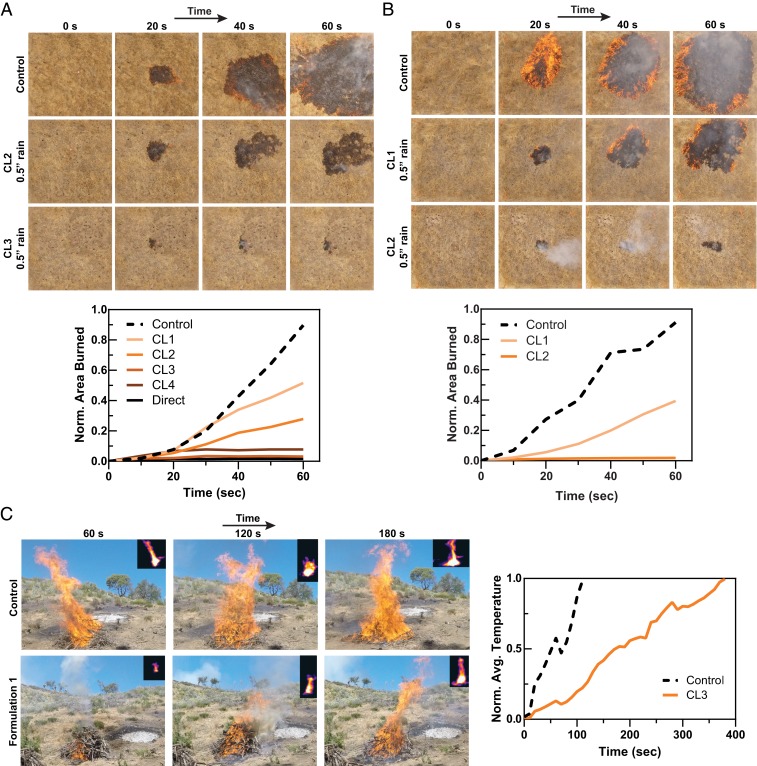
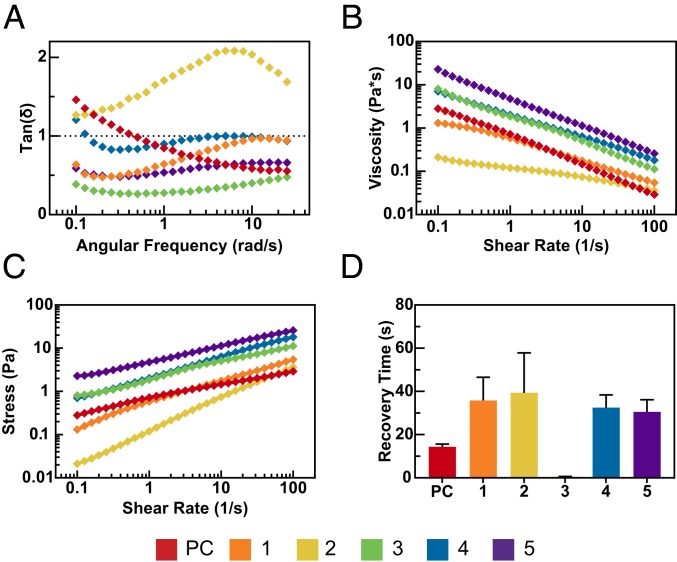
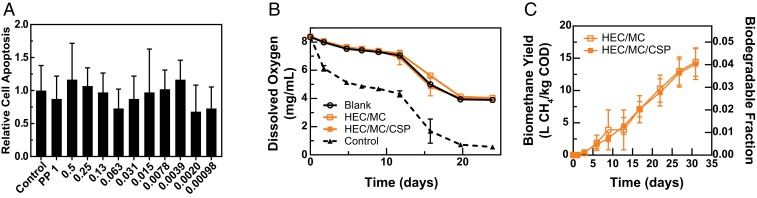
Polyphosphate fire retardants are a critical tactical resource for fighting fires in the wildland and in the wildland-urban interface. Yet, application of these retardants is limited to emergency suppression strategies because current formulations cannot retain fire retardants on target vegetation for extended periods of time through environmental exposure and weathering. New retardant formulations with persistent retention to target vegetation throughout the peak fire season would enable methodical, prophylactic treatment strategies of landscapes at high risk of wildfires through prolonged prevention of ignition and continual impediment to active flaming fronts. Here we develop a sprayable, environmentally benign viscoelastic fluid comprising biopolymers and colloidal silica to enhance adherence and retention of polyphosphate retardants on common wildfire-prone vegetation. These viscoelastic fluids exhibit appropriate wetting and rheological responses to enable robust retardant adherence to vegetation following spray application. Further, laboratory and pilot-scale burn studies establish that these materials drastically reduce ignition probability before and after simulated weathering events. Overall, these studies demonstrate how these materials actualize opportunities to shift the approach of retardant-based wildfire management from reactive suppression to proactive prevention at the source of ignitions.
聚磷酸盐阻燃剂是在野外和城乡过渡地带灭火的关键战术资源。然而,由于目前的配方不能在环境暴露和风化的情况下长时间将阻燃剂保留在目标植被上,因此这些阻燃剂的应用仅限于紧急抑制策略。新的阻燃剂配方在整个火灾高峰期对目标植被具有持久的保留能力,将通过长时间预防点火和持续阻碍活跃火焰前沿,为高火灾风险的景观提供有条不紊、预防性的处理策略。在这里,我们开发了一种可喷涂的、环境友好的粘弹性流体,由生物聚合物和胶体二氧化硅组成,以增强聚磷酸盐阻燃剂在常见的野火易发植被上的附着力和保留力。这些粘弹性流体在喷涂后表现出适当的润湿和流变响应,从而使阻燃剂能够牢固地附着在植被上。此外,实验室和试点规模的燃烧研究表明,这些材料大大降低了模拟风化事件前后的点火概率。总的来说,这些研究表明,这些材料如何实现将基于阻燃剂的野火管理方法从反应性抑制转变为在点火源进行主动预防的机会。