Pem Barbara, Pongrac Igor M, Ulm Lea, Pavičić Ivan, Vrček Valerije, Domazet Jurašin Darija, Ljubojević Marija, Krivohlavek Adela, Vinković Vrček Ivana
Institute for Medical Research and Occupational Health, Ksaverska cesta 2, 10000 Zagreb, Croatia.
University of Zagreb, School of Medicine, Croatian Institute for Brain Research, Šalata 12, 10000 Zagreb, Croatia.
Beilstein J Nanotechnol. 2019 Sep 2;10:1802-1817. doi: 10.3762/bjnano.10.175. eCollection 2019.
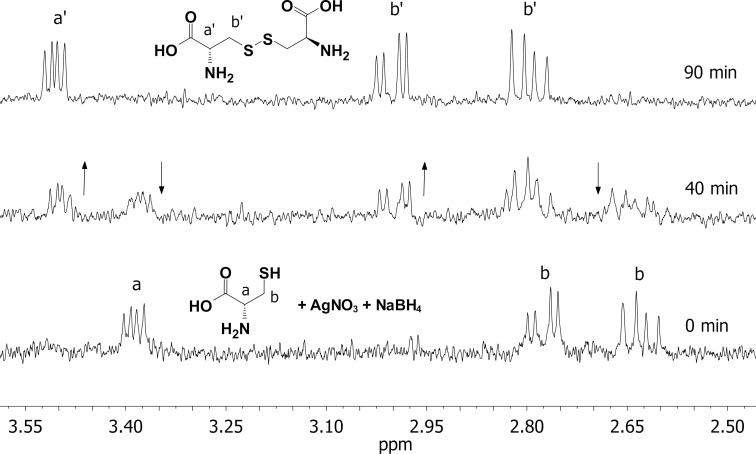
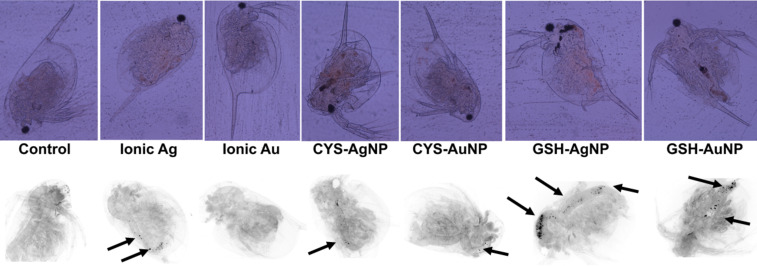
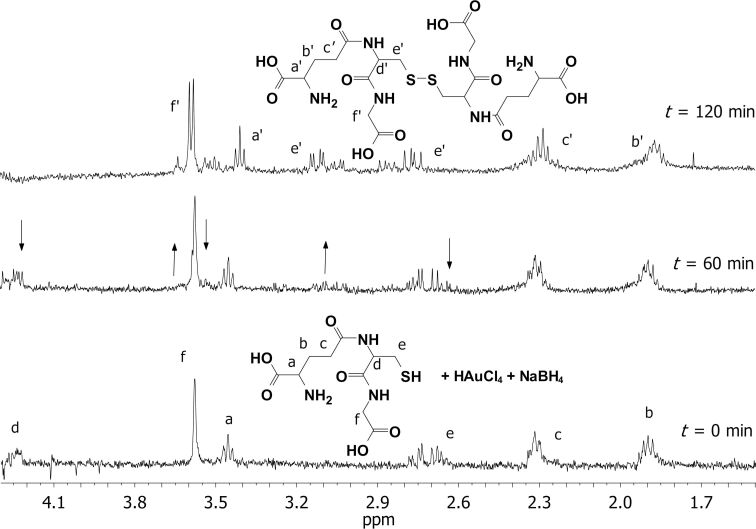
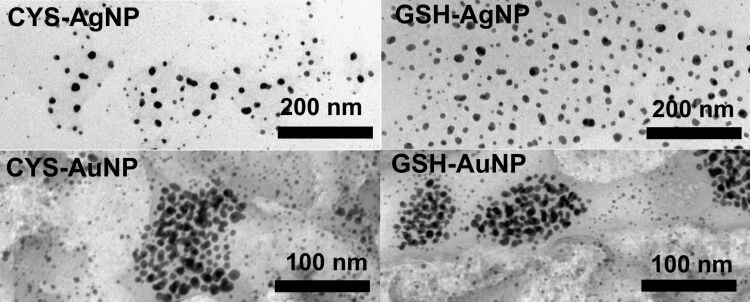
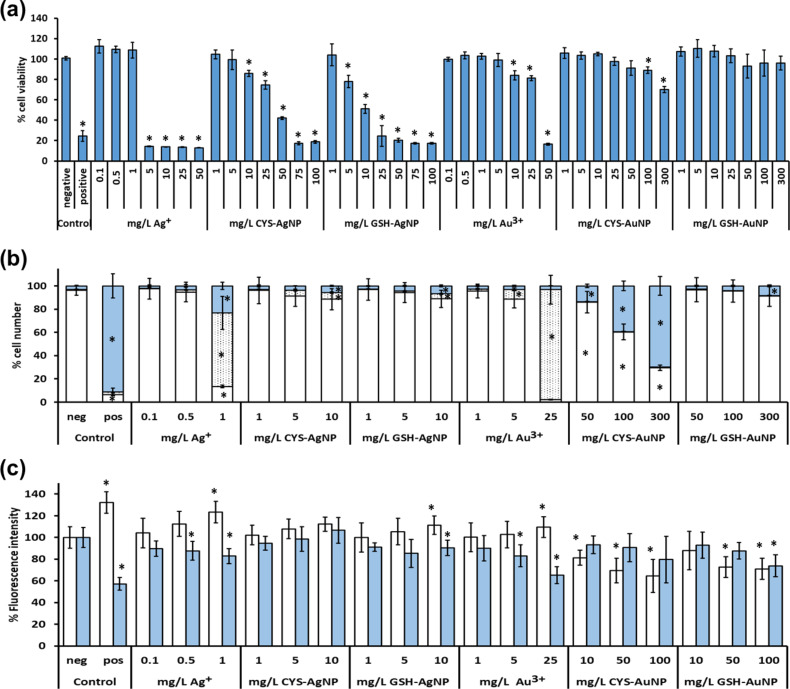
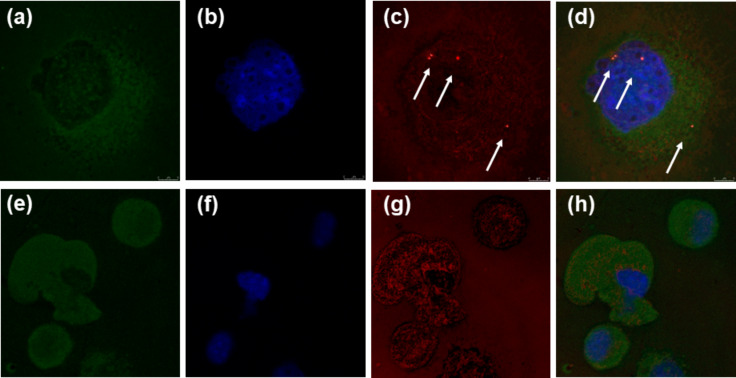
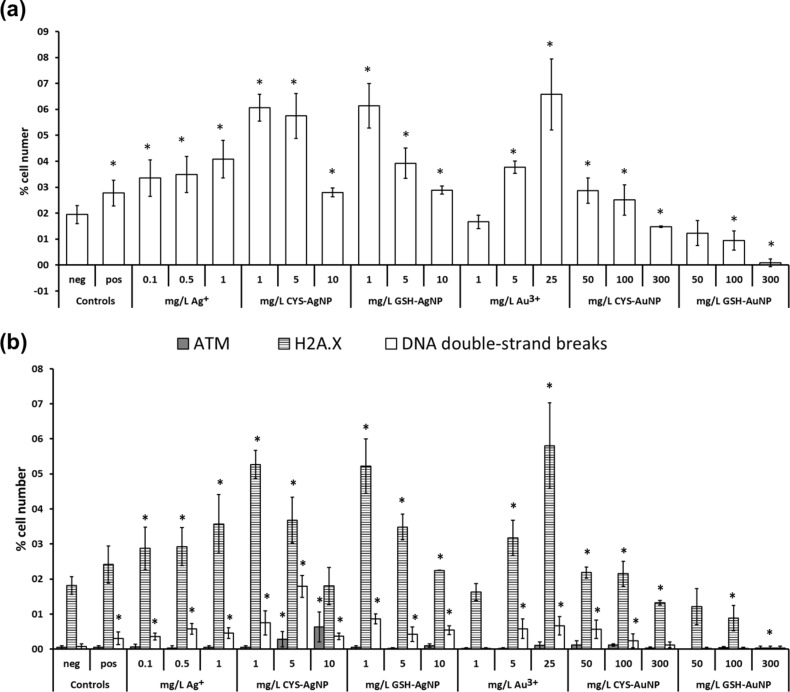
This study was designed to evaluate the nano-bio interactions between endogenous biothiols (cysteine and glutathione) with biomedically relevant, metallic nanoparticles (silver nanoparticles (AgNPs) and gold nanoparticles (AuNPs)), in order to assess the biocompatibility and fate of nanoparticles in biological systems. A systematic and comprehensive analysis revealed that the preparation of AgNPs and AuNPs in the presence of biothiols leads to nanoparticles stabilized with oxidized forms of biothiols. Their safety was tested by evaluation of cell viability, reactive oxygen species (ROS) production, apoptosis induction and DNA damage in murine fibroblast cells (L929), while ecotoxicity was tested using the aquatic model organism . The toxicity of these nanoparticles was considerably lower compared to their ionic metal forms (i.e., Ag and Au). The comparison with data published on polymer-coated nanoparticles evidenced that surface modification with biothiols made them safer for the biological environment. In vitro evaluation on human cells demonstrated that the toxicity of AgNPs and AuNPs prepared in the presence of cysteine was similar to the polymer-based nanoparticles with the same core material, while the use of glutathione for nanoparticle stabilization was considerably less toxic. These results represent a significant contribution to understanding the role of biothiols on the fate and behavior of metal-based nanomaterials.
本研究旨在评估内源性生物硫醇(半胱氨酸和谷胱甘肽)与具有生物医学相关性的金属纳米颗粒(银纳米颗粒(AgNPs)和金纳米颗粒(AuNPs))之间的纳米-生物相互作用,以评估纳米颗粒在生物系统中的生物相容性和归宿。系统而全面的分析表明,在生物硫醇存在下制备AgNPs和AuNPs会导致纳米颗粒被生物硫醇的氧化形式稳定化。通过评估小鼠成纤维细胞(L929)的细胞活力、活性氧(ROS)产生、凋亡诱导和DNA损伤来测试它们的安全性,同时使用水生模式生物测试生态毒性。与它们的离子金属形式(即Ag和Au)相比,这些纳米颗粒的毒性要低得多。与已发表的关于聚合物包覆纳米颗粒的数据比较表明,用生物硫醇进行表面改性使它们在生物环境中更安全。对人类细胞的体外评估表明,在半胱氨酸存在下制备的AgNPs和AuNPs的毒性与具有相同核心材料的聚合物基纳米颗粒相似,而使用谷胱甘肽来稳定纳米颗粒的毒性要小得多。这些结果对理解生物硫醇在金属基纳米材料的归宿和行为中的作用做出了重大贡献。