Public Health England, 61 Colindale Avenue, Colindale, NW9 5EQ, United Kingdom.
Public Health England, 61 Colindale Avenue, Colindale, NW9 5EQ, United Kingdom.
Int J Infect Dis. 2019 Dec;89:146-153. doi: 10.1016/j.ijid.2019.10.011. Epub 2019 Oct 16.
Epidemic intelligence (EI) for emerging infections is the process of identifying key information on emerging infectious diseases and specific incidents. Automated web-based infectious disease surveillance technologies are available; however, human input is still needed to review, validate, and interpret these sources. In this study, entries captured by Public Health England's (PHE) manual event-based EI system were examined to inform future intelligence gathering activities.
A descriptive analysis of unique events captured in a database between 2013 and 2017 was conducted. The top five diseases in terms of the number of entries were described in depth to determine the effectiveness of PHE's EI surveillance system compared to other sources.
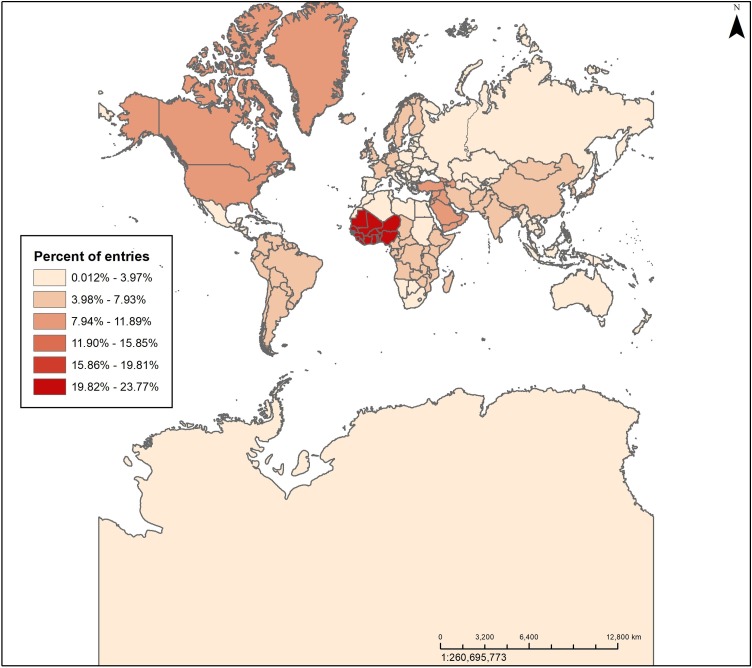
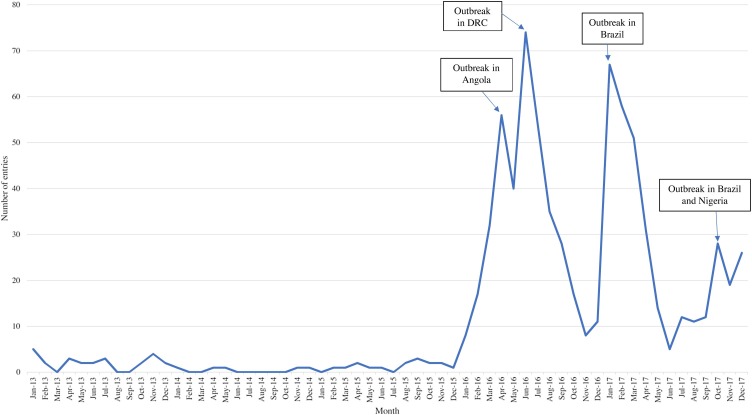
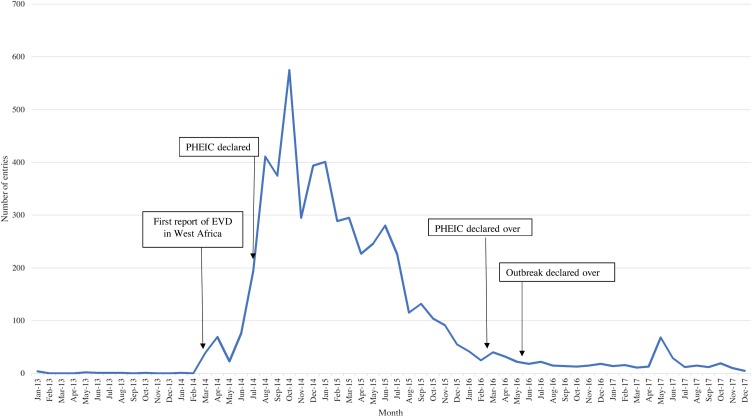
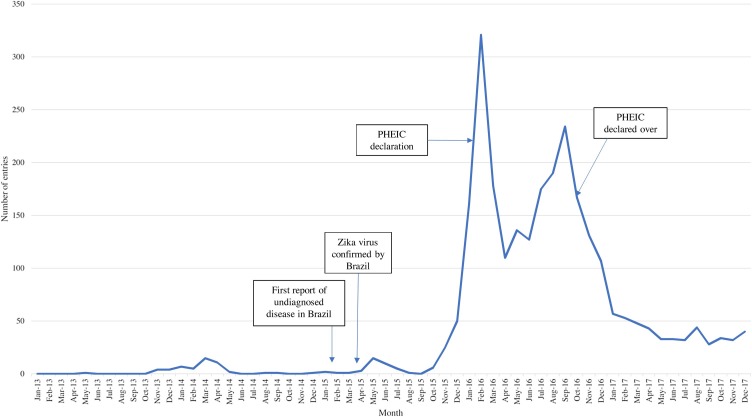
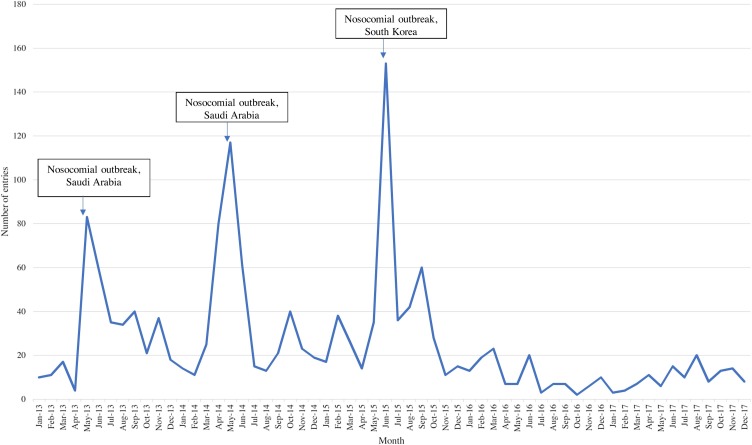
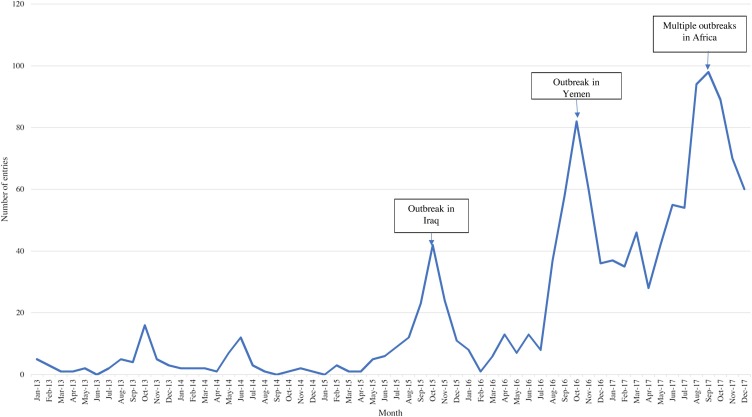
Between 2013 and 2017, a total of 22 847 unique entries were added to the database. The top three initial and definitive information sources varied considerably by disease. Ebola entries dominated the database, making up 23.7% of the total, followed by Zika (11.8%), Middle East respiratory syndrome (6.7%), cholera (5.5%), and yellow fever and undiagnosed morbidity (both 3.3%). Initial reports of major outbreaks due to the top five disease agents were picked up through the manual system prior to being publicly reported by official sources.
PHE's manual EI process quickly and accurately detected global public health threats at the earliest stages and allowed for monitoring of events as they evolved.
针对新发传染病的传染病监测是识别新发传染病和特定事件关键信息的过程。虽然已有自动化基于网络的传染病监测技术,但仍需要人工来审查、验证和解释这些来源。本研究通过检查英国公共卫生部(PHE)基于手动事件的传染病监测系统捕获的条目,为未来的情报收集活动提供信息。
对 2013 年至 2017 年间数据库中捕获的独特事件进行描述性分析。深入描述了按条目数量排名前五的疾病,以确定 PHE 的传染病监测系统与其他来源相比的有效性。
2013 年至 2017 年间,数据库中总共添加了 22847 个独特条目。初始和最终信息来源的前三名因疾病而异。埃博拉条目占据了数据库的主导地位,占总数的 23.7%,其次是寨卡病毒(11.8%)、中东呼吸综合征(6.7%)、霍乱(5.5%)、黄热病和未确诊的发病率(均为 3.3%)。前五大疾病病原体引起的重大疫情的初始报告通过手动系统在官方来源公开报告之前被迅速捕获。
PHE 的手动传染病监测过程能够在早期迅速准确地发现全球公共卫生威胁,并能监测事件的演变。