University of Kent, School of Biosciences, Kent Fungal Group, Canterbury Kent CT2 7NJ, UK.
Genes (Basel). 2019 Oct 28;10(11):855. doi: 10.3390/genes10110855.
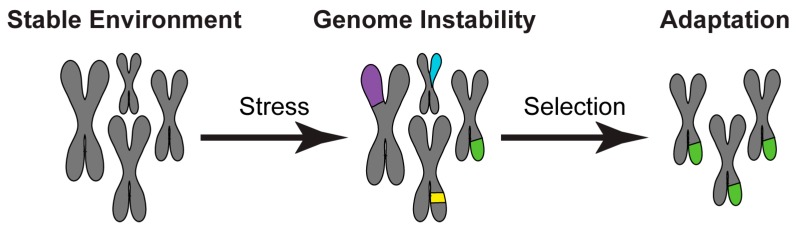
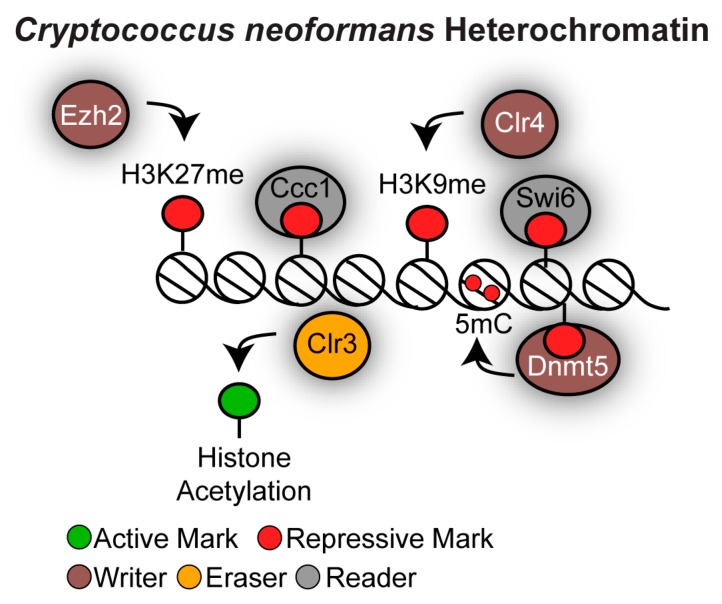
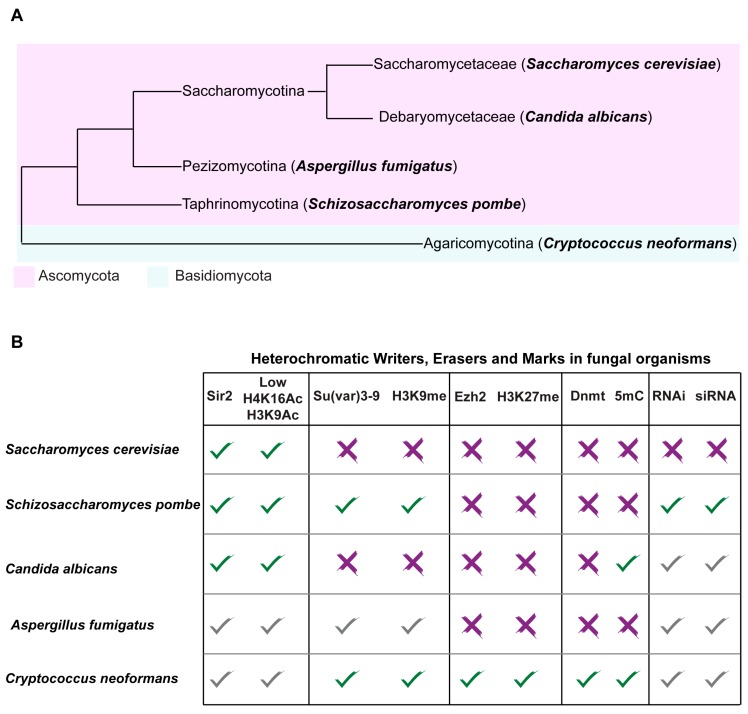
Human fungal pathogens, such as , and , are a public health problem, causing millions of infections and killing almost half a million people annually. The ability of these pathogens to colonise almost every organ in the human body and cause life-threating infections relies on their capacity to adapt and thrive in diverse hostile host-niche environments. Stress-induced genome instability is a key adaptive strategy used by human fungal pathogens as it increases genetic diversity, thereby allowing selection of genotype(s) better adapted to a new environment. Heterochromatin represses gene expression and deleterious recombination and could play a key role in modulating genome stability in response to environmental changes. However, very little is known about heterochromatin structure and function in human fungal pathogens. In this review, I use our knowledge of heterochromatin structure and function in fungal model systems as a road map to review the role of heterochromatin in regulating genome plasticity in the most common human fungal pathogens: , and
人类真菌病原体,如 、 和 ,是一个公共卫生问题,每年导致数百万人感染,近 50 万人死亡。这些病原体能够在人体的几乎每个器官中定植并引起危及生命的感染,这依赖于它们在各种敌对的宿主小生境中适应和茁壮成长的能力。应激诱导的基因组不稳定性是人类真菌病原体使用的一种关键适应策略,因为它增加了遗传多样性,从而允许选择更适应新环境的基因型。异染色质抑制基因表达和有害重组,可能在调节基因组稳定性以响应环境变化方面发挥关键作用。然而,我们对人类真菌病原体中的异染色质结构和功能知之甚少。在这篇综述中,我使用我们在真菌模型系统中对异染色质结构和功能的了解作为路线图,来回顾异染色质在调节最常见的人类真菌病原体: 、 和 中基因组可塑性的作用。