• 文献检索
  • 文档翻译
  • 深度研究
  • 学术资讯
  • Suppr Zotero 插件Zotero 插件
  • 邀请有礼
  • 套餐&价格
  • 历史记录
应用&插件
Suppr Zotero 插件Zotero 插件浏览器插件Mac 客户端Windows 客户端微信小程序
定价
高级版会员购买积分包购买API积分包
服务
文献检索文档翻译深度研究API 文档MCP 服务
关于我们
关于 Suppr公司介绍联系我们用户协议隐私条款
关注我们

Suppr 超能文献

核心技术专利:CN118964589B侵权必究
粤ICP备2023148730 号-1Suppr @ 2026

文献检索

告别复杂PubMed语法,用中文像聊天一样搜索,搜遍4000万医学文献。AI智能推荐,让科研检索更轻松。

立即免费搜索

文件翻译

保留排版,准确专业,支持PDF/Word/PPT等文件格式,支持 12+语言互译。

免费翻译文档

深度研究

AI帮你快速写综述,25分钟生成高质量综述,智能提取关键信息,辅助科研写作。

立即免费体验

抗原受体 CDR 环的比较分析。

Comparative Analysis of the CDR Loops of Antigen Receptors.

机构信息

Department of Statistics, University of Oxford, Oxford, United Kingdom.

出版信息

Front Immunol. 2019 Oct 15;10:2454. doi: 10.3389/fimmu.2019.02454. eCollection 2019.

DOI:10.3389/fimmu.2019.02454
PMID:31681328
原文链接:https://pmc.ncbi.nlm.nih.gov/articles/PMC6803477/
Abstract

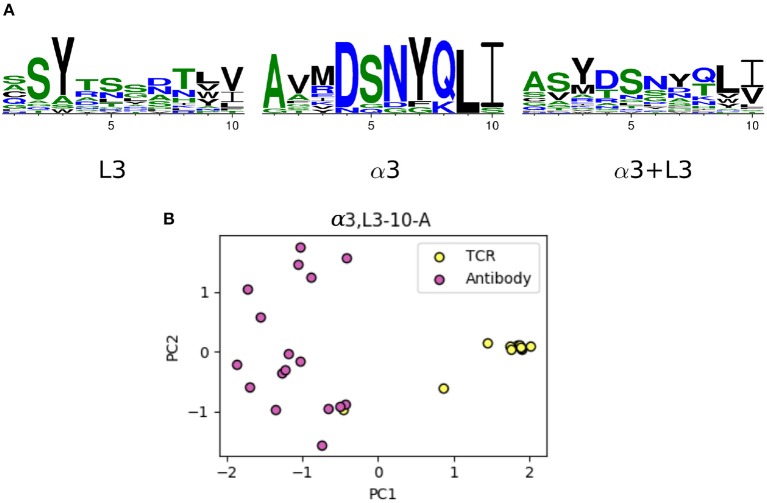
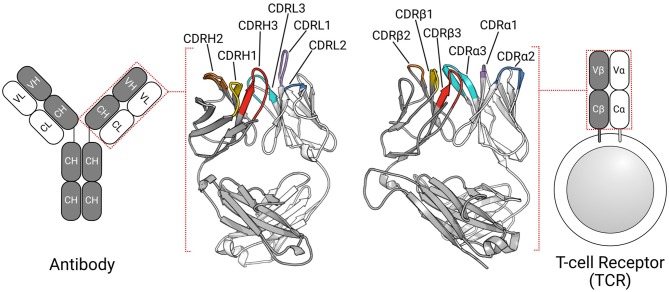
The adaptive immune system uses two main types of antigen receptors: T-cell receptors (TCRs) and antibodies. While both proteins share a globally similar β-sandwich architecture, TCRs are specialized to recognize peptide antigens in the binding groove of the major histocompatibility complex, while antibodies can bind an almost infinite range of molecules. For both proteins, the main determinants of target recognition are the complementarity-determining region (CDR) loops. Five of the six CDRs adopt a limited number of backbone conformations, known as the "canonical classes"; the remaining CDR (β3in TCRs and H3 in antibodies) is more structurally diverse. In this paper, we first update the definition of canonical forms in TCRs, build an auto-updating sequence-based prediction tool (available at http://opig.stats.ox.ac.uk/resources) and demonstrate its application on large scale sequencing studies. Given the global similarity of TCRs and antibodies, we then examine the structural similarity of their CDRs. We find that TCR and antibody CDRs tend to have different length distributions, and where they have similar lengths, they mostly occupy distinct structural spaces. In the rare cases where we found structural similarity, the underlying sequence patterns for the TCR and antibody version are different. Finally, where multiple structures have been solved for the same CDR sequence, the structural variability in TCR loops is higher than that in antibodies, suggesting TCR CDRs are more flexible. These structural differences between TCR and antibody CDRs may be important to their different biological functions.

摘要

适应性免疫系统使用两种主要类型的抗原受体

T 细胞受体 (TCR) 和抗体。虽然这两种蛋白质都具有全球相似的β-三明治结构,但 TCR 专门识别主要组织相容性复合体结合槽中的肽抗原,而抗体可以结合几乎无限范围的分子。对于这两种蛋白质,靶标识别的主要决定因素是互补决定区 (CDR) 环。六个 CDR 中的五个采用有限数量的骨架构象,称为“典型类别”;剩下的 CDR(TCR 中的β3 和抗体中的 H3)在结构上更加多样化。在本文中,我们首先更新 TCR 中典型形式的定义,构建一个自动更新的基于序列的预测工具(可在 http://opig.stats.ox.ac.uk/resources 获得),并展示其在大规模测序研究中的应用。鉴于 TCR 和抗体的全球相似性,我们随后检查了它们的 CDR 的结构相似性。我们发现 TCR 和抗体的 CDR 倾向于具有不同的长度分布,并且在它们具有相似长度的情况下,它们主要占据不同的结构空间。在我们发现结构相似性的极少数情况下,TCR 和抗体版本的潜在序列模式是不同的。最后,对于同一 CDR 序列已经解决了多个结构,TCR 环的结构可变性高于抗体,这表明 TCR CDR 更具灵活性。TCR 和抗体 CDR 之间的这些结构差异可能对它们的不同生物学功能很重要。
https://cdn.ncbi.nlm.nih.gov/pmc/blobs/d279/6803477/a15485fb0bf0/fimmu-10-02454-g0006.jpg
https://cdn.ncbi.nlm.nih.gov/pmc/blobs/d279/6803477/f6c134ddcec5/fimmu-10-02454-g0001.jpg
https://cdn.ncbi.nlm.nih.gov/pmc/blobs/d279/6803477/1d105978077e/fimmu-10-02454-g0002.jpg
https://cdn.ncbi.nlm.nih.gov/pmc/blobs/d279/6803477/08604ead4a2b/fimmu-10-02454-g0003.jpg
https://cdn.ncbi.nlm.nih.gov/pmc/blobs/d279/6803477/784ba164e3dc/fimmu-10-02454-g0004.jpg
https://cdn.ncbi.nlm.nih.gov/pmc/blobs/d279/6803477/257ea1af4fd3/fimmu-10-02454-g0005.jpg
https://cdn.ncbi.nlm.nih.gov/pmc/blobs/d279/6803477/a15485fb0bf0/fimmu-10-02454-g0006.jpg
https://cdn.ncbi.nlm.nih.gov/pmc/blobs/d279/6803477/f6c134ddcec5/fimmu-10-02454-g0001.jpg
https://cdn.ncbi.nlm.nih.gov/pmc/blobs/d279/6803477/1d105978077e/fimmu-10-02454-g0002.jpg
https://cdn.ncbi.nlm.nih.gov/pmc/blobs/d279/6803477/08604ead4a2b/fimmu-10-02454-g0003.jpg
https://cdn.ncbi.nlm.nih.gov/pmc/blobs/d279/6803477/784ba164e3dc/fimmu-10-02454-g0004.jpg
https://cdn.ncbi.nlm.nih.gov/pmc/blobs/d279/6803477/257ea1af4fd3/fimmu-10-02454-g0005.jpg
https://cdn.ncbi.nlm.nih.gov/pmc/blobs/d279/6803477/a15485fb0bf0/fimmu-10-02454-g0006.jpg

相似文献

1
Comparative Analysis of the CDR Loops of Antigen Receptors.抗原受体 CDR 环的比较分析。
Front Immunol. 2019 Oct 15;10:2454. doi: 10.3389/fimmu.2019.02454. eCollection 2019.
2
The diversity of H3 loops determines the antigen-binding tendencies of antibody CDR loops.H3环的多样性决定了抗体互补决定区环的抗原结合倾向。
Protein Sci. 2016 Apr;25(4):815-25. doi: 10.1002/pro.2874. Epub 2016 Jan 20.
3
Predicting antibody complementarity determining region structures without classification.无需分类预测抗体互补决定区结构。
Mol Biosyst. 2011 Dec;7(12):3327-34. doi: 10.1039/c1mb05223c. Epub 2011 Oct 20.
4
STCRDab: the structural T-cell receptor database.STCRDab:结构性 T 细胞受体数据库。
Nucleic Acids Res. 2018 Jan 4;46(D1):D406-D412. doi: 10.1093/nar/gkx971.
5
T-Cell Receptor Cognate Target Prediction Based on Paired α and β Chain Sequence and Structural CDR Loop Similarities.基于α和β链序列以及结构 CDR 环相似性的 T 细胞受体同源性靶标预测。
Front Immunol. 2019 Aug 28;10:2080. doi: 10.3389/fimmu.2019.02080. eCollection 2019.
6
Do antibody CDR loops change conformation upon binding?抗体 CDR 环在结合时是否改变构象?
MAbs. 2024 Jan-Dec;16(1):2322533. doi: 10.1080/19420862.2024.2322533. Epub 2024 Mar 13.
7
CDR-H3 diversity is not required for antigen recognition by synthetic antibodies.CDR-H3 多样性不是合成抗体识别抗原所必需的。
J Mol Biol. 2013 Feb 22;425(4):803-11. doi: 10.1016/j.jmb.2012.11.037. Epub 2012 Dec 3.
8
Systematic classification of CDR-L3 in antibodies: implications of the light chain subtypes and the VL-VH interface.抗体中互补决定区-3(CDR-L3)的系统分类:轻链亚型及VL-VH界面的影响
Proteins. 2009 Apr;75(1):139-46. doi: 10.1002/prot.22230.
9
Transitions of CDR-L3 Loop Canonical Cluster Conformations on the Micro-to-Millisecond Timescale.CDR-L3 环构象规则簇在微秒到毫秒时间尺度上的转变。
Front Immunol. 2019 Nov 19;10:2652. doi: 10.3389/fimmu.2019.02652. eCollection 2019.
10
RosettaAntibodyDesign (RAbD): A general framework for computational antibody design.罗塞塔抗体设计(RAbD):一种通用的计算抗体设计框架。
PLoS Comput Biol. 2018 Apr 27;14(4):e1006112. doi: 10.1371/journal.pcbi.1006112. eCollection 2018 Apr.

引用本文的文献

1
T-cell receptor insights: Determinants of Major Histocompatibility Complex class I versus class II recognition.T细胞受体见解:主要组织相容性复合体I类与II类识别的决定因素
Protein Sci. 2025 Sep;34(9):e70262. doi: 10.1002/pro.70262.
2
Applying computational protein design to therapeutic antibody discovery - current state and perspectives.将计算蛋白质设计应用于治疗性抗体发现——现状与展望。
Front Immunol. 2025 May 22;16:1571371. doi: 10.3389/fimmu.2025.1571371. eCollection 2025.
3
Antibody numbering schemes: advances, comparisons and tools for antibody engineering.

本文引用的文献

1
T-cell receptor mimic (TCRm) antibody therapeutics against intracellular proteins.针对细胞内蛋白的T细胞受体模拟(TCRm)抗体疗法。
Antib Ther. 2019 Jan 21;2(1):22-32. doi: 10.1093/abt/tbz001. eCollection 2019 Jan.
2
Structural Modeling of Lymphocyte Receptors and Their Antigens.淋巴细胞受体及其抗原的结构建模
Methods Mol Biol. 2019;2048:207-229. doi: 10.1007/978-1-4939-9728-2_17.
3
The Hypervariable Loops of Free TCRs Sample Multiple Distinct Metastable Conformations in Solution.游离TCR的高变环在溶液中采样多种不同的亚稳态构象。
抗体编号方案:抗体工程的进展、比较及工具
Protein Eng Des Sel. 2025 Jan 10;38. doi: 10.1093/protein/gzaf005.
4
T-cell receptor structures and predictive models reveal comparable alpha and beta chain structural diversity despite differing genetic complexity.T细胞受体结构和预测模型显示,尽管基因复杂性不同,但α链和β链的结构多样性具有可比性。
Commun Biol. 2025 Mar 4;8(1):362. doi: 10.1038/s42003-025-07708-6.
5
Unlocking the potential of approach in designing antibodies against SARS-CoV-2.挖掘该方法在设计抗SARS-CoV-2抗体方面的潜力。
Front Bioinform. 2025 Feb 13;5:1533983. doi: 10.3389/fbinf.2025.1533983. eCollection 2025.
6
T-cell Receptor Repertoire Analysis in the Context of Transarterial Chemoembolization Synergy with Systemic Therapy for Hepatocellular Carcinoma.经动脉化疗栓塞联合全身治疗对肝细胞癌的协同作用背景下的T细胞受体谱分析
J Clin Transl Hepatol. 2025 Jan 28;13(1):69-83. doi: 10.14218/JCTH.2024.00238. Epub 2024 Nov 12.
7
Quantifying conformational changes in the TCR:pMHC-I binding interface.量化TCR:pMHC-I结合界面中的构象变化。
Front Immunol. 2024 Dec 2;15:1491656. doi: 10.3389/fimmu.2024.1491656. eCollection 2024.
8
Distinct T-cell receptor (TCR) gene segment usage and MHC-restriction between foetal and adult thymus.胎儿胸腺与成人胸腺之间不同的T细胞受体(TCR)基因片段使用情况及MHC限制。
Elife. 2024 Dec 5;13:RP93493. doi: 10.7554/eLife.93493.
9
A platform of ADAPTive scaffolds: development of CDR-H3 β-hairpin mimics into covalent inhibitors of the PD1/PDL1 immune checkpoint.适应性支架平台:将互补决定区-重链3β-发夹模拟物开发为程序性死亡蛋白1/程序性死亡配体1免疫检查点的共价抑制剂
RSC Chem Biol. 2024 Nov 4;5(12):1259-70. doi: 10.1039/d4cb00174e.
10
ABodyBuilder3: improved and scalable antibody structure predictions.ABodyBuilder3:改进和可扩展的抗体结构预测。
Bioinformatics. 2024 Oct 1;40(10). doi: 10.1093/bioinformatics/btae576.
Front Mol Biosci. 2018 Nov 13;5:95. doi: 10.3389/fmolb.2018.00095. eCollection 2018.
4
A novel antibody-TCR (AbTCR) platform combines Fab-based antigen recognition with gamma/delta-TCR signaling to facilitate T-cell cytotoxicity with low cytokine release.一种新型抗体-TCR(AbTCR)平台将基于Fab的抗原识别与γ/δ-TCR信号传导相结合,以促进T细胞细胞毒性,同时减少细胞因子释放。
Cell Discov. 2018 Nov 20;4:62. doi: 10.1038/s41421-018-0066-6. eCollection 2018.
5
SCALOP: sequence-based antibody canonical loop structure annotation.SCALOP:基于序列的抗体规范环结构注释。
Bioinformatics. 2019 May 15;35(10):1774-1776. doi: 10.1093/bioinformatics/bty877.
6
TCRmodel: high resolution modeling of T cell receptors from sequence.TCRmodel:基于序列的 T 细胞受体的高分辨率建模。
Nucleic Acids Res. 2018 Jul 2;46(W1):W396-W401. doi: 10.1093/nar/gky432.
7
and Structural Analyses Demonstrate That Intrinsic Protein Motions Guide T Cell Receptor Complementarity Determining Region Loop Flexibility.并且结构分析表明,固有蛋白质运动指导 T 细胞受体互补决定区环的柔韧性。
Front Immunol. 2018 Apr 11;9:674. doi: 10.3389/fimmu.2018.00674. eCollection 2018.
8
Insights into the Structural Basis of Antibody Affinity Maturation from Next-Generation Sequencing.从下一代测序中洞察抗体亲和力成熟的结构基础。
Front Immunol. 2018 Feb 1;9:117. doi: 10.3389/fimmu.2018.00117. eCollection 2018.
9
How B-Cell Receptor Repertoire Sequencing Can Be Enriched with Structural Antibody Data.如何利用结构抗体数据丰富B细胞受体组库测序。
Front Immunol. 2017 Dec 8;8:1753. doi: 10.3389/fimmu.2017.01753. eCollection 2017.
10
Predicting loop conformational ensembles.预测环构象集合。
Bioinformatics. 2018 Mar 15;34(6):949-956. doi: 10.1093/bioinformatics/btx718.