Department of Plastic & Reconstructive Surgery, Johns Hopkins University School of Medicine, 600 N. Wolfe Street, Baltimore, Maryland, 21287, USA.
Translational Tissue Engineering Center, Department of Biomedical Engineering, Johns Hopkins University Whiting School of Engineering, Baltimore, Maryland, USA.
Sci Rep. 2019 Nov 8;9(1):16368. doi: 10.1038/s41598-019-51794-6.
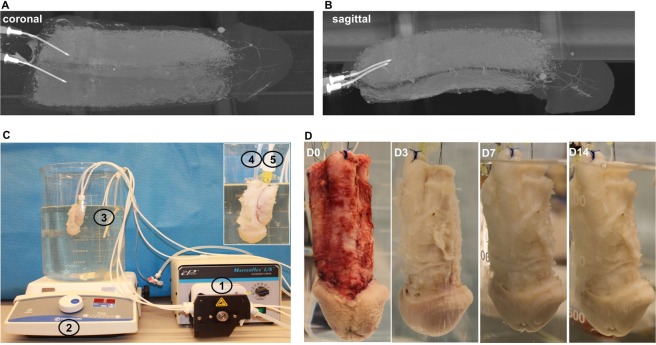
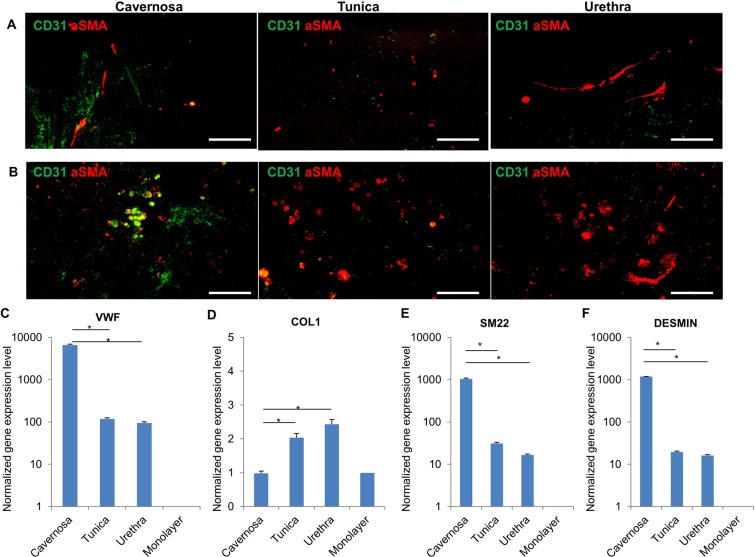
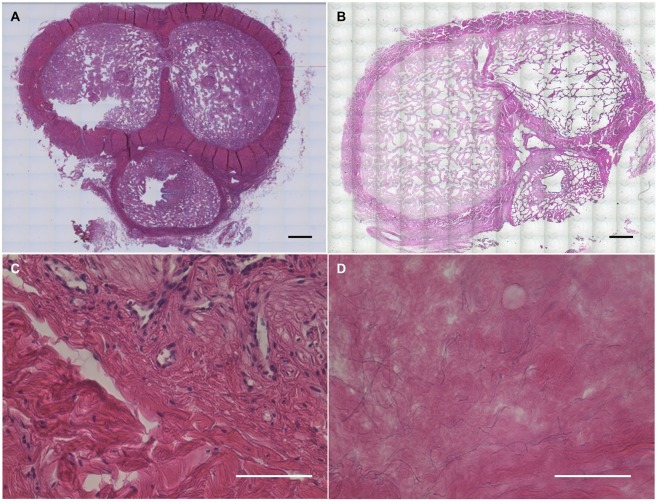
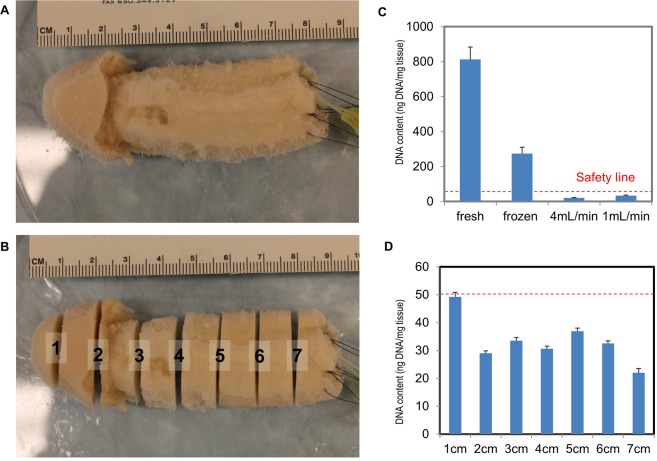
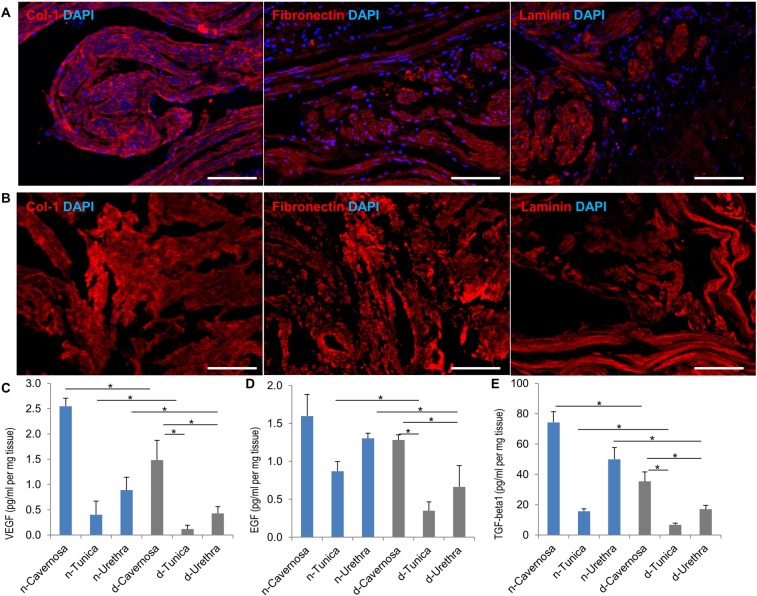
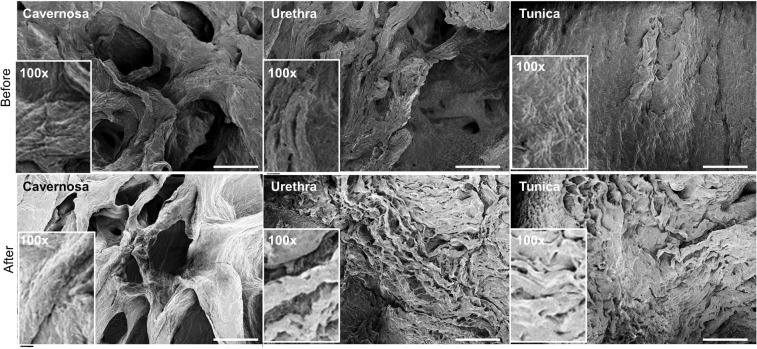
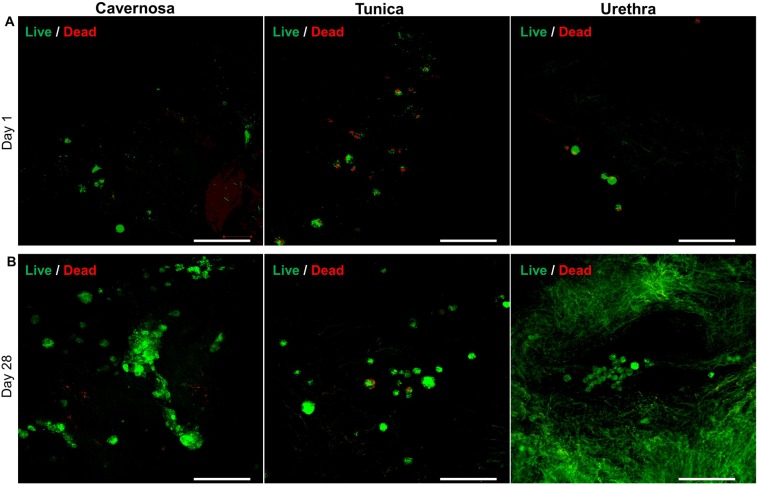
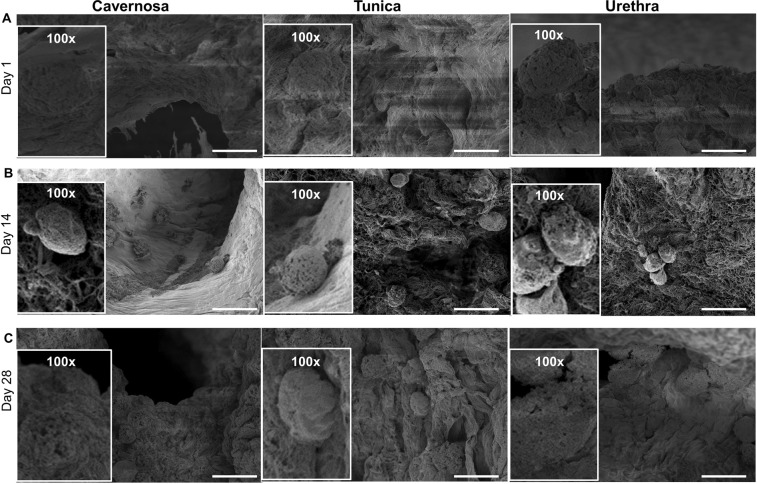
Reconstruction for total penile defects presents unique challenges due to its anatomical and functional complexity. Standard methods suffer from high complication rates and poor functional outcomes. In this work we have developed the first protocol for decellularizing whole-organ human penile specimens for total penile tissue engineering. The use of a hybrid decellularization scheme combining micro-arterial perfusion, urethral catheter perfusion and external diffusion enabled the creation of a full-size scaffold with removal of immunogenic components. Decellularization was complete as assessed by H&E and immunohistochemistry, while quantification of residual DNA showed acceptably low levels (<50 ng/mg). An intact ECM was maintained with histologic architecture preservation on H&E and SEM as well as preservation of key proteins such as collagen-1, laminin and fibronectin and retention of growth factors VEGF (45%), EGF (57%) and TGF-beta1 (42%) on ELISA. Post-decellularization patency of the cavernosal arteries for future use in reseeding was demonstrated. Scaffold biocompatibility was evaluated using human adipose-derived stromal vascular cells. Live/Dead stains showed the scaffold successfully supported cell survival and expansion. Influence on cellular behavior was seen with significantly higher expression of VWF, COL1, SM22 and Desmin as compared to cell monolayer. Preliminary evidence for regional tropism was also seen, with formation of microtubules and increased endothelial marker expression in the cavernosa. This report of successful decellularization of the complete human phallus is an initial step towards developing a tissue engineered human penile scaffold with potential for more successfully restoring cosmetic, urinary and sexual function after complete penile loss.
由于其解剖和功能的复杂性,全阴茎缺陷的重建带来了独特的挑战。标准方法存在高并发症发生率和较差的功能结果。在这项工作中,我们开发了第一个脱细胞化整个器官的人类阴茎标本的方案,用于全阴茎组织工程。使用结合微动脉灌注、尿道导管灌注和外部扩散的混合脱细胞方案,能够创建具有去除免疫原性成分的全尺寸支架。通过 H&E 和免疫组织化学评估,脱细胞完全,而残留 DNA 的定量显示可接受的低水平(<50 ng/mg)。保留了完整的细胞外基质,H&E 和 SEM 显示组织学结构保存良好,以及关键蛋白质如胶原蛋白-1、层粘连蛋白和纤维连接蛋白的保存,并通过 ELISA 保留了生长因子 VEGF(45%)、EGF(57%)和 TGF-beta1(42%)。为了将来用于再种植,证明了海绵体动脉在脱细胞后的通畅性。使用人脂肪来源的基质血管细胞评估支架的生物相容性。活/死染色表明支架成功地支持细胞存活和扩张。与细胞单层相比,VWF、COL1、SM22 和 Desmin 的表达明显更高,这表明细胞行为受到影响。还观察到局部趋化性的初步证据,在海绵体内形成微管和增加内皮标记物的表达。本报告成功脱细胞化完整的人类阴茎是朝着开发具有潜在能力的组织工程化人类阴茎支架迈出的第一步,该支架可更成功地恢复完全丧失阴茎后的美容、尿和性功能。