The Hormel Institute, University of Minnesota, 801 16th Ave NE, Austin, MN 55912, United States.
Division of Gastroenterology and Hepatology, Mayo Clinic, 200 First Avenue SW, Rochester, MN 55905, United States.
EBioMedicine. 2019 Nov;49:145-156. doi: 10.1016/j.ebiom.2019.10.038. Epub 2019 Nov 7.
Barrett's esophagus (BE), a complication of gastroesophageal reflux disease (GERD), predisposes patients to esophageal adenocarcinoma (EAC). Reliable biomarkers for early detection and discovery of potential drug targets are urgently needed for improved BE and EAC patient outcomes.
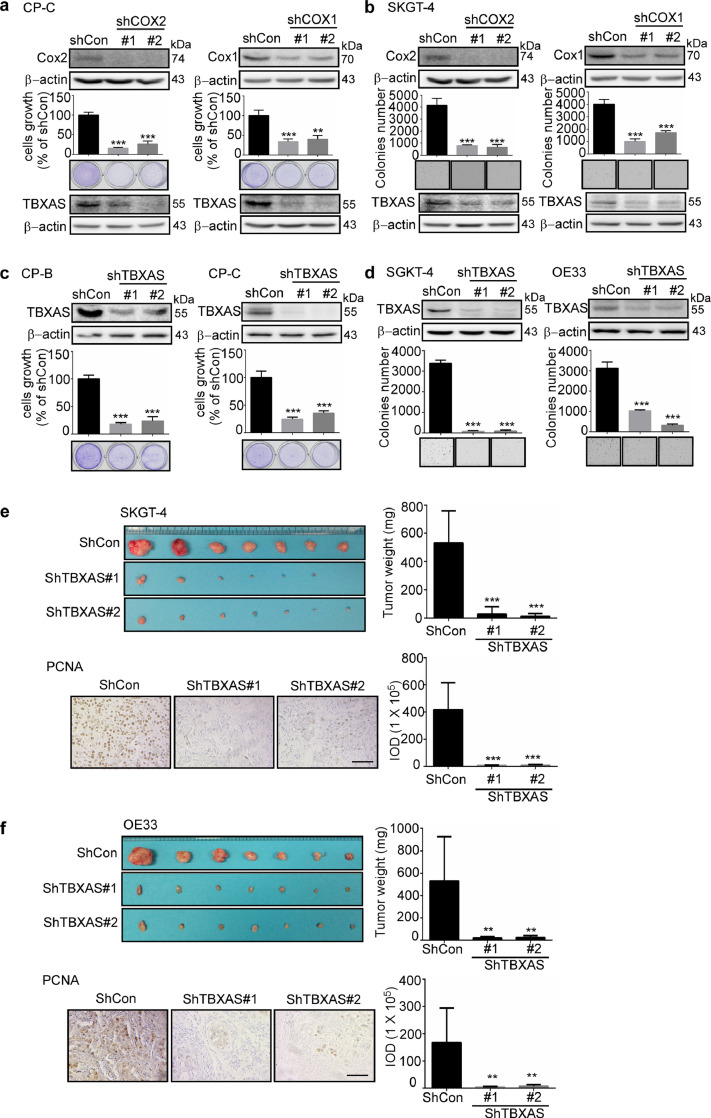
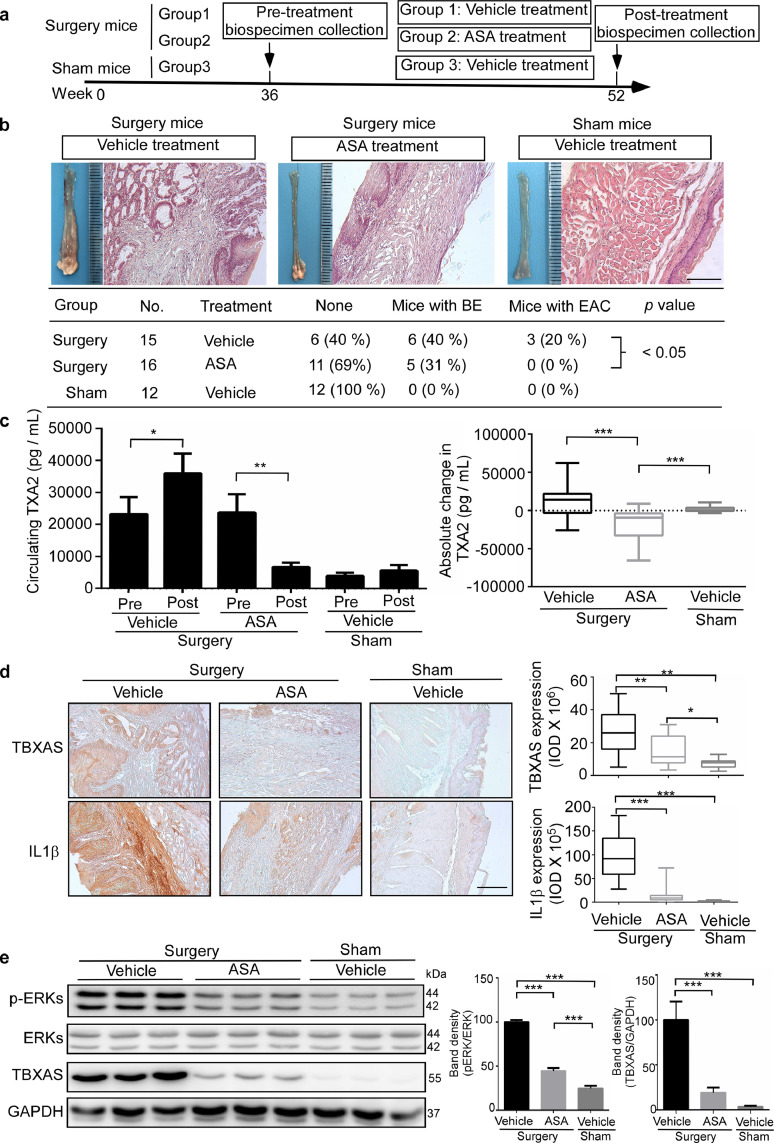
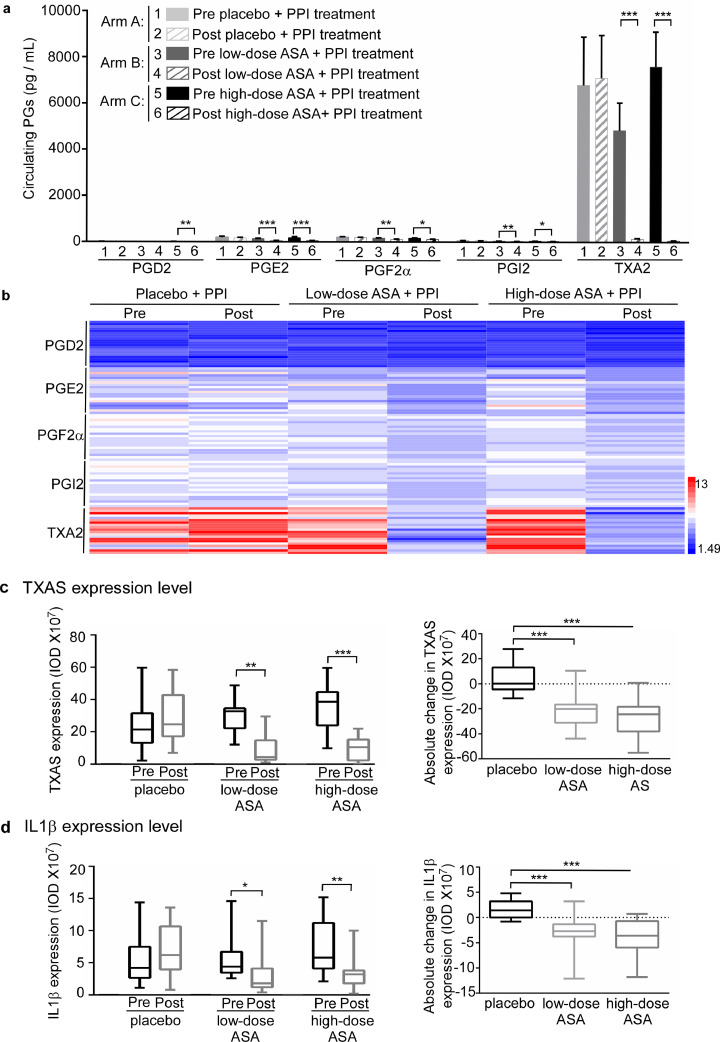
Patient biopsy samples were evaluated for COX1/2, and thromboxane A2 synthase (TBXAS) expression. Circulating prostaglandins biosynthesis was determined using enzyme immunoassay kits. Anchorage-independent cell growth assay, crystal violet staining assay, and xenograft experiments were conducted to assess BE and EAC cell growth. A surgical mouse model of reflux (i.e., esophagoduodenostomy) was established and samples were analyzed using an enzyme immunoassay kit, immunohistochemistry, immunoblotting, or RT-PCR. Esophageal biopsy samples (pre- and post-intervention) were obtained from a randomized clinical trial in which participants were administered esomeprazole (40 mg) twice daily in combination with an acetylsalicylic acid (ASA) placebo or 81 or 325 mg ASA for 28 days. Esophageal biopsy specimens before and after the intervention period were analyzed.
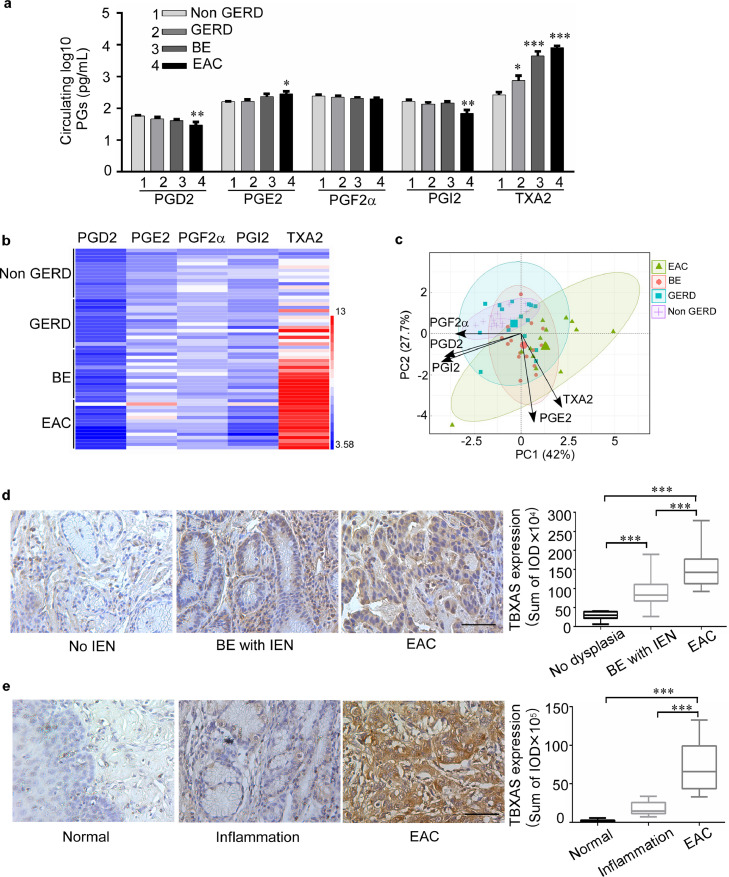
COX2 and TBXAS are highly expressed in BE and EAC patients accompanied by a pronounced elevation of circulating TXA2 levels. ASA suppressed BE and EAC growth by targeting the TXA2 pathway. Additionally, biopsies from 49 patients (with similar baseline characteristics) showed that ASA substantially decreased serum TXA2 levels, resulting in reduced inflammation.
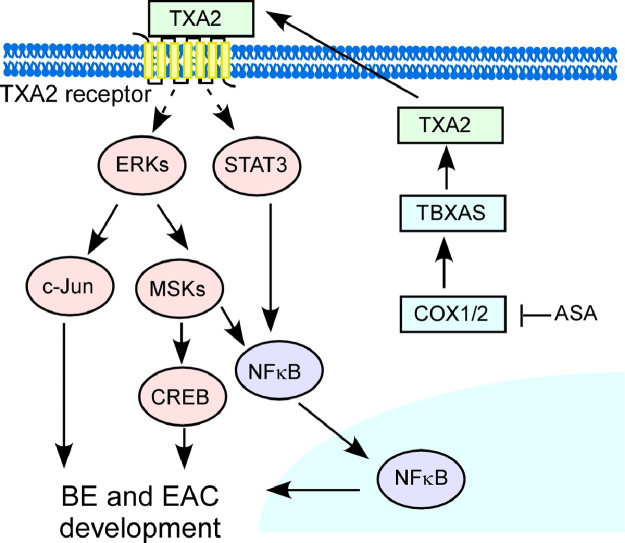
This study establishes the importance of the COX1/2-driven TXA2 pathway in BE and EAC pathophysiology and lays the groundwork for introducing a TXA2-targeting strategy for EAC prevention and early detection.
Hormel Foundation, Exact Sciences, Pentax Medical, Intromedic and National Cancer.
巴雷特食管(BE)是胃食管反流病(GERD)的并发症,使患者易患食管腺癌(EAC)。迫切需要可靠的生物标志物来早期检测和发现潜在的药物靶点,以改善 BE 和 EAC 患者的预后。
评估患者活检样本中 COX1/2 和血栓素 A2 合酶(TBXAS)的表达。使用酶免疫试剂盒测定循环前列腺素生物合成。进行锚定非依赖性细胞生长测定、结晶紫染色测定和异种移植实验,以评估 BE 和 EAC 细胞的生长。建立了反流的手术小鼠模型(即食管十二指肠吻合术),并使用酶免疫试剂盒、免疫组织化学、免疫印迹或 RT-PCR 分析样本。从一项随机临床试验中获得食管活检样本(干预前后),该试验中参与者接受埃索美拉唑(40mg)每天两次联合乙酰水杨酸(ASA)安慰剂或 81 或 325mg ASA 治疗 28 天。分析干预前后的食管活检标本。
COX2 和 TBXAS 在 BE 和 EAC 患者中高度表达,同时循环 TXA2 水平显著升高。ASA 通过靶向 TXA2 途径抑制 BE 和 EAC 的生长。此外,49 名患者(具有相似的基线特征)的活检标本表明,ASA 可显著降低血清 TXA2 水平,从而减少炎症。
本研究确立了 COX1/2 驱动的 TXA2 途径在 BE 和 EAC 病理生理学中的重要性,并为引入靶向 TXA2 的策略预防和早期发现 EAC 奠定了基础。
霍梅尔基金会、Exact Sciences、Pentax Medical、Intromedic 和国家癌症研究所。