López-Colom Paola, Castillejos Lorena, Rodríguez-Sorrento Agustina, Puyalto Mónica, Mallo Juan José, Martín-Orúe Susana María
1Animal Nutrition and Welfare Service, Animal and Food Science Department, Facultat de Veterinària, Universitat Autònoma de Barcelona, Bellaterra, Spain.
Norel S.A, Madrid, Spain.
J Anim Sci Biotechnol. 2019 Nov 9;10:89. doi: 10.1186/s40104-019-0393-y. eCollection 2019.
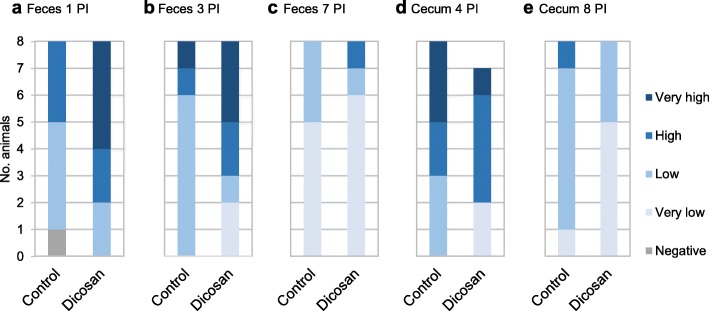
The search for alternatives to antibiotics in pig production has increased the interest in natural resources with antimicrobial properties, such as medium-chain fatty acids (MCFA) as in-feed additives. This study evaluated the potential of a novel blend of MCFA salts (DIC) from distilled coconut oil with a lauric acid content to reduce enteropathogens and control intestinal diseases around weaning. Two experimental disease models were implemented in early-weaned piglets, consisting of two oral challenges: Typhimurium (1.2 × 10 CFU) or enterotoxigenic (ETEC) F4 (1.5 × 10 CFU). The parameters assessed were: animal performance, clinical signs, pathogen excretion, intestinal fermentation, immune-inflammatory response, and intestinal morphology.
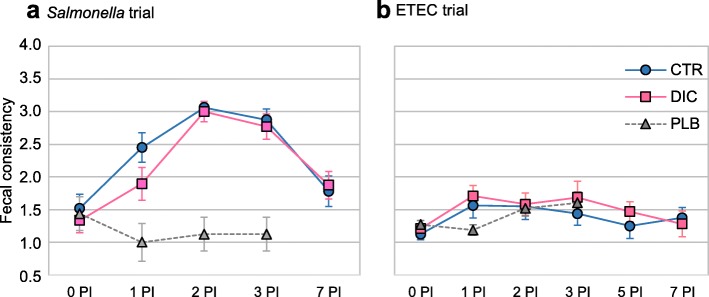
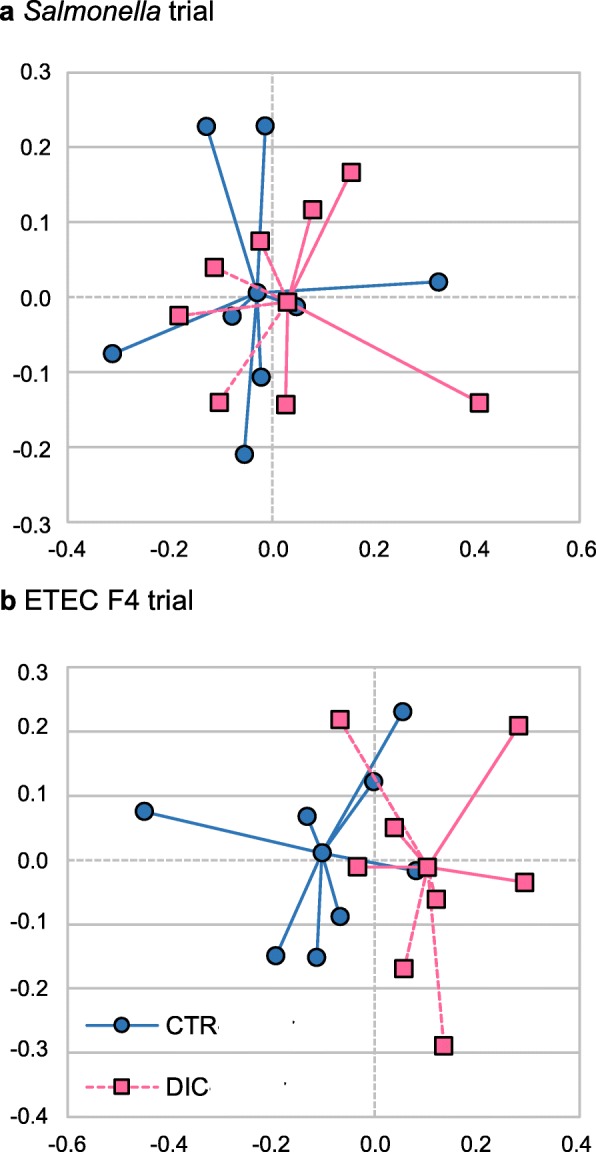
The challenge promoted an acute course of diarrhea, with most of the parameters responding to the challenge, whereas the ETEC F4 challenge promoted a mild clinical course. A consistent antipathogenic effect of DIC was observed in both trials in the hindgut, with reductions in spp. plate counts in the cecum ( = 0.03) on d 8 post-inoculation (PI) ( trial), and of enterobacteria and total coliform counts in the ileum and colon ( < 0.10) on d 8 PI (ETEC F4 trial). When analyzing the entire colonic microbiota (16S rRNA gene sequencing), this additive tended ( = 0.13) to reduce the Firmicutes/Bacteroidetes ratio and enriched Fibrobacteres after the challenge. In the ETEC F4 challenge, DIC prompted structural changes in the ecosystem with increases in , and a trend ( = 0.14) to increase the Veillonellaceae family. Other parameters such as the intestinal fermentation products or serum pro-inflammatory mediators were not modified by DIC supplementation, nor were the histological parameters. Only the intraepithelial lymphocyte (IEL) counts were lowered by DIC in animals challenged with ( = 0.07). With ETEC F4, the IEL counts were higher with DIC on d 8 PI ( = 0.08).
This study confirms the potential activity of this MCFA salts mixture to reduce intestinal colonization by opportunistic pathogens such as or and its ability to modulate colonic microbiota. These changes could explain to some extent the local immune cell response at the ileal level.
在生猪生产中寻找抗生素替代品的需求增加了人们对具有抗菌特性的自然资源的兴趣,例如中链脂肪酸(MCFA)作为饲料添加剂。本研究评估了一种来自蒸馏椰子油的新型中链脂肪酸盐混合物(DIC)(月桂酸含量)减少断奶前后肠道病原体并控制肠道疾病的潜力。在早期断奶仔猪中实施了两种实验性疾病模型:由两次口服攻毒组成,分别是鼠伤寒沙门氏菌(1.2×10CFU)或产肠毒素大肠杆菌(ETEC)F4(1.5×10CFU)。评估的参数包括:动物生长性能、临床症状、病原体排泄、肠道发酵、免疫炎症反应和肠道形态。
攻毒引发了急性腹泻病程,大多数参数对攻毒有反应,而ETEC F4攻毒引发了轻度临床病程。在两项试验中,均在回肠末端观察到DIC具有一致的抗病原体作用,在接种后第8天(PI),鼠伤寒沙门氏菌试验中盲肠中鼠伤寒沙门氏菌平板计数降低(P = 0.03),ETEC F4试验中回肠和结肠中肠杆菌和总大肠菌群计数降低(P < 0.10)。在分析整个结肠微生物群(16S rRNA基因测序)时,这种添加剂在鼠伤寒沙门氏菌攻毒后倾向于(P = 0.13)降低厚壁菌门/拟杆菌门的比例并富集纤维杆菌门。在ETEC F4攻毒中,DIC促使生态系统发生结构变化, 增加,并且有增加韦荣氏菌科的趋势(P = 0.14)。其他参数,如肠道发酵产物或血清促炎介质,未因添加DIC而改变,组织学参数也未改变。仅在鼠伤寒沙门氏菌攻毒的动物中,DIC降低了上皮内淋巴细胞(IEL)计数(P = 0.07)。对于ETEC F4,在接种后第8天,DIC组的IEL计数较高(P = 0.08)。
本研究证实了这种中链脂肪酸盐混合物具有降低诸如鼠伤寒沙门氏菌或ETEC F4等机会性病原体在肠道定植的潜在活性及其调节结肠微生物群的能力。这些变化在一定程度上可以解释回肠水平的局部免疫细胞反应。