• 文献检索
  • 文档翻译
  • 深度研究
  • 学术资讯
  • Suppr Zotero 插件Zotero 插件
  • 邀请有礼
  • 套餐&价格
  • 历史记录
应用&插件
Suppr Zotero 插件Zotero 插件浏览器插件Mac 客户端Windows 客户端微信小程序
定价
高级版会员购买积分包购买API积分包
服务
文献检索文档翻译深度研究API 文档MCP 服务
关于我们
关于 Suppr公司介绍联系我们用户协议隐私条款
关注我们

Suppr 超能文献

核心技术专利:CN118964589B侵权必究
粤ICP备2023148730 号-1Suppr @ 2026

文献检索

告别复杂PubMed语法,用中文像聊天一样搜索,搜遍4000万医学文献。AI智能推荐,让科研检索更轻松。

立即免费搜索

文件翻译

保留排版,准确专业,支持PDF/Word/PPT等文件格式,支持 12+语言互译。

免费翻译文档

深度研究

AI帮你快速写综述,25分钟生成高质量综述,智能提取关键信息,辅助科研写作。

立即免费体验

铜离子浓度对细菌和细胞的影响。

Effect of Copper Ion Concentration on Bacteria and Cells.

作者信息

Fowler Lee, Engqvist Håkan, Öhman-Mägi Caroline

机构信息

Division of Applied Material Science, Department of Engineering Sciences, The Ångström Laboratory, Uppsala University, Box 534, 751 21 Uppsala, Sweden.

出版信息

Materials (Basel). 2019 Nov 19;12(22):3798. doi: 10.3390/ma12223798.

DOI:10.3390/ma12223798
PMID:31752323
原文链接:https://pmc.ncbi.nlm.nih.gov/articles/PMC6888263/
Abstract

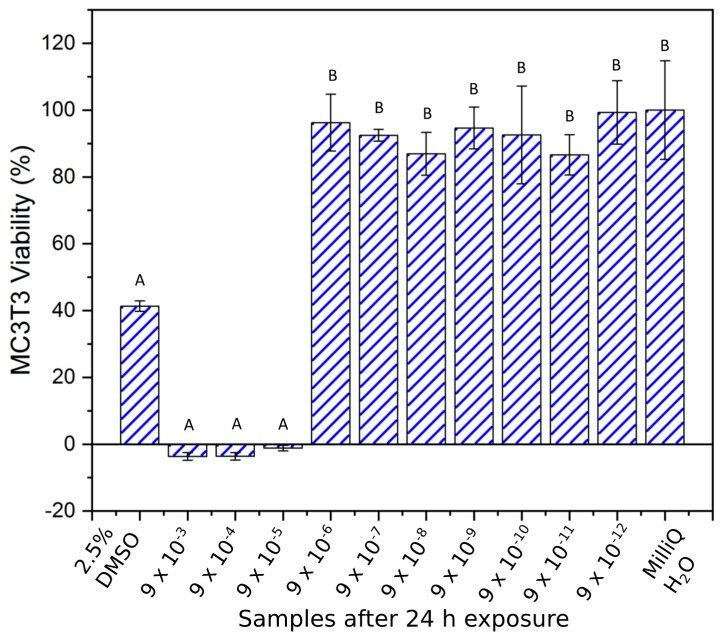
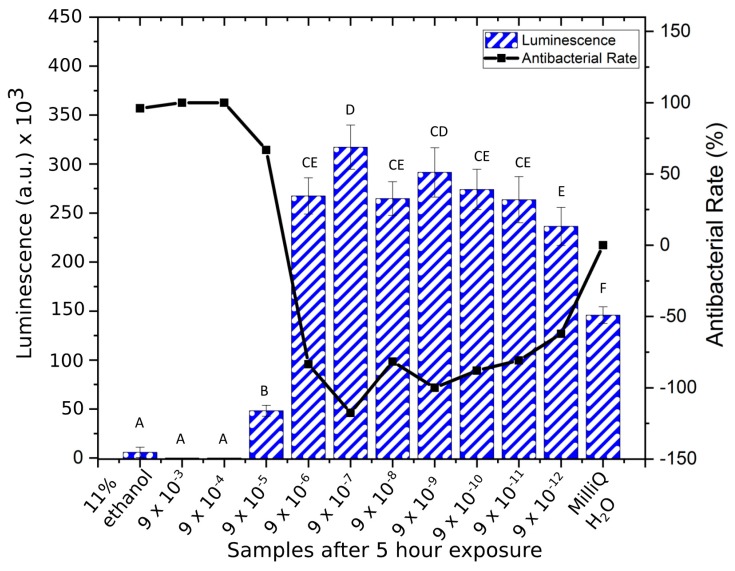
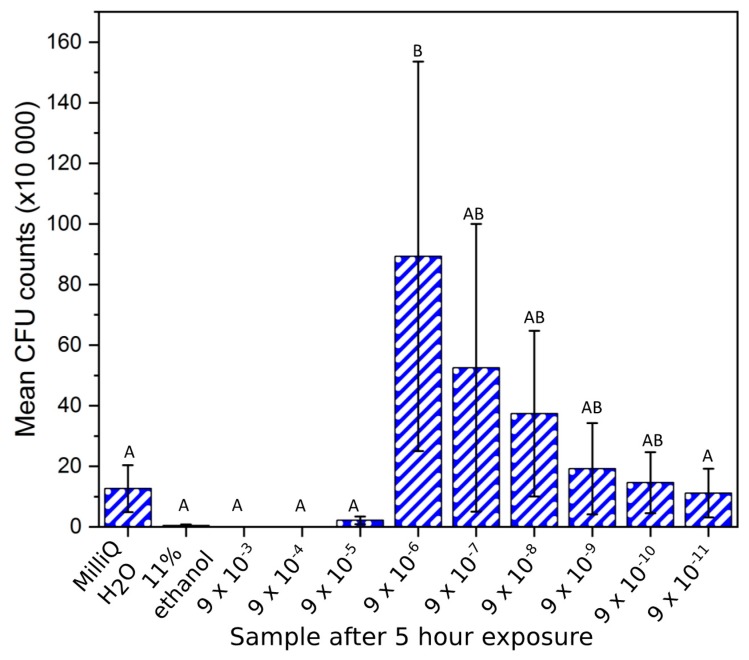
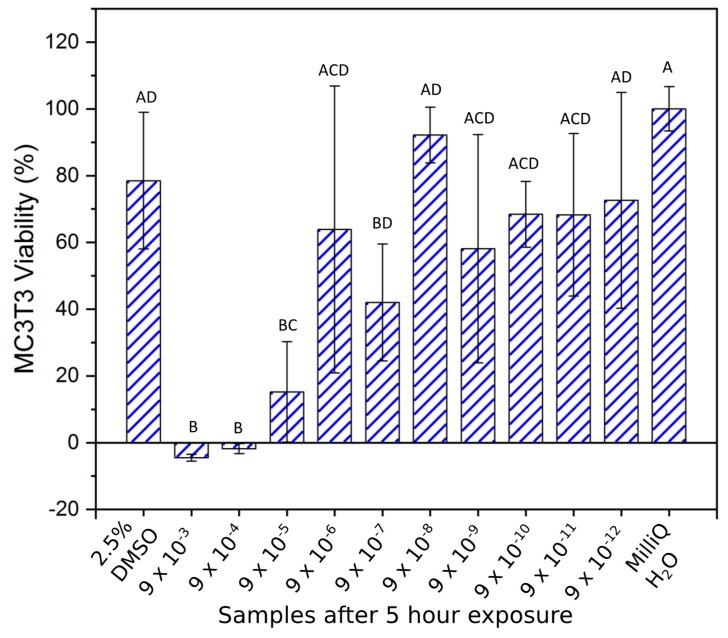
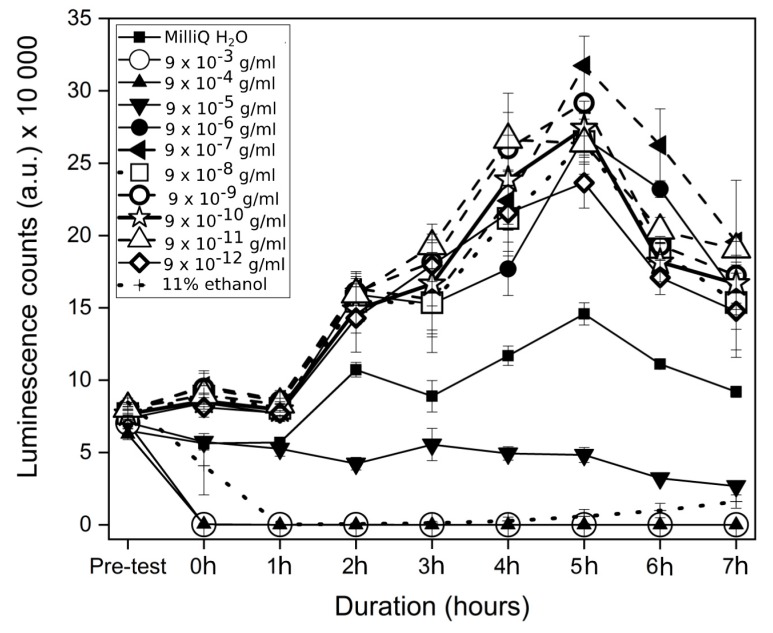
In the oral cavity, dental implants-most often made of commercially pure titanium-come in contact with bacteria, and antibacterial management has been researched extensively to improve patient care. With antibiotic resistance becoming increasingly prevalent, this has resulted in copper being investigated as an antibacterial element in alloys. In this study, the objective was to investigate the copper ion concentrations at which cyto-toxicity is avoided while bacterial inhibition is ensured, by comparing Cu ion effects on selected eukaryotes and prokaryotes. To determine relevant copper ion concentrations, ion release rates from copper and a 10 wt. % Cu Ti-alloy were investigated. Survival studies were performed on MC3T3 cells and bacteria, after exposure to Cu ions concentrations ranging from 9 × 10 to 9 × 10 g/mL. Cell survival increased from <10% to >90% after 24 h of exposure, by reducing Cu concentrations from 9 × 10 to 9 × 10 g/mL. Survival of bacteria also increased in the same range of Cu concentrations. The maximum bacteria growth was found at 9 × 10 g/mL, probably due to stress response. In conclusion, the minimum inhibitory concentrations of Cu ions for these prokaryotes and eukaryotes were found in the range from 9 × 10 to 9 × 10 g/mL. Interestingly, the Cu ion concentration correlating to the release rate of the 10 wt. % Cu alloy (9 × 10 g/mL) did not kill the bacteria, although this alloy has previously been found to be antibacterial. Further studies should investigate in depth the bacteria-killing mechanism of copper.

摘要

在口腔中,牙种植体(大多由商业纯钛制成)会与细菌接触,人们已对抗菌管理进行了广泛研究,以改善患者护理。随着抗生素耐药性日益普遍,这使得铜作为合金中的抗菌元素受到研究。在本研究中,目标是通过比较铜离子对选定的真核生物和原核生物的影响,来研究既能确保细菌抑制又能避免细胞毒性的铜离子浓度。为了确定相关的铜离子浓度,研究了铜和一种10重量%铜钛合金的离子释放速率。在暴露于浓度范围为9×10至9×10克/毫升的铜离子后,对MC3T3细胞和细菌进行了存活研究。通过将铜浓度从9×10降至9×10克/毫升,暴露24小时后细胞存活率从<10%提高到了>90%。在相同的铜浓度范围内,细菌的存活率也有所提高。在9×10克/毫升时发现细菌生长最多,这可能是由于应激反应。总之,这些原核生物和真核生物的铜离子最小抑菌浓度在9×10至9×10克/毫升范围内。有趣的是,与10重量%铜合金(9×10克/毫升)释放速率相关的铜离子浓度并未杀死细菌,尽管此前已发现这种合金具有抗菌性。进一步的研究应深入探究铜的杀菌机制。
https://cdn.ncbi.nlm.nih.gov/pmc/blobs/61b7/6888263/97d371db7c71/materials-12-03798-g006.jpg
https://cdn.ncbi.nlm.nih.gov/pmc/blobs/61b7/6888263/4a4466e54f7f/materials-12-03798-g001.jpg
https://cdn.ncbi.nlm.nih.gov/pmc/blobs/61b7/6888263/336b7dc9b42e/materials-12-03798-g002.jpg
https://cdn.ncbi.nlm.nih.gov/pmc/blobs/61b7/6888263/c375a2ee5f45/materials-12-03798-g003.jpg
https://cdn.ncbi.nlm.nih.gov/pmc/blobs/61b7/6888263/b25f3c033cda/materials-12-03798-g004.jpg
https://cdn.ncbi.nlm.nih.gov/pmc/blobs/61b7/6888263/69e41639edef/materials-12-03798-g005.jpg
https://cdn.ncbi.nlm.nih.gov/pmc/blobs/61b7/6888263/97d371db7c71/materials-12-03798-g006.jpg
https://cdn.ncbi.nlm.nih.gov/pmc/blobs/61b7/6888263/4a4466e54f7f/materials-12-03798-g001.jpg
https://cdn.ncbi.nlm.nih.gov/pmc/blobs/61b7/6888263/336b7dc9b42e/materials-12-03798-g002.jpg
https://cdn.ncbi.nlm.nih.gov/pmc/blobs/61b7/6888263/c375a2ee5f45/materials-12-03798-g003.jpg
https://cdn.ncbi.nlm.nih.gov/pmc/blobs/61b7/6888263/b25f3c033cda/materials-12-03798-g004.jpg
https://cdn.ncbi.nlm.nih.gov/pmc/blobs/61b7/6888263/69e41639edef/materials-12-03798-g005.jpg
https://cdn.ncbi.nlm.nih.gov/pmc/blobs/61b7/6888263/97d371db7c71/materials-12-03798-g006.jpg

相似文献

1
Effect of Copper Ion Concentration on Bacteria and Cells.铜离子浓度对细菌和细胞的影响。
Materials (Basel). 2019 Nov 19;12(22):3798. doi: 10.3390/ma12223798.
2
Antibacterial investigation of titanium-copper alloys using luminescent Staphylococcus epidermidis in a direct contact test.采用发光表皮葡萄球菌直接接触试验研究钛铜合金的抗菌性能。
Mater Sci Eng C Mater Biol Appl. 2019 Apr;97:707-714. doi: 10.1016/j.msec.2018.12.050. Epub 2018 Dec 17.
3
In vitro and in vivo studies of anti-bacterial copper-bearing titanium alloy for dental application.用于牙科应用的载铜抗菌钛合金的体外和体内研究。
Dent Mater. 2018 Aug;34(8):1112-1126. doi: 10.1016/j.dental.2018.04.007. Epub 2018 Apr 27.
4
The antibacterial properties and biocompatibility of a Ti-Cu sintered alloy for biomedical application.一种用于生物医学应用的钛-铜烧结合金的抗菌性能和生物相容性。
Biomed Mater. 2014 Apr;9(2):025013. doi: 10.1088/1748-6041/9/2/025013. Epub 2014 Feb 24.
5
A new antibacterial titanium-copper sintered alloy: preparation and antibacterial property.一种新型抗菌钛铜烧结合金:制备与抗菌性能。
Mater Sci Eng C Mater Biol Appl. 2013 Oct;33(7):4280-7. doi: 10.1016/j.msec.2013.06.016. Epub 2013 Jun 26.
6
Effect of Cu content on the antibacterial activity of titanium-copper sintered alloys.铜含量对钛铜烧结合金抗菌活性的影响。
Mater Sci Eng C Mater Biol Appl. 2014 Feb 1;35:392-400. doi: 10.1016/j.msec.2013.11.028. Epub 2013 Dec 1.
7
Development of Antibacterial Ti-Cu Alloys for Dental Applications: Effects of Ageing for Alloys with Up to 10 wt% Cu.用于牙科应用的抗菌钛铜合金的开发:含铜量高达10 wt%的合金的时效影响。
Materials (Basel). 2019 Dec 3;12(23):4017. doi: 10.3390/ma12234017.
8
The anti-bacterial activity of titanium-copper sintered alloy against Porphyromonas gingivalis in vitro.钛铜烧结合金对牙龈卟啉单胞菌的体外抗菌活性
Dent Mater J. 2016;35(4):659-67. doi: 10.4012/dmj.2016-001.
9
In vitro study on an antibacterial Ti-5Cu alloy for medical application.用于医学应用的抗菌Ti-5Cu合金的体外研究。
J Mater Sci Mater Med. 2016 May;27(5):91. doi: 10.1007/s10856-016-5698-1. Epub 2016 Mar 14.
10
Optimization of mechanical properties, biocorrosion properties and antibacterial properties of as-cast Ti-Cu alloys.铸态Ti-Cu合金力学性能、生物腐蚀性能及抗菌性能的优化
Biomed Mater. 2016 Oct 21;11(6):065001. doi: 10.1088/1748-6041/11/6/065001.

引用本文的文献

1
Comparison of single bacteria and a bacterial reference community in a test against coated surfaces of varying copper content.在针对不同铜含量涂层表面的测试中,单一细菌与细菌参考群落的比较。
Front Microbiol. 2025 Aug 26;16:1659828. doi: 10.3389/fmicb.2025.1659828. eCollection 2025.
2
Suspension-Sprayed Calcium Phosphate Coatings with Antibacterial Properties.具有抗菌性能的悬浮喷涂磷酸钙涂层
J Funct Biomater. 2024 Sep 25;15(10):281. doi: 10.3390/jfb15100281.
3
Carboxymethyl chitosan nanoparticle-modulated cationic hydrogels doped with copper ions for combating bacteria and facilitating wound healing.

本文引用的文献

1
Antibacterial investigation of titanium-copper alloys using luminescent Staphylococcus epidermidis in a direct contact test.采用发光表皮葡萄球菌直接接触试验研究钛铜合金的抗菌性能。
Mater Sci Eng C Mater Biol Appl. 2019 Apr;97:707-714. doi: 10.1016/j.msec.2018.12.050. Epub 2018 Dec 17.
2
A review of select minerals influencing the haematopoietic process.选择影响造血过程的矿物质综述。
Nutr Res Rev. 2018 Dec;31(2):267-280. doi: 10.1017/S0954422418000112. Epub 2018 Jul 9.
3
Nanostructured titanium surfaces exhibit recalcitrance towards Staphylococcus epidermidis biofilm formation.
掺杂铜离子的羧甲基壳聚糖纳米颗粒调控阳离子水凝胶用于抗菌和促进伤口愈合。
Front Bioeng Biotechnol. 2024 Sep 20;12:1429771. doi: 10.3389/fbioe.2024.1429771. eCollection 2024.
4
Exudate Unidirectional Pump to Promote Glucose Catabolism Triggering Fenton-Like Reaction for Chronic Diabetic Wounds Therapy.外泌体单向泵促进葡萄糖代谢触发芬顿样反应用于慢性糖尿病伤口治疗。
Adv Sci (Weinh). 2024 Oct;11(38):e2404652. doi: 10.1002/advs.202404652. Epub 2024 Aug 9.
5
A pH-Responsive Polycaprolactone-Copper Peroxide Composite Coating Fabricated via Suspension Flame Spraying for Antimicrobial Applications.通过悬浮火焰喷涂制备的用于抗菌应用的pH响应性聚己内酯-过氧化铜复合涂层
Materials (Basel). 2024 Jun 1;17(11):2666. doi: 10.3390/ma17112666.
6
Keratin/Copper Complex Electrospun Nanofibers for Antibacterial Treatments: Property Investigation and In Vitro Response.用于抗菌治疗的角蛋白/铜复合电纺纳米纤维:性能研究与体外反应
Materials (Basel). 2024 May 18;17(10):2435. doi: 10.3390/ma17102435.
7
Biomaterials science and surface engineering strategies for dental peri-implantitis management.生物材料科学与表面工程策略在牙科种植体周围炎治疗中的应用。
Mil Med Res. 2024 May 13;11(1):29. doi: 10.1186/s40779-024-00532-9.
8
Decoupling locally enhanced electric field treatment (LEEFT) intensity and copper release by applying asymmetric electric pulses for water disinfection.通过施加非对称电脉冲实现水消毒,使局部增强电场处理(LEEFT)强度与铜释放解耦。
Water Res X. 2023 Nov 11;21:100206. doi: 10.1016/j.wroa.2023.100206. eCollection 2023 Dec 1.
9
Systems analysis reveals differential expression of endocervical genes in African women randomized to DMPA-IM, LNG implant or cu-IUD.系统分析显示,随机分配到 DMPA-IM、LNG 植入物或铜 IUD 的非洲女性的宫颈内基因表达存在差异。
Clin Immunol. 2023 Oct;255:109750. doi: 10.1016/j.clim.2023.109750. Epub 2023 Sep 3.
10
Copper and Zinc Metal-Organic Frameworks with Bipyrazole Linkers Display Strong Antibacterial Activity against Both Gram+ and Gram- Bacterial Strains.含联吡啶配体的铜锌金属有机框架对革兰氏阳性和革兰氏阴性细菌菌株均表现出较强的抗菌活性。
Molecules. 2023 Aug 21;28(16):6160. doi: 10.3390/molecules28166160.
纳米结构钛表面表现出对表皮葡萄球菌生物膜形成的顽固性。
Sci Rep. 2018 Jan 18;8(1):1071. doi: 10.1038/s41598-018-19484-x.
4
How frequent does peri-implantitis occur? A systematic review and meta-analysis.种植体周围炎的发生频率有多高?一项系统评价和荟萃分析。
Clin Oral Investig. 2018 May;22(4):1805-1816. doi: 10.1007/s00784-017-2276-y. Epub 2017 Dec 7.
5
The Risk Factors in Early Failure of Dental Implants: a Retrospective Study.牙种植体早期失败的危险因素:一项回顾性研究。
J Dent (Shiraz). 2017 Dec;18(4):298-303.
6
At the Nexus of Antibiotics and Metals: The Impact of Cu and Zn on Antibiotic Activity and Resistance.在抗生素和金属的交汇点:Cu 和 Zn 对抗生素活性和抗性的影响。
Trends Microbiol. 2017 Oct;25(10):820-832. doi: 10.1016/j.tim.2017.04.010. Epub 2017 May 17.
7
Antibacterial effect of hydrogen peroxide-titanium dioxide suspensions in the decontamination of rough titanium surfaces.过氧化氢-二氧化钛悬浮液对粗糙钛表面去污的抗菌作用。
Biofouling. 2017 Jul;33(6):451-459. doi: 10.1080/08927014.2017.1322585. Epub 2017 May 19.
8
Prevalences of peri-implantitis and peri-implant mucositis: systematic review and meta-analysis.种植体周围炎和种植体周围黏膜炎的患病率:系统评价和荟萃分析。
J Dent. 2017 Jul;62:1-12. doi: 10.1016/j.jdent.2017.04.011. Epub 2017 May 3.
9
Peri-Implant Bone Loss and Peri-Implantitis: A Report of Three Cases and Review of the Literature.种植体周围骨吸收与种植体周围炎:三例报告及文献综述
Case Rep Dent. 2016;2016:2491714. doi: 10.1155/2016/2491714. Epub 2016 Oct 19.
10
Optimization of mechanical properties, biocorrosion properties and antibacterial properties of as-cast Ti-Cu alloys.铸态Ti-Cu合金力学性能、生物腐蚀性能及抗菌性能的优化
Biomed Mater. 2016 Oct 21;11(6):065001. doi: 10.1088/1748-6041/11/6/065001.