College of Horticulture, Nanjing Agricultural University, Nanjing 210095, China.
College of Plant Protection, Nanjing Agricultural University, Nanjing 210095, China.
Molecules. 2019 Nov 20;24(23):4202. doi: 10.3390/molecules24234202.
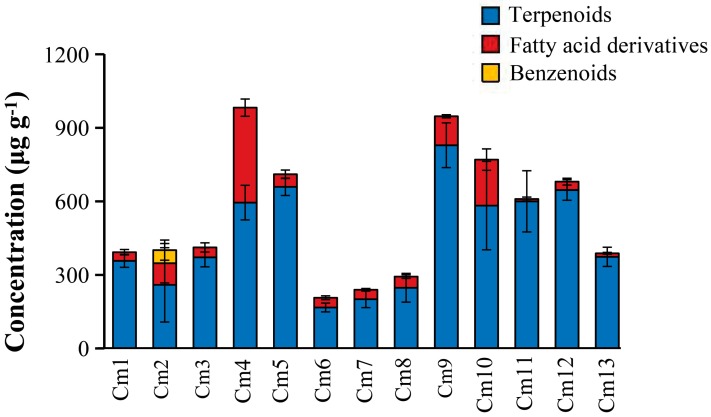
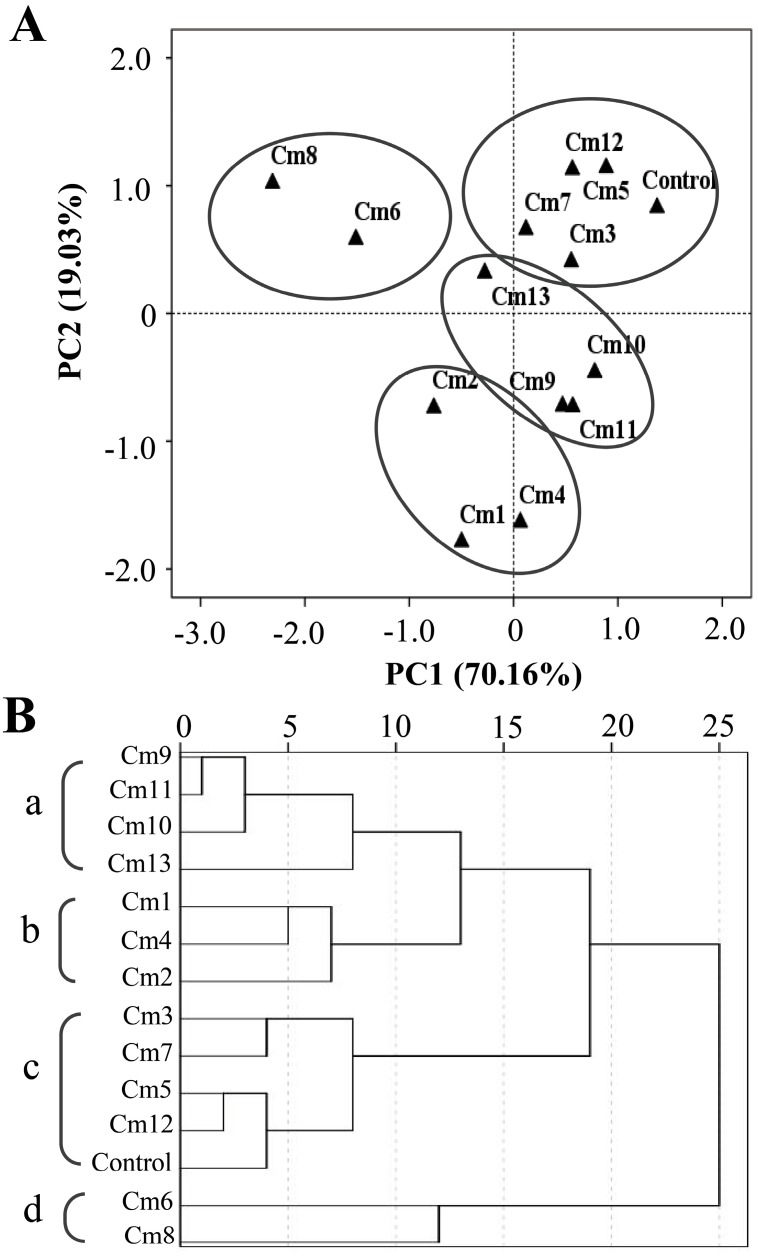
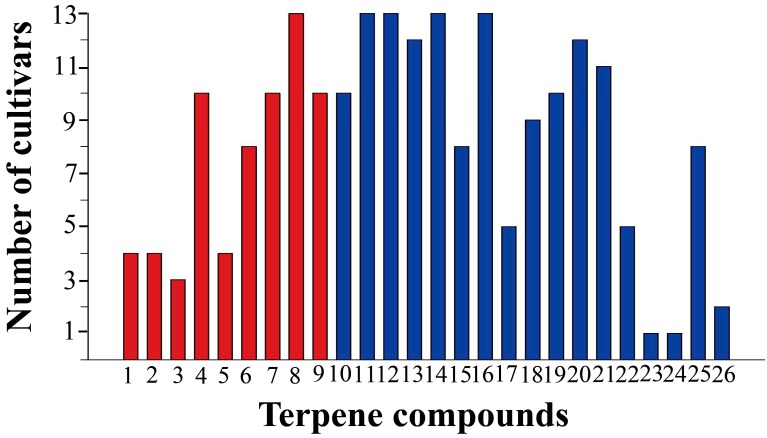
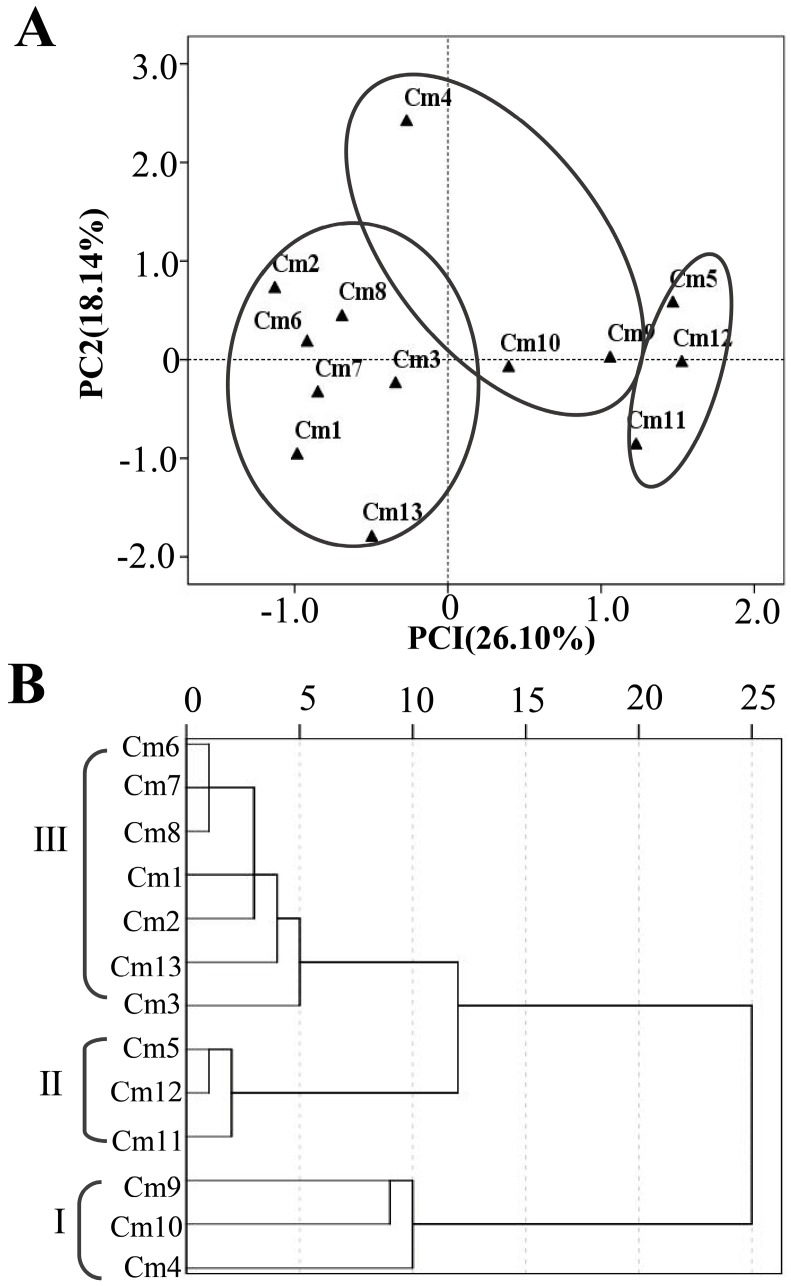
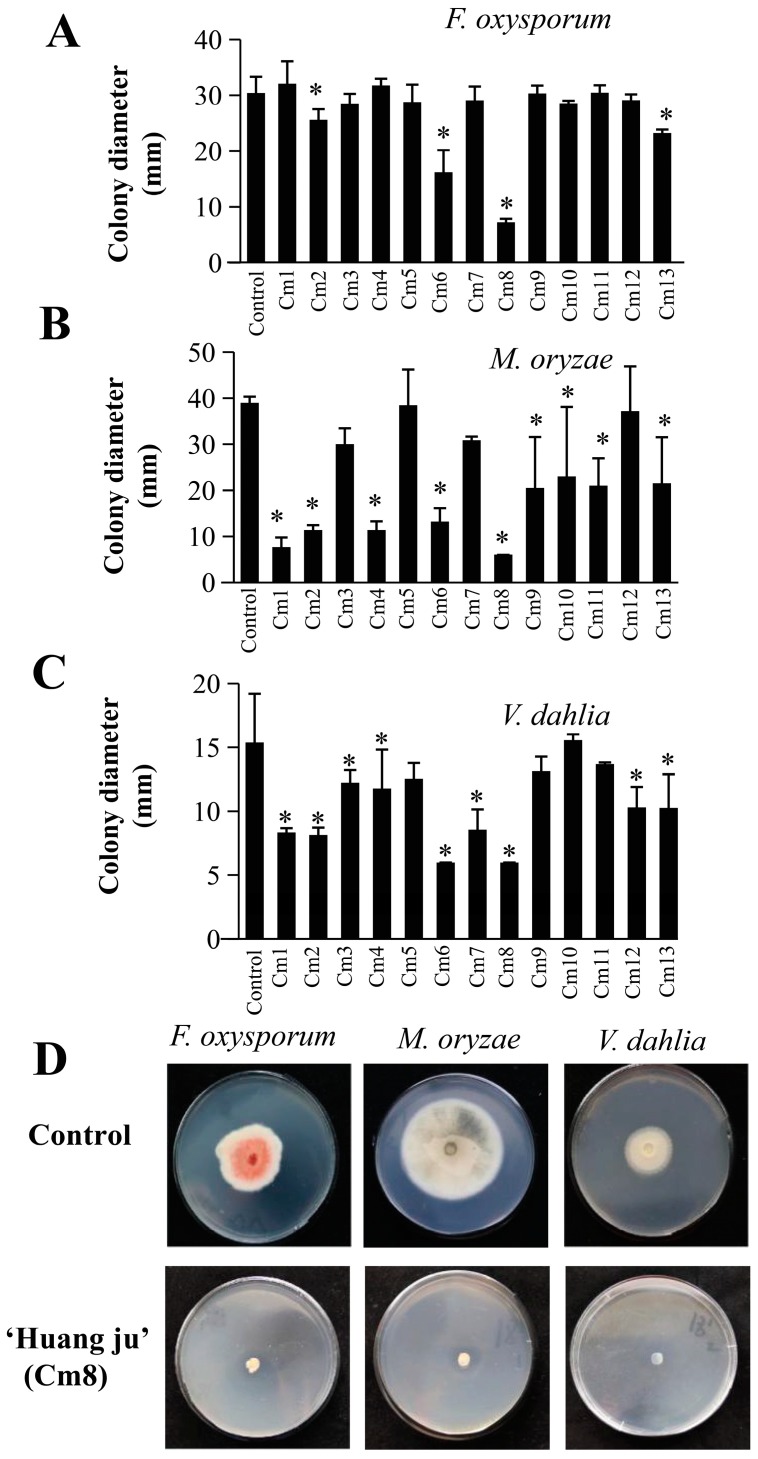
Ramat is an ornamental plant of worldwide cultivation. Like many other species in the family Asteraceae, is a rich producer of secondary metabolites. There are two objectives in this study: (I) to determine and compare the diversity of apolar secondary metabolites among different cultivars of and (II) to compare their properties as antifungal agents. To attain these objectives, we selected 13 cultivars of that are commonly used for making chrysanthemum tea as experimental materials. Leaves at the same developmental stage were collected from respective mature plants and subjected to organic extraction. The extracts were analyzed using gas chromatography-mass spectrometry. A total of 37 apolar secondary metabolites including 26 terpenoids were detected from the 13 cultivars. These 13 cultivars can be largely divided into three chemotypes based on chemical principal components analysis. Next, the extracts from the 13 cultivars were examined in in vitro assays for their antifungal properties against three species of pathogenic fungi: , , and . Significant variability in antifungal activity of the leaf extracts among different cultivars was observed. The 13 cultivars can be divided into four groups based on their antifungal activities, which could be partly correlated to the contents of terpenoids. In short, this study reveals large variations in chemical composition, particularly of terpenoids, of leaf secondary metabolites among different cultivars of and their different abilities in functioning as antifungal agents.
天人菊是一种在全球范围内种植的观赏植物。像菊科的许多其他物种一样,它是次生代谢产物的丰富生产者。本研究有两个目的:(I)确定和比较不同天人菊品种之间的非极性次生代谢物的多样性,(II)比较它们作为抗真菌剂的特性。为了实现这些目标,我们选择了 13 种常用于制作菊花茶的天人菊品种作为实验材料。从各自成熟的植物上采集相同发育阶段的叶片,并进行有机提取。使用气相色谱-质谱法对提取物进行分析。从 13 个品种中检测到 37 种非极性次生代谢物,包括 26 种萜类化合物。这些 13 个品种可以根据化学主成分分析大致分为三种化学型。接下来,我们对 13 个品种的提取物进行了体外抗真菌活性检测,以评估其对三种致病真菌( 、 和 )的抑制作用。不同品种叶片提取物的抗真菌活性存在显著差异。根据抗真菌活性,这 13 个品种可分为四组,这与萜类化合物的含量部分相关。总之,本研究揭示了不同天人菊品种间次生代谢物化学成分,特别是萜类化合物的差异,以及它们作为抗真菌剂的不同功能能力。