Sahlan Muhamad, Devina Andrea, Pratami Diah Kartika, Situmorang Herbert, Farida Siti, Munim Abdul, Kusumoputro Benyamin, Yohda Masafumi, Faried Ahmad, Gozan Misri, Ledyawati Mia
Department of Chemical Engineering, Faculty of Engineering, Universitas Indonesia, Campus UI Depok, West Java 16425, Indonesia.
Research Centre for Biomedical Engineering, Faculty of Engineering, Universitas Indonesia, Campus UI Depok, West Java 16425, Indonesia.
Saudi J Biol Sci. 2019 Nov;26(7):1531-1538. doi: 10.1016/j.sjbs.2018.12.008. Epub 2018 Dec 17.
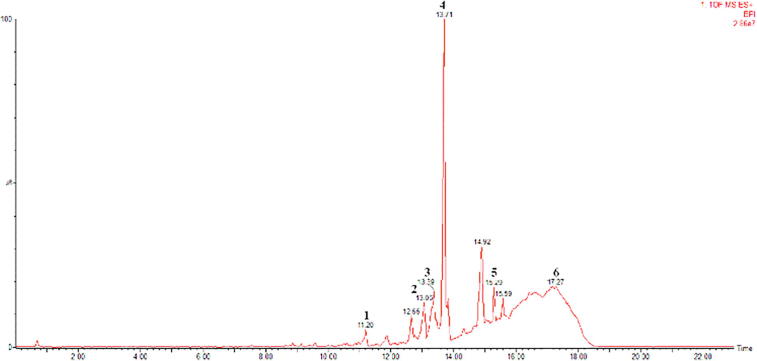
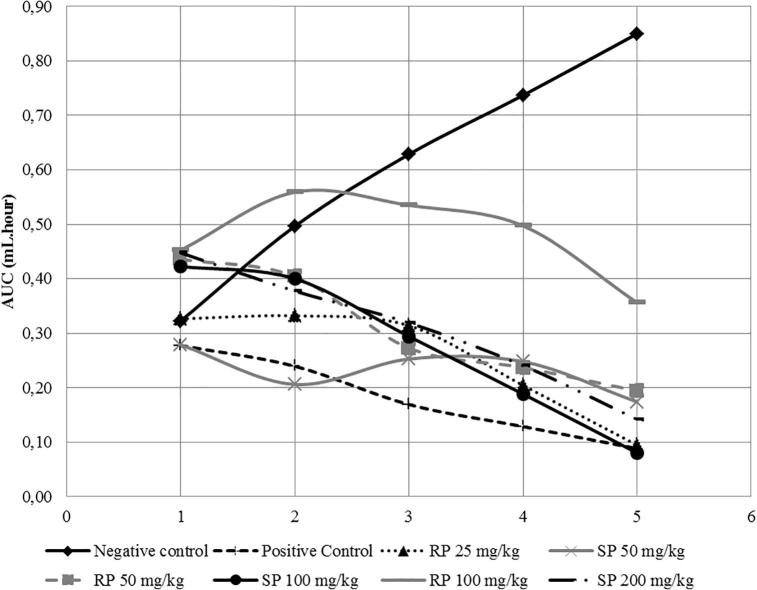
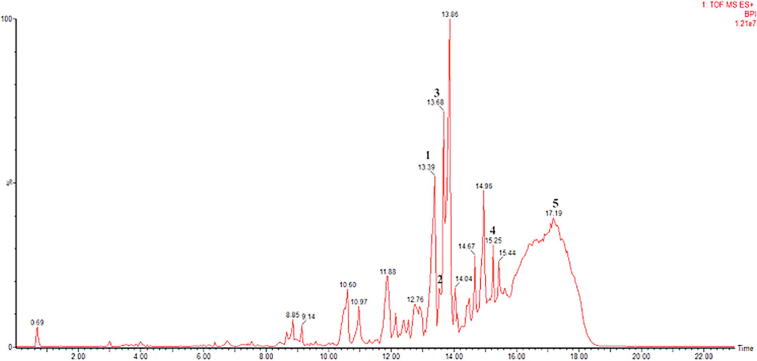
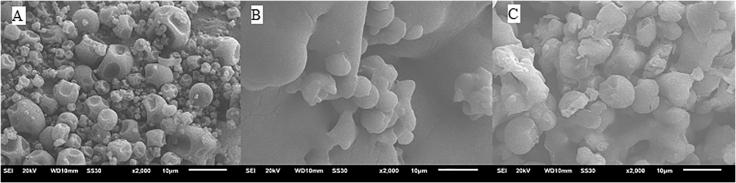
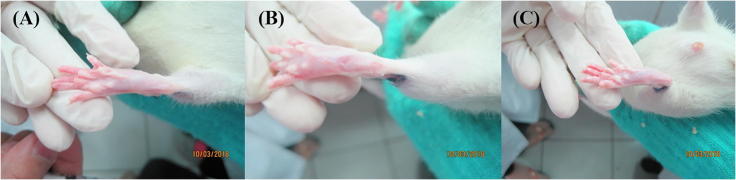
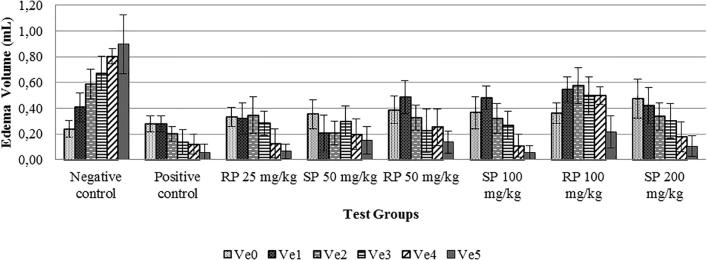
Anti-inflammatory drugs inhibit inflammation, particularly those classified as nonsteroidal anti-inflammatory drugs (NSAIDs). Several studies have reported that propolis has both anti-ulcerogenic and anti-inflammatory effects. In this study, we investigated the bioactive compound and anti-inflammatory properties of both smooth and rough propolis from . To further identify anti-inflammatory markers in propolis, LC-MS/MS was used, and results were analyzed by Mass Lynx 4.1. Rough and smooth propolis of . were microcapsulated with maltodextrin and arabic gum. Propolis microcapsules at dose 25-200 mg/kg were applied for carrageenan-induced rat's paw-inflammation model. Data were analyzed by one-way ANOVA and Kruskal-Wallis statistical tests. LC-MS/MS experiments identified seven anti-inflammatory compounds, including [6]-dehydrogingerdione, alpha-tocopherol succinate, adhyperforin, 6-epiangustifolin, deoxypodophyllotoxin, kurarinone, and xanthoxyletin. Our results indicated that smooth propolis at 50 mg/kg inhibited inflammation to the greatest extent, followed by rough propolis at a dose of 25 mg/kg. SPM and RPM with the dose of 25 mg/kg had inflammatory inhibition value of 62.24% and 58.12%, respectively, which is comparable with the value 70.26% of sodium diclofenac with the dose of 135 mg/kg. This study suggests that propolis has the potential candidate to develop as a non-steroid anti-inflammatory drug.
抗炎药物可抑制炎症,尤其是那些归类为非甾体抗炎药(NSAIDs)的药物。多项研究报告称,蜂胶具有抗溃疡和抗炎作用。在本研究中,我们调查了[来源地]光滑蜂胶和粗糙蜂胶的生物活性成分及抗炎特性。为了进一步鉴定蜂胶中的抗炎标志物,我们使用了液相色谱-串联质谱(LC-MS/MS),并通过Mass Lynx 4.1软件分析结果。[来源地]的粗糙蜂胶和光滑蜂胶用麦芽糊精和阿拉伯胶进行了微囊化处理。将剂量为25 - 200毫克/千克的蜂胶微囊应用于角叉菜胶诱导的大鼠足趾炎症模型。数据通过单因素方差分析和克鲁斯卡尔-沃利斯统计检验进行分析。LC-MS/MS实验鉴定出七种抗炎化合物,包括[6]-脱氢姜二酮、α-生育酚琥珀酸酯、金丝桃素、6-表古豆素、脱氧鬼臼毒素、苦参酮和花椒毒素。我们的结果表明,50毫克/千克的光滑蜂胶抑制炎症的程度最大,其次是25毫克/千克的粗糙蜂胶。剂量为25毫克/千克的光滑蜂胶微囊(SPM)和粗糙蜂胶微囊(RPM)的炎症抑制值分别为62.24%和58.12%,这与135毫克/千克剂量的双氯芬酸钠70.26%的抑制值相当。本研究表明,蜂胶有潜力开发成为一种非甾体抗炎药。