Department of Anesthesiology, The Third Affiliated Hospital of Sun Yat-sen University, Guangzhou 510000, China.
Department of Anesthesiology, Sun Yat-sen Memorial Hospital, Sun Yat-sen University, Guangzhou 510000, China.
Biosci Rep. 2020 Jan 31;40(1). doi: 10.1042/BSR20191043.
Hydrogen-rich saline (HRS) has been proven effective against ischemia/reperfusion (I/R) injury. However, knowledge on the underlying signaling events remain poor. Having recent highlight of microRNAs (miRNAs) in mediating intestinal I/R injury, we hypothesized that HRS may protect intestine against I/R injury by regulating miRNAs.
Mice were given intraperitoneal injection of saline or HRS once daily for five consecutive days before undergoing intestinal I/R that was induced by 60-min ischemia followed by 180-min reperfusion of superior mesenteric artery. The intestine was collected for histopathological assay, miRNA microarray profiling, Real-Time PCR, and Western blotting. Next, miR-199a-3p mimics or inhibitors were transfected into IEC-6 cells to explore the relationship between HRS treatment and miR-199a-3p.
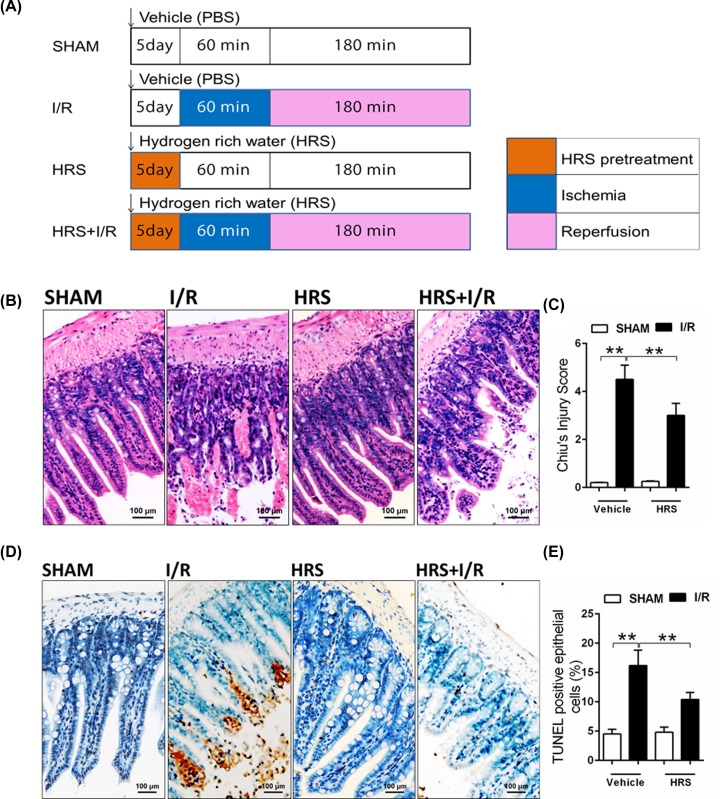
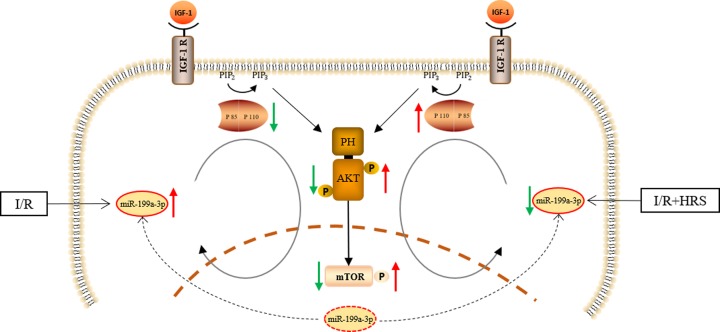
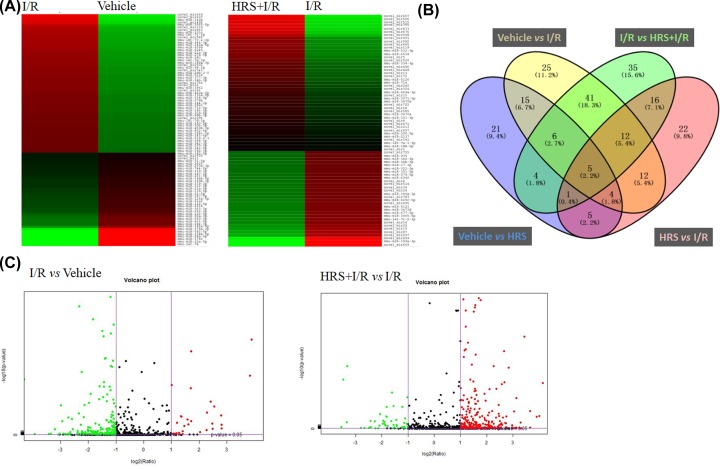
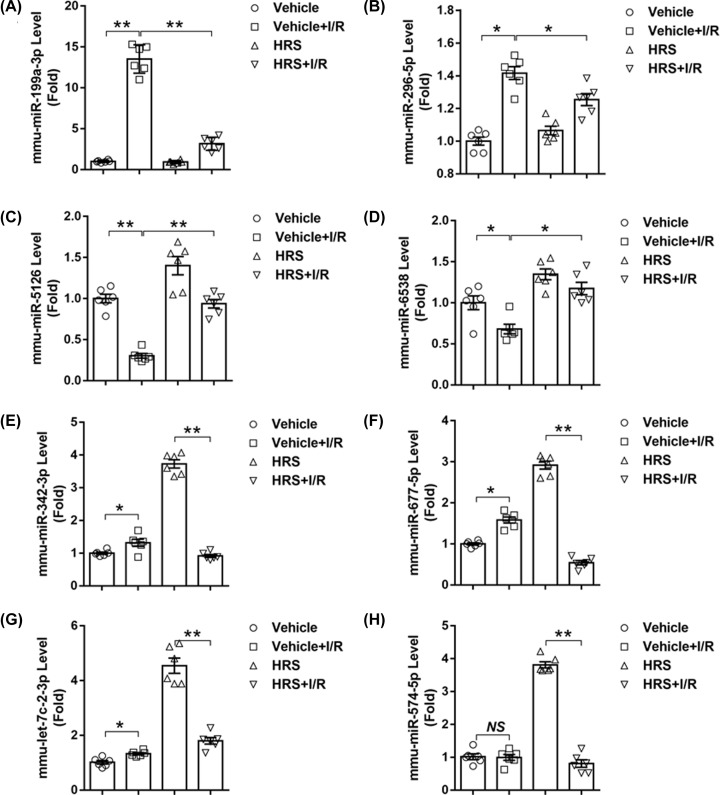
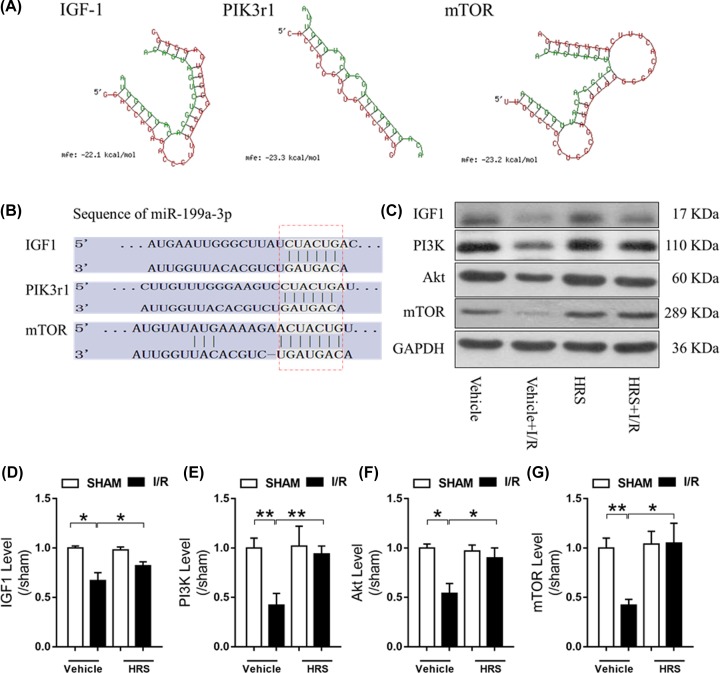
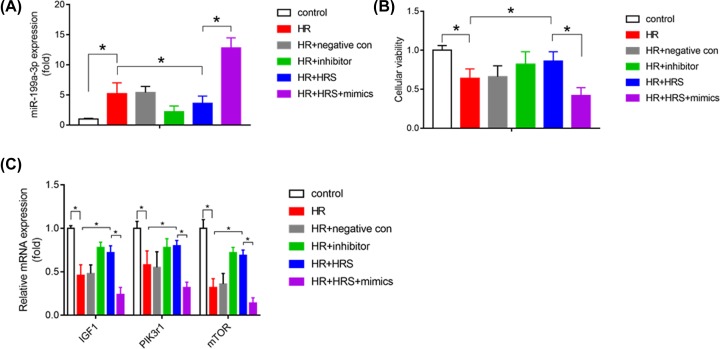
I/R-induced mucosal injury and epithelial cells apoptosis were attenuated by HRS pretreatment. A total of 64 intestinal I/R-responsive miRNAs were altered significantly by HRS pretreatment, in which we validated four novel miRNAs with top significance by Real-Time PCR, namely miR-199a-3p, miR-296-5p, miR-5126, and miR-6538. Particularly, miR-199a-3p was drastically increased by I/R but reduced by HRS. Computational analysis predicts insulin-like growth factor (IGF)-1, mammalian target of rapamycin (mTOR), and phosphoinositide-3-kinase (PI3K) regulatory subunit 1 as targets of miR-199a-3p, suggesting involvement of the pro-survival pathway, IGF- 1/PI3K/Akt/mTOR. In in vitro experiment, HRS treatment reduced miR-199a-3p level, increase IGF-1, PI3K and mTOR mRNA expression, restore IEC-6 cells viability, and this protective effects were reversed under miR-199a-3p mimics treatment.
Collectively, miR-199a-3p may serve a key role in the anti-apoptotic mechanism of HRS that contributes to its protection of the intestine against I/R injury.
富氢盐水(HRS)已被证明可有效对抗缺血再灌注(I/R)损伤。然而,其潜在的信号事件知之甚少。最近,microRNAs(miRNAs)在介导肠道 I/R 损伤方面受到了关注,我们假设 HRS 可能通过调节 miRNAs 来保护肠道免受 I/R 损伤。
小鼠在进行肠系膜上动脉缺血 60 分钟,再灌注 180 分钟诱导 I/R 前,连续 5 天每天腹腔注射生理盐水或 HRS。收集肠道进行组织病理学检测、miRNA 微阵列分析、Real-Time PCR 和 Western blot。然后,将 miR-199a-3p 模拟物或抑制剂转染至 IEC-6 细胞,以探讨 HRS 处理与 miR-199a-3p 之间的关系。
HRS 预处理可减轻 I/R 诱导的黏膜损伤和上皮细胞凋亡。HRS 预处理可显著改变 64 种肠道 I/R 反应性 miRNA,其中我们通过 Real-Time PCR 验证了 4 种具有最高意义的新型 miRNA,即 miR-199a-3p、miR-296-5p、miR-5126 和 miR-6538。特别是,miR-199a-3p 在 I/R 后明显增加,但在 HRS 后减少。计算分析预测胰岛素样生长因子(IGF)-1、雷帕霉素靶蛋白(mTOR)和磷酸肌醇-3-激酶(PI3K)调节亚基 1 是 miR-199a-3p 的靶点,表明涉及生存途径,IGF-1/PI3K/Akt/mTOR。在体外实验中,HRS 处理降低了 miR-199a-3p 水平,增加了 IGF-1、PI3K 和 mTOR mRNA 表达,恢复了 IEC-6 细胞活力,而在 miR-199a-3p 模拟物处理下,这种保护作用被逆转。
综上所述,miR-199a-3p 可能在 HRS 的抗凋亡机制中发挥关键作用,有助于其保护肠道免受 I/R 损伤。