Feng Jie, Byrne Niall M, Al Jamal Wafa, Coulter Jonathan A
School of Pharmacy, Queens University Belfast, Lisburn Road, Belfast BT9 7BL, UK.
Cancers (Basel). 2019 Dec 11;11(12):1989. doi: 10.3390/cancers11121989.
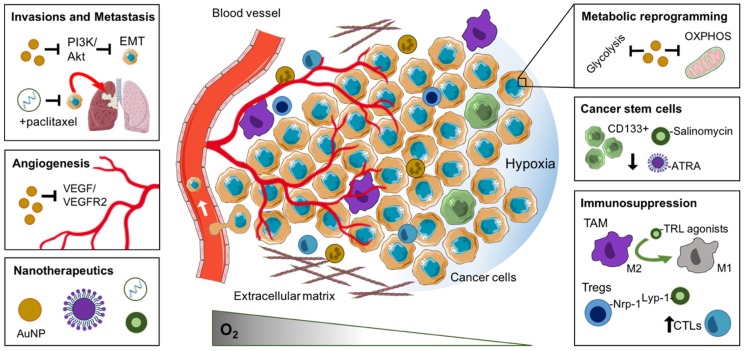
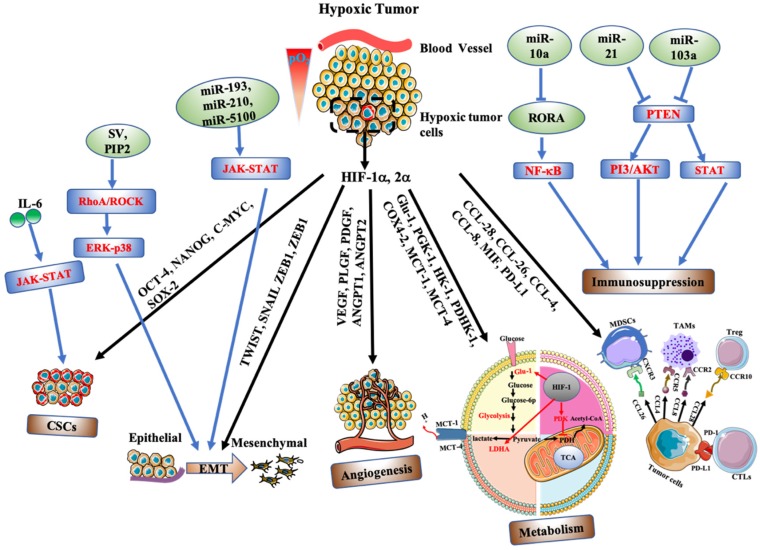
Hypoxia is one of the most common phenotypes of malignant tumours. Hypoxia leads to the increased activity of hypoxia-inducible factors (HIFs), which regulate the expression of genes controlling a raft of pro-tumour phenotypes. These include maintenance of the cancer stem cell compartment, epithelial-mesenchymal transition (EMT), angiogenesis, immunosuppression, and metabolic reprogramming. Hypoxia can also contribute to the tumour progression in a HIF-independent manner via the activation of a complex signalling network pathway, including JAK-STAT, RhoA/ROCK, NF-κB and PI3/AKT. Recent studies suggest that nanotherapeutics offer a unique opportunity to target the hypoxic microenvironment, enhancing the therapeutic window of conventional therapeutics. In this review, we summarise recent advances in understanding the impact of hypoxia on tumour progression, while outlining possible nanotherapeutic approaches for overcoming hypoxia-mediated resistance.
缺氧是恶性肿瘤最常见的表型之一。缺氧导致缺氧诱导因子(HIFs)活性增加,HIFs调控一系列控制肿瘤相关表型的基因表达。这些表型包括维持癌症干细胞池、上皮-间质转化(EMT)、血管生成、免疫抑制和代谢重编程。缺氧还可通过激活包括JAK-STAT、RhoA/ROCK、NF-κB和PI3/AKT在内的复杂信号网络途径,以不依赖HIF的方式促进肿瘤进展。最近的研究表明,纳米疗法为靶向缺氧微环境提供了独特的机会,可扩大传统疗法的治疗窗口。在本综述中,我们总结了在理解缺氧对肿瘤进展影响方面的最新进展,同时概述了克服缺氧介导的耐药性的可能纳米治疗方法。