Department of Dermatology and Cutaneous Biology, Thomas Jefferson University, Philadelphia, PA, 19107, USA.
The Joan and Joel Rosenbloom Research Center for Fibrotic Diseases, Thomas Jefferson University, Philadelphia, Pennsylvania, PA, 19107, USA.
Sci Rep. 2019 Dec 17;9(1):19256. doi: 10.1038/s41598-019-55352-y.
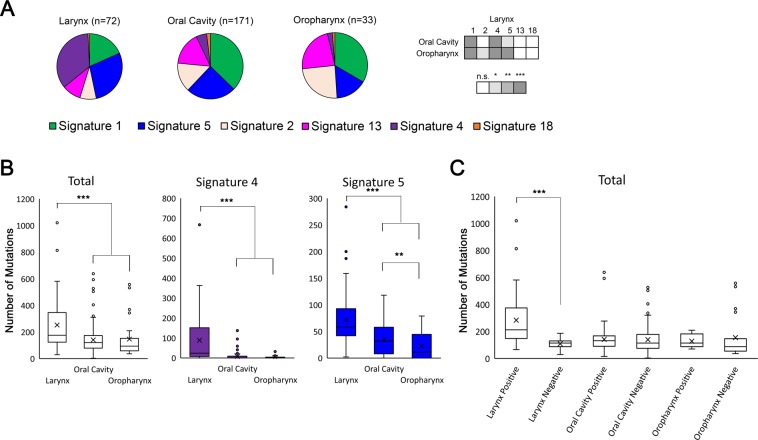
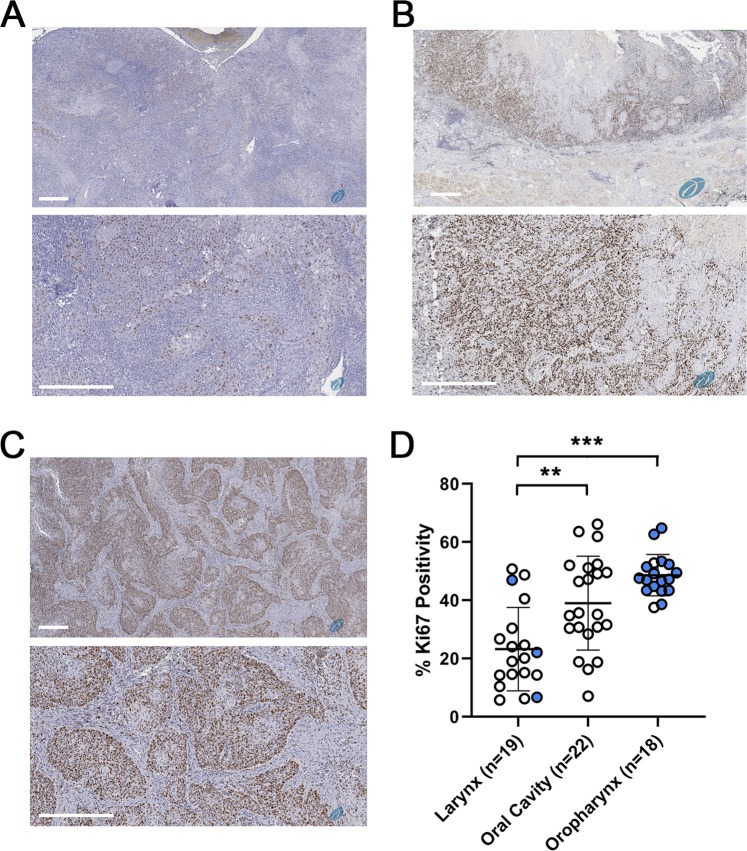
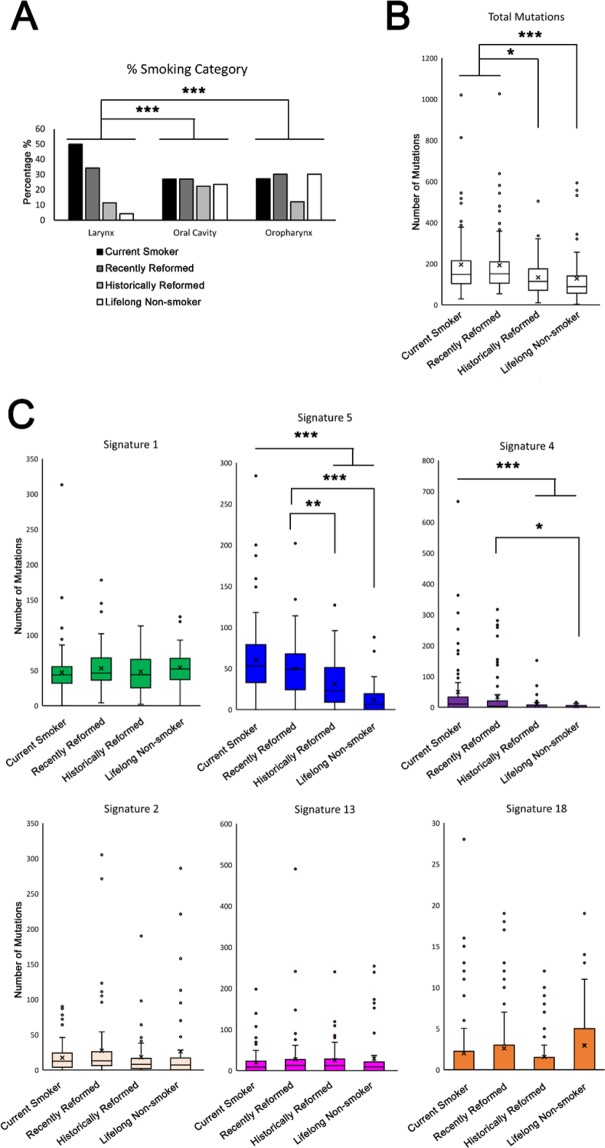
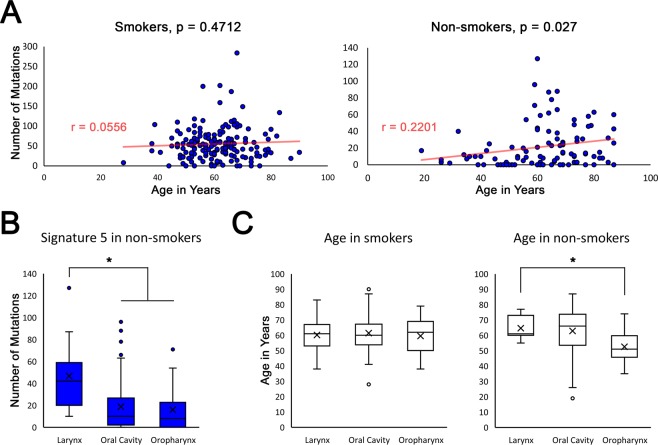
Squamous cell carcinomas of the head and neck (HNSCC) arise from mucosal keratinocytes of the upper aero-digestive tract. Despite a common cell of origin and similar driver-gene mutations which divert cell fate from differentiation to proliferation, HNSCC are considered a heterogeneous group of tumors categorized by site of origin within the aero-digestive mucosa, and the presence or absence of HPV infection. Tobacco use is a major driver of carcinogenesis in HNSCC and is a poor prognosticator that has previously been associated with poor immune cell infiltration and higher mutation numbers. Here, we study patterns of mutations in HNSCC that are derived from the specific nucleotide changes and their surrounding nucleotide context (also known as mutation signatures). We identify that mutations linked to DNA adducts associated with tobacco smoke exposure are predominantly found in the larynx. Presence of this class of mutation, termed COSMIC signature 4, is responsible for the increased burden of mutation in this anatomical sub-site. In addition, we show that another mutation pattern, COSMIC signature 5, is positively associated with age in HNSCC from non-smokers and that larynx SCC from non-smokers have a greater number of signature 5 mutations compared with other HNSCC sub-sites. Immunohistochemistry demonstrates a significantly lower Ki-67 proliferation index in size matched larynx SCC compared with oral cavity SCC and oropharynx SCC. Collectively, these observations support a model where larynx SCC are characterized by slower growth and increased susceptibility to mutations from tobacco carcinogen DNA adducts.
头颈部鳞状细胞癌 (HNSCC) 起源于上呼吸道-消化道的黏膜角质形成细胞。尽管具有相同的细胞起源和类似的驱动基因突变,这些突变将细胞命运从分化转向增殖,但 HNSCC 被认为是一组具有异质性的肿瘤,根据其在呼吸道黏膜中的起源部位以及 HPV 感染的存在与否进行分类。吸烟是 HNSCC 致癌的主要因素,也是预后不良的因素,先前与免疫细胞浸润不良和更高的突变数量有关。在这里,我们研究了源自特定核苷酸变化及其周围核苷酸背景(也称为突变特征)的 HNSCC 突变模式。我们发现与烟草烟雾暴露相关的 DNA 加合物相关的突变主要存在于喉部。这种突变类别的存在,称为 COSMIC 特征 4,是导致该解剖亚部位突变负担增加的原因。此外,我们还表明,另一种突变模式,即 COSMIC 特征 5,与非吸烟者的 HNSCC 年龄呈正相关,并且与其他 HNSCC 亚部位相比,非吸烟者的喉癌 SCC 具有更多的特征 5 突变。免疫组织化学显示,在大小匹配的喉癌 SCC 中,Ki-67 增殖指数明显低于口腔 SCC 和口咽 SCC。综上所述,这些观察结果支持这样一种模型,即喉癌 SCC 的特征是生长速度较慢,并且更容易受到烟草致癌剂 DNA 加合物的突变影响。