Laport Marinella Silva, Pinheiro Ulisses, Rachid Caio Tavora Coelho da Costa
Institute of Microbiology Paulo de Góes, Federal University of Rio de Janeiro, Rio de Janeiro, Brazil.
Department of Zoology, Federal University of Pernambuco, Recife, Brazil.
Front Microbiol. 2019 Dec 3;10:2799. doi: 10.3389/fmicb.2019.02799. eCollection 2019.
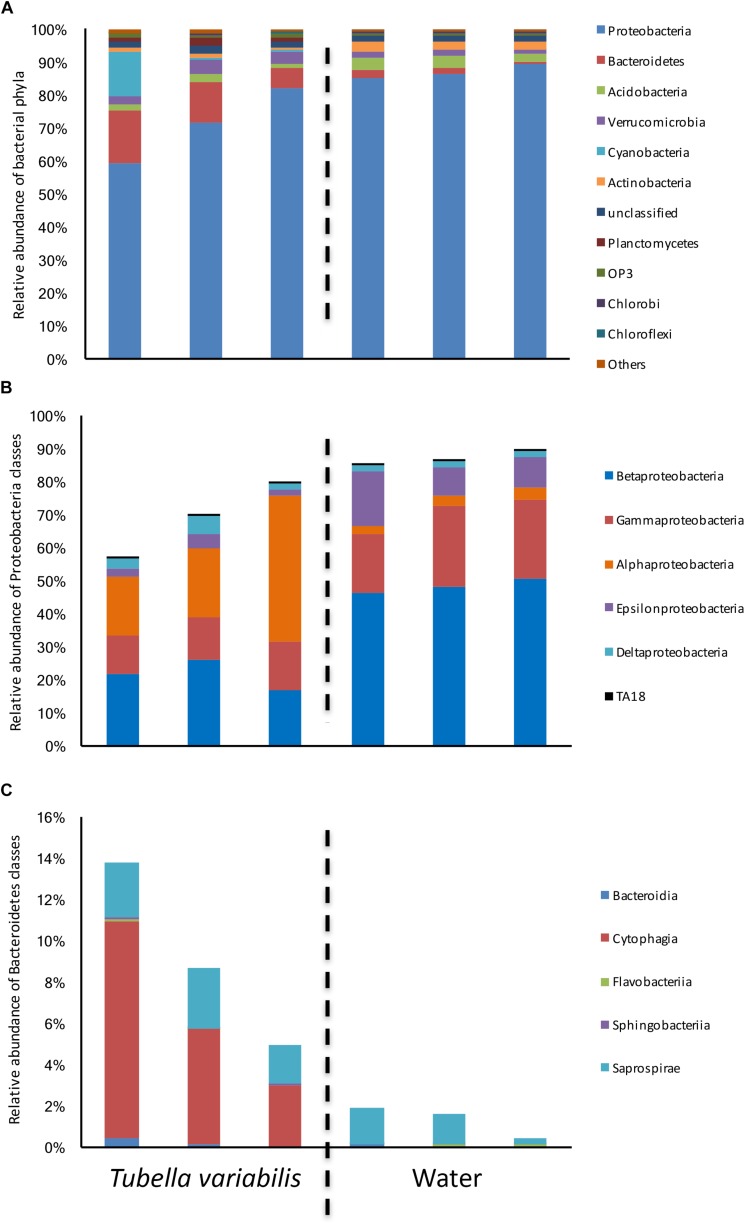
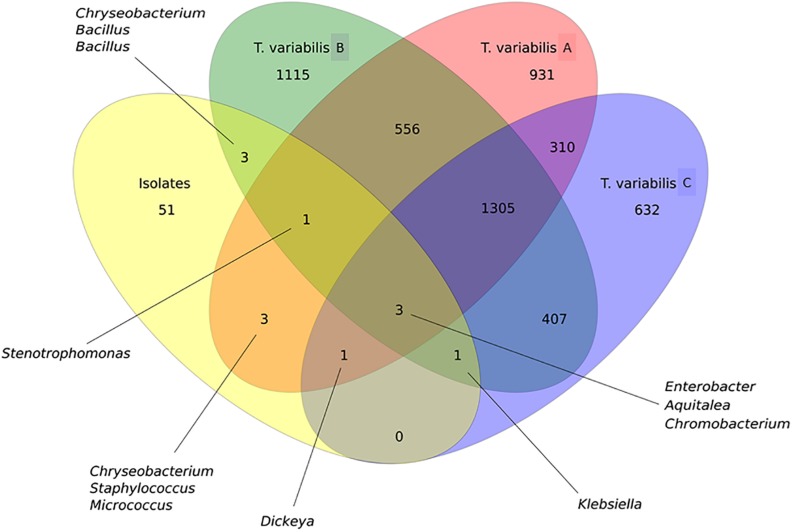
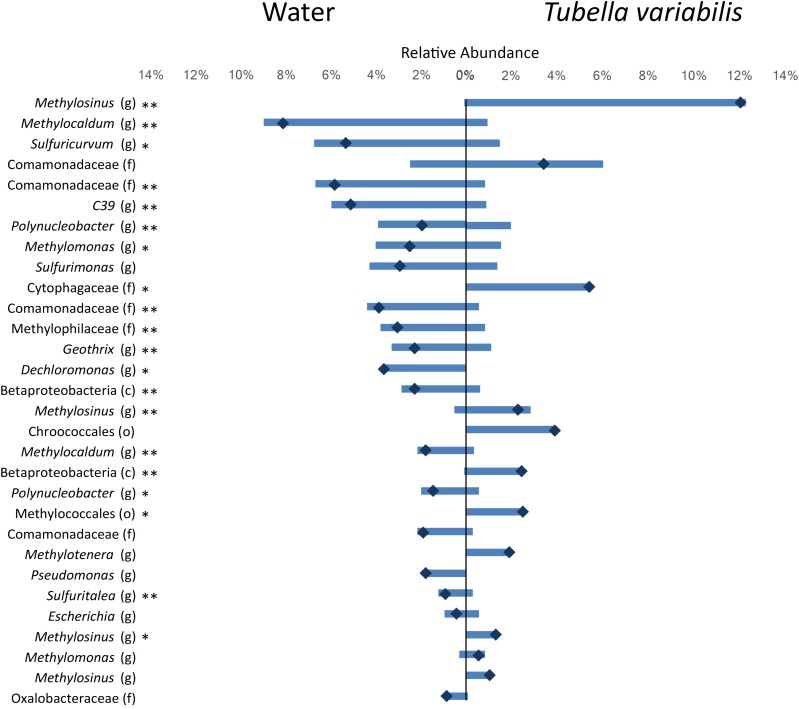
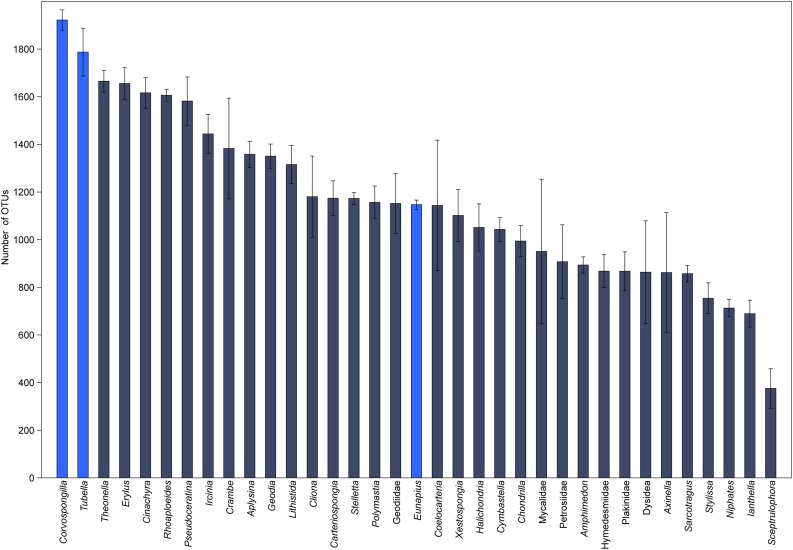
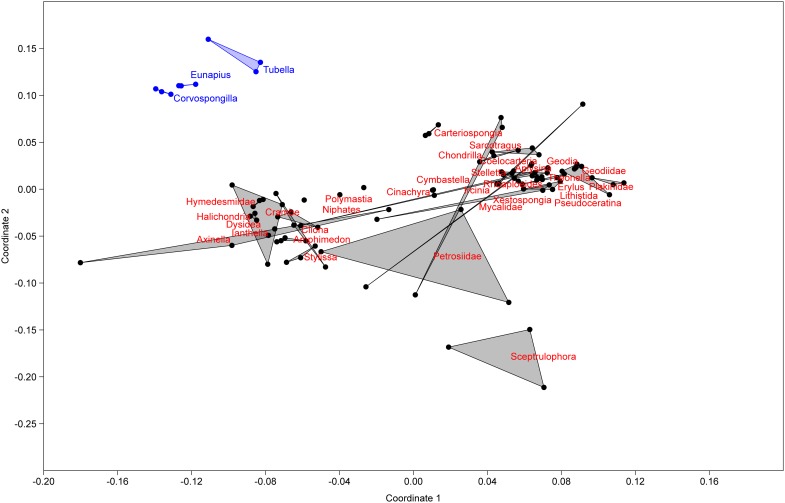
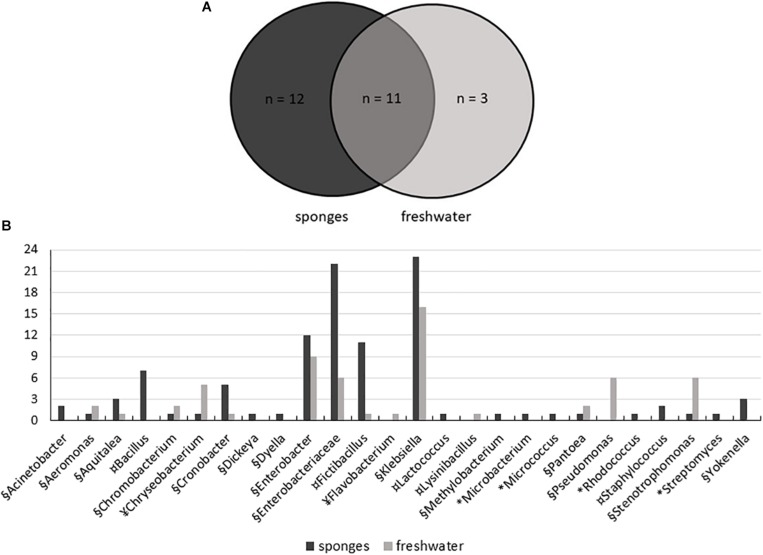
Sponges can host diverse and abundant communities of microorganisms, which constitute an interesting source of bioactive compounds. Thus, to broaden our knowledge about the diversity of the microbiota that is found in freshwater sponges, the microbial community of was analyzed using culture-independent and culture-dependent approaches. Additionally, sponge-associated bacteria were compared with those living in the surrounding waters. Bacteria were also tested for antimicrobial production. Overall, the microbial composition identified comprises at least 44 phyla belonging mainly to Proteobacteria and low percentages of Bacteroidetes, Acidobacteria, and Verrucomicrobia. Alphaproteobacteria was the dominant class in while Betaproteobacteria was dominant in freshwater. Our data also revealed a high richness of bacteria in comparison to another freshwater sponge and 32 marine sponges. A global comparison of the structure of microbiota of different sponges showed that the main structuring factor may be the sponge environment, with and all freshwater sponges clustering together, and far away from the marine sponges. Bacterial strains from sponges and from freshwater were isolated and 163 morphotypes were phylogenetically identified. These belong to 26 genera, of which 12 were exclusively found in sponge samples and three only in freshwater. Inhibitory activities were also detected among 20-25% of the isolates from sponges and freshwater, respectively. This study presents new information on the composition of the microbial community found in freshwater sponges, which is diverse, abundant and distinct from some marine sponges. Moreover, the antimicrobial activity observed from the bacterial strains might play an important role in shaping microbial communities of the environment.
海绵可容纳多样且丰富的微生物群落,这些群落构成了生物活性化合物的一个有趣来源。因此,为拓宽我们对淡水海绵中微生物群多样性的认识,采用非培养和培养依赖方法对[海绵名称未给出]的微生物群落进行了分析。此外,将与海绵相关的细菌与生活在周围水体中的细菌进行了比较。还对细菌的抗菌产物进行了测试。总体而言,鉴定出的微生物组成至少包括44个门,主要属于变形菌门,以及低比例的拟杆菌门、酸杆菌门和疣微菌门。α-变形菌纲在[海绵名称未给出]中占主导地位,而β-变形菌纲在淡水中占主导地位。我们的数据还显示,与另一种淡水海绵和32种海洋海绵相比,该海绵中的细菌丰富度较高。对不同海绵微生物群结构的全球比较表明,主要的结构因素可能是海绵环境,[海绵名称未给出]和所有淡水海绵聚集在一起,且远离海洋海绵。从海绵和淡水中分离出细菌菌株,并对163种形态型进行了系统发育鉴定。这些属于26个属,其中12个仅在海绵样本中发现,3个仅在淡水中发现。分别在20 - 25%的海绵和淡水分离物中检测到了抑制活性。这项研究提供了关于淡水海绵中微生物群落组成的新信息,该群落多样、丰富且与一些海洋海绵不同。此外,从细菌菌株中观察到的抗菌活性可能在塑造环境微生物群落方面发挥重要作用。