Ghulam Rasool Khawaja, Husain Mureed, Salman Shehzad, Tufail Muhammad, Sukirno Sukirno, Mehmood Khalid, Aslam Farooq Wazirzada, Aldawood Abdulrahman S
Economic Entomology Research Unit, Department of Plant Protection, College of Food and Agriculture Sciences, King Saud University, Riyadh, Kingdom of Saudi Arabia.
Ghazi University, Dera Ghazi Khan, Punjab, Pakistan.
Saudi J Biol Sci. 2020 Jan;27(1):401-406. doi: 10.1016/j.sjbs.2019.10.010. Epub 2019 Oct 30.
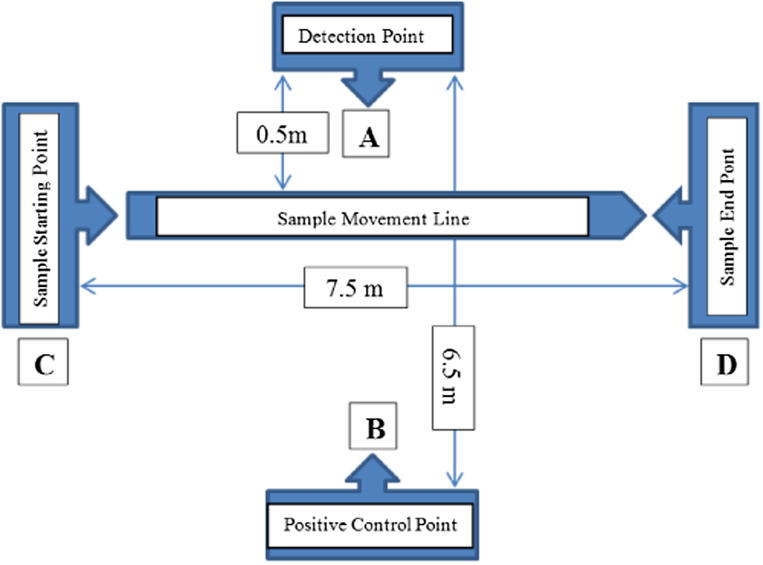
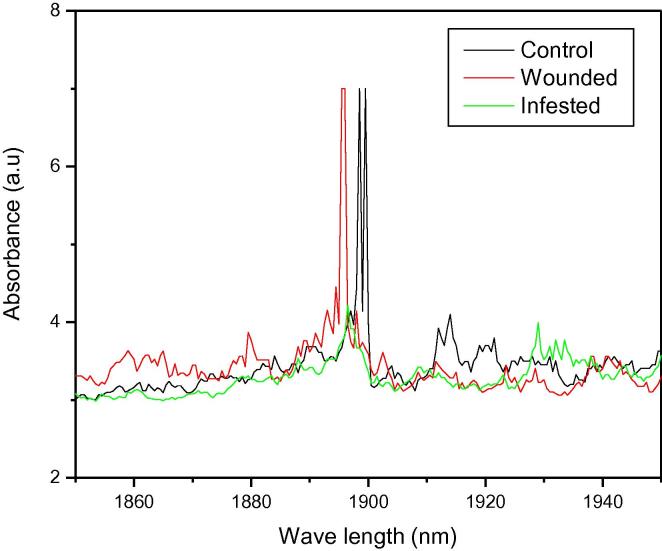
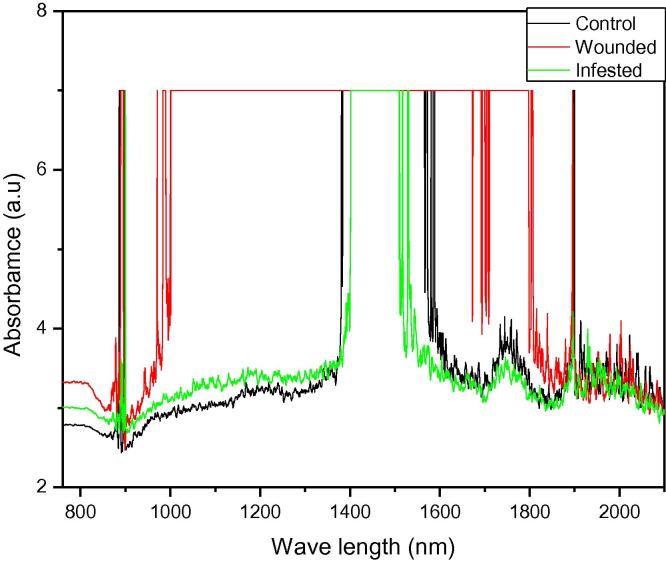
Red palm weevil (RPW) causes severe damage to date palm trees, leading to the death of trees if not detected and treated in time. A major obstacle in RPW control is the difficulty in identifying an early stage infestation In the present study, we measured the efficacy of some non-invasive optical devices including cameras (digital camera and thermal camera), TreeRadarUnit™ (TRU) (Radar 2000, Radar 900), resistograph, magnetic DNA biosensor, and Near-infrared Spectroscopy (NIRS) to detect RPW infestation in date palm trees under field conditions at Riyadh, Saudi Arabia. Date palm trees used in these experiments were selected based on visual observations. After inspection of date palm trees with different devices to detect RPW infestation, each tree was taken down and dissected in detail to validate the accuracy of each device. Results indicated that the visual RPW detection approach presented the highest accuracy (87%) followed by Radar 2000 (77%), Radar 900 (73%), resistograph (73%), thermal camera (61%), and digital camera (52%). Moreover, different stages of RPW placed in plastic cups were fastened onto the healthy date palm trunks to judge RPW presence, the magnetic DNA biosensor correctly detected RPW eggs 75% of the time, followed by detection of larvae (64%) and the control (empty cup) (54%). In another experiment where determinations were made in an open area, the efficiency of the DNA biosensor for detecting adults was 100%, followed by 83%, 63%, 60%, and 39% for pupae, larvae, eggs, and control, respectively. Absorption spectra generated through NIRS for infested, wounded, and control samples of date palm tissue showed a remarkable variation in the gradient of the corresponding peaks between 1850 nm and 1950 nm. Based on the detection efficiency of the tested devices, the resistograph and NIRS have the best potential to detect RPW infestation in date palm trees.
红棕象甲(RPW)会对枣椰树造成严重损害,如果不及时发现和处理,会导致树木死亡。RPW防治的一个主要障碍是难以识别早期虫害。在本研究中,我们测量了一些非侵入式光学设备的功效,包括相机(数码相机和热成像相机)、TreeRadarUnit™(TRU)(Radar 2000、Radar 900)、阻力仪、磁性DNA生物传感器和近红外光谱(NIRS),以在沙特阿拉伯利雅得的田间条件下检测枣椰树中的RPW虫害。这些实验中使用的枣椰树是根据目视观察挑选的。在用不同设备检查枣椰树以检测RPW虫害后,将每棵树砍倒并进行详细解剖,以验证每个设备的准确性。结果表明,目视RPW检测方法的准确率最高(87%),其次是Radar 2000(77%)、Radar 900(73%)、阻力仪(73%)、热成像相机(61%)和数码相机(52%)。此外,将放置在塑料杯中的不同阶段的RPW固定在健康的枣椰树干上以判断RPW的存在,磁性DNA生物传感器正确检测到RPW卵的时间为75%,其次是幼虫(64%)和对照(空杯)(54%)。在另一个在开阔区域进行测定的实验中,DNA生物传感器检测成虫的效率为100%,其次是蛹(83%)、幼虫(63%)、卵(60%)和对照(39%)。通过NIRS生成的枣椰树组织受侵染、受伤和对照样品的吸收光谱显示,在1850 nm至1950 nm之间相应峰的梯度有显著变化。基于测试设备的检测效率,阻力仪和NIRS在检测枣椰树中的RPW虫害方面具有最佳潜力。