Wang Zheng, Chen Mo, Pan Junjie, Wang Xuan, Chen Xiao-Song, Shen Kun-Wei
Comprehensive Breast Health Center, Ruijin Hospital, Shanghai Jiao Tong University School of Medicine, Shanghai 200025, China.
Cancer Metastasis Institute, Fudan University, Shanghai 200040, China.
J Cancer. 2020 Jan 1;11(2):292-300. doi: 10.7150/jca.34572. eCollection 2020.
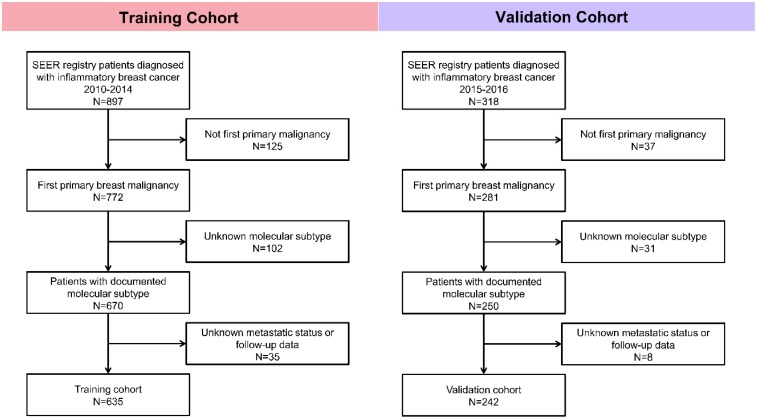
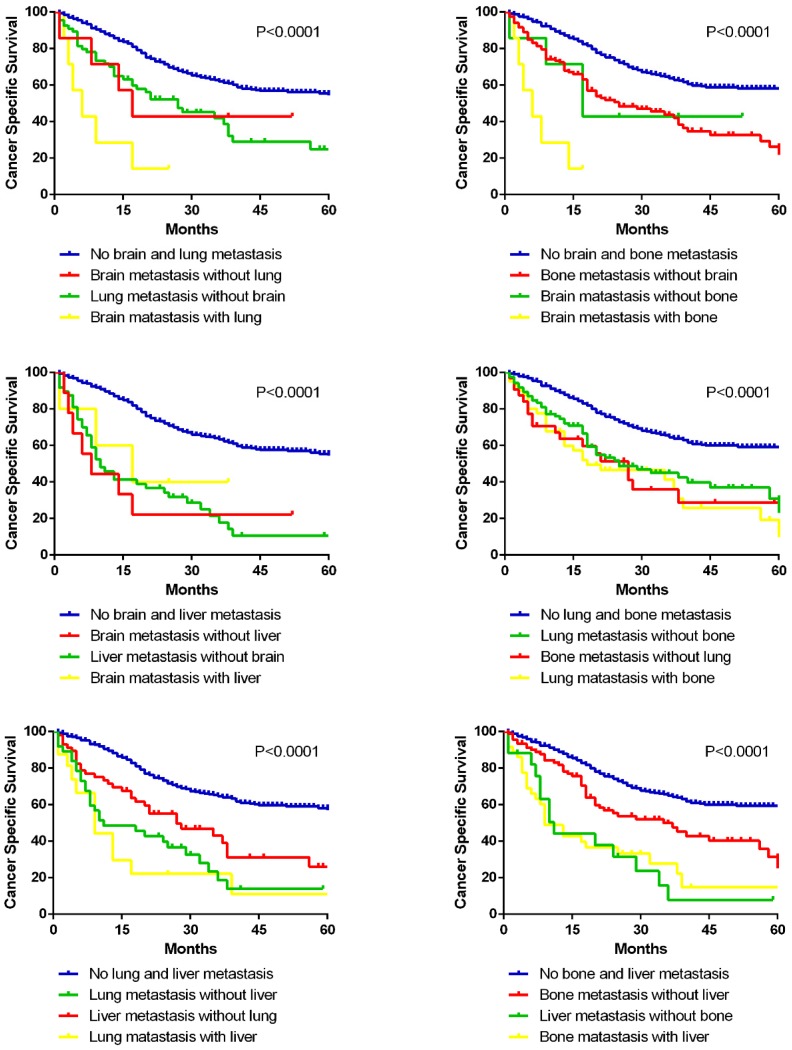
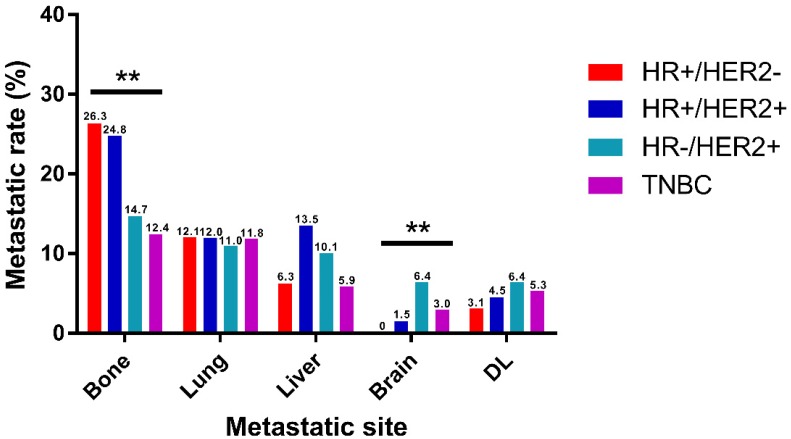
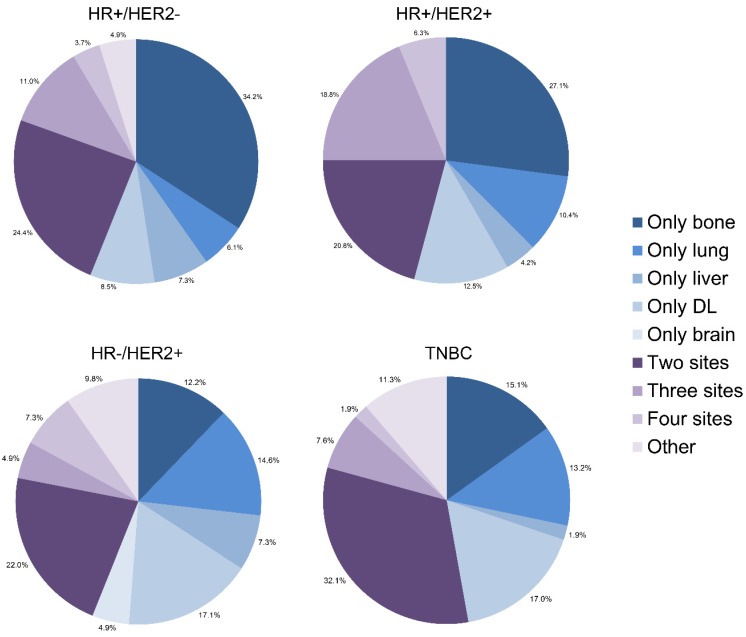
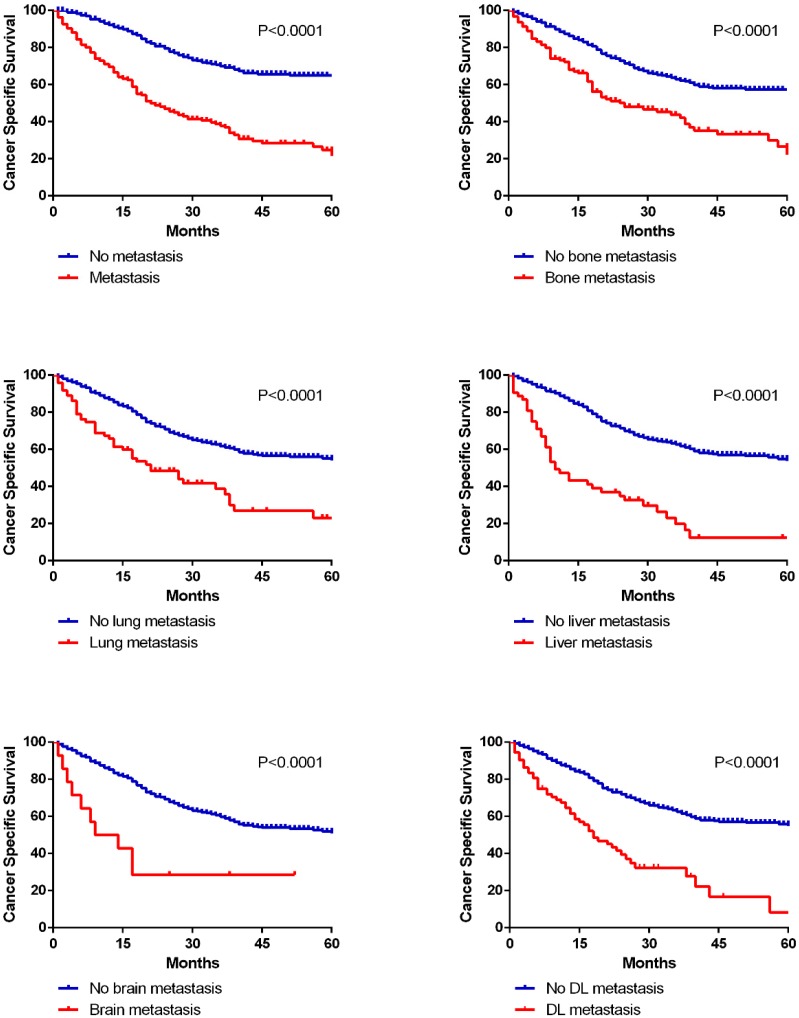
Inflammatory breast cancer (IBC) is a fatal form of breast cancer. IBC patients present with unfavorable prognosis mainly attributable to high risk of distant metastasis. Thus, in this cohort study, we aimed to explore metastatic profiles of different molecular subtypes of IBC and elucidate the clinical and prognostic characteristics among different metastatic sites. Patients diagnosed as IBC between 2010 and 2016 were identified from the Surveillance, Epidemiology and End Results (SEER) database. Chi-square tests were performed to compare metastatic distribution among different molecular subtypes. We further used odds ratio calculation to analyze the combined metastatic patterns. Kaplan-Meier methods and multivariate Cox regression models were applied to analyze survival data among different metastatic organs. In total, we enrolled 635 IBC patients between 2010 and 2014 as the training cohort and 242 IBC patients between 2015 and 2016 as the validation cohort, All the included patients were recorded with known metastatic status, follow-up data and molecular subtype. In the present study, we elaborated the following three points: (1) Elucidating the distribution of single-organ metastases in IBC. Bone and brain were the most and least common metastatic lesions for all subtypes of IBC, separately. (2) Clarifying the combined metastatic patterns and tendency of co-metastases. Bi-organ metastasis occurred most frequently among all combined metastases. Several combinations, such as liver and bone, lung and brain, were preferential for bi-organ metastasis. (3) Analyzing prognostic values of single-organ and bi-organ metastases. All single-organ distal metastases were independent risk factors indicating an unfavorable prognosis. In conclusion, our results would provide more information for clinical decision and future studies.
炎性乳腺癌(IBC)是一种致命的乳腺癌形式。IBC患者预后不良,主要归因于远处转移的高风险。因此,在这项队列研究中,我们旨在探索IBC不同分子亚型的转移特征,并阐明不同转移部位的临床和预后特征。从监测、流行病学和最终结果(SEER)数据库中识别出2010年至2016年间被诊断为IBC的患者。采用卡方检验比较不同分子亚型之间的转移分布。我们进一步使用比值比计算来分析联合转移模式。应用Kaplan-Meier方法和多变量Cox回归模型分析不同转移器官的生存数据。总共,我们纳入了2010年至2014年间的635例IBC患者作为训练队列,以及2015年至2016年间的242例IBC患者作为验证队列。所有纳入患者均记录有已知的转移状态、随访数据和分子亚型。在本研究中,我们阐述了以下三点:(1)阐明IBC中单器官转移的分布。骨和脑分别是IBC所有亚型中最常见和最不常见的转移病灶。(2)明确联合转移模式和共转移倾向。双器官转移在所有联合转移中发生频率最高。几种组合,如肝和骨、肺和脑,是双器官转移的优先组合。(3)分析单器官和双器官转移的预后价值。所有单器官远处转移都是提示预后不良的独立危险因素。总之,我们的结果将为临床决策和未来研究提供更多信息。