Department of Clinical Dentistry, University of Bergen, Bergen, Norway.
Royal Norwegian Naval Academy, Bergen, Norway.
Sci Rep. 2020 Jan 10;10(1):142. doi: 10.1038/s41598-019-56705-3.
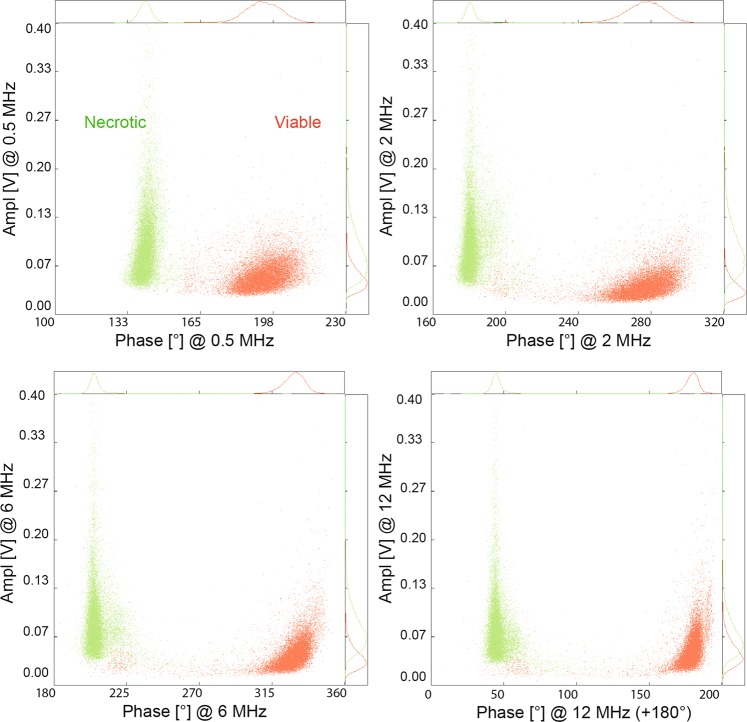
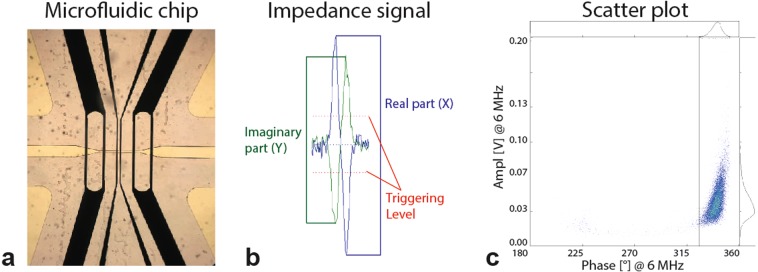
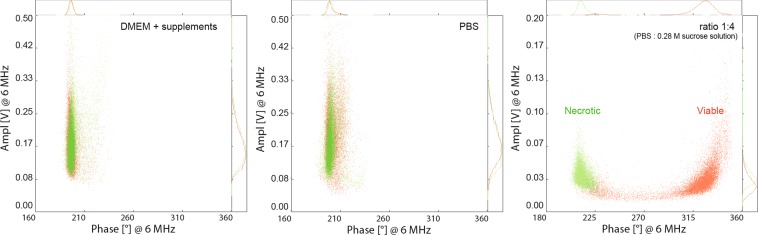
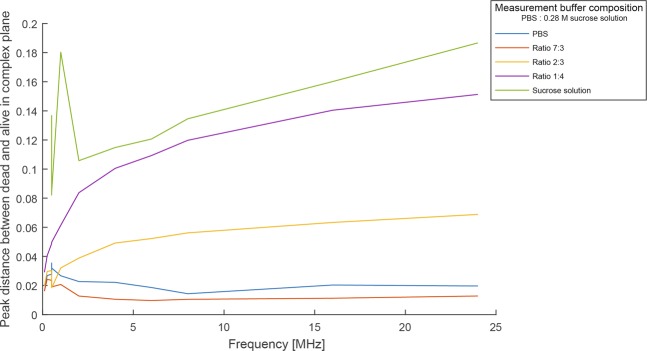
The development of reliable and cost-efficient methods to assess the toxicity of nanomaterials (NMs) is critical for the proper identification of their impact on human health and for ensuring a safe progress of nanotechnology. In this study, we investigated the reliability and applicability of label-free impedance flow cytometry (IFC) for in vitro nanotoxicity screening, which avoids time-consuming labelling steps and minimizes possible NM-induced interferences. U937 human lymphoma cells were exposed for 24 h to eight different nanomaterials at five concentrations (2, 10, 20, 50, and 100 μg/mL). The NMs' effect on viability was measured using IFC and the results were compared to those obtained by trypan blue (TB) dye exclusion and conventional flow cytometry (FC). To discriminate viable from necrotic cells, the IFC measurement settings regarding signal trigger level and frequency, as well as the buffer composition, were optimised. A clear discrimination between viable and necrotic cells was obtained at 6 MHz in a sucrose-based measurement buffer. Nanomaterial-induced interferences were not detected for IFC. The IFC and TB assay results were in accordance for all NMs. The IFC was found to be robust, reliable and less prone to interferences due to the advantage of being label-free.
开发可靠且具有成本效益的方法来评估纳米材料 (NMs) 的毒性对于正确识别它们对人类健康的影响以及确保纳米技术的安全发展至关重要。在这项研究中,我们研究了无标记阻抗流式细胞术 (IFC) 在体外纳米毒性筛选中的可靠性和适用性,该方法避免了耗时的标记步骤,并最大程度地减少了 NM 可能引起的干扰。将 U937 人淋巴瘤细胞在 24 小时内暴露于五种浓度 (2、10、20、50 和 100μg/mL) 的八种不同纳米材料中。使用 IFC 测量 NM 对细胞活力的影响,并将结果与台盼蓝 (TB) 染料排除和传统流式细胞术 (FC) 的结果进行比较。为了区分活细胞和坏死细胞,优化了 IFC 测量的信号触发水平和频率以及缓冲液组成。在基于蔗糖的测量缓冲液中,在 6MHz 时可以清楚地区分活细胞和坏死细胞。未检测到 IFC 中的 NM 诱导干扰。IFC 和 TB 测定结果与所有 NM 均一致。由于无标记的优势,IFC 被发现更稳健、可靠且不易受到干扰。