Elufisan Temidayo O, Rodríguez-Luna Isabel C, Oyedara Omotayo Opemipo, Sánchez-Varela Alejandro, Hernández-Mendoza Armando, Dantán Gonzalez Edgar, Paz-González Alma D, Muhammad Kashif, Rivera Gildardo, Villalobos-Lopez Miguel Angel, Guo Xianwu
Laboratorio de Biotecnologia Genomica, Centro de Biotecnologia Genomica, Instituto Politecnico Nacional, Mexico, Reynosa, Tamaulipas, Mexico.
Science Policy and Innovation Studies (SPIS), National Center for Technology Management Obafemi Awolowo University campus Ile-Ife, Ile-Ife, Osun, Nigeria.
PeerJ. 2020 Jan 6;8:e8102. doi: 10.7717/peerj.8102. eCollection 2020.
are ubiquitous gram-negative bacteria, which can survive in a wide range of environments. They can use many substances for their growth and are known to be intrinsically resistant to many antimicrobial agents. They have been tested for biotechnological applications, bioremediation, and production of antimicrobial agents.
. Pemsol was isolated from a crude oil contaminated soil. The capability of this isolate to tolerate and degrade polycyclic aromatic hydrocarbons (PAH) such as anthraquinone, biphenyl, naphthalene, phenanthrene, phenanthridine, and xylene was evaluated in Bushnell Hass medium containing PAHs as the sole carbon sources. The metabolites formed after 30-day degradation of naphthalene by Pemsol were analyzed using Fourier Transform Infra-red Spectroscopic (FTIR), Ultra-Performance Liquid Chromatography-Mass Spectrometry (UPLC-MS) and Gas Chromatography-Mass Spectrometry (GC-MS). The genome of Pemsol was also sequenced and analyzed.
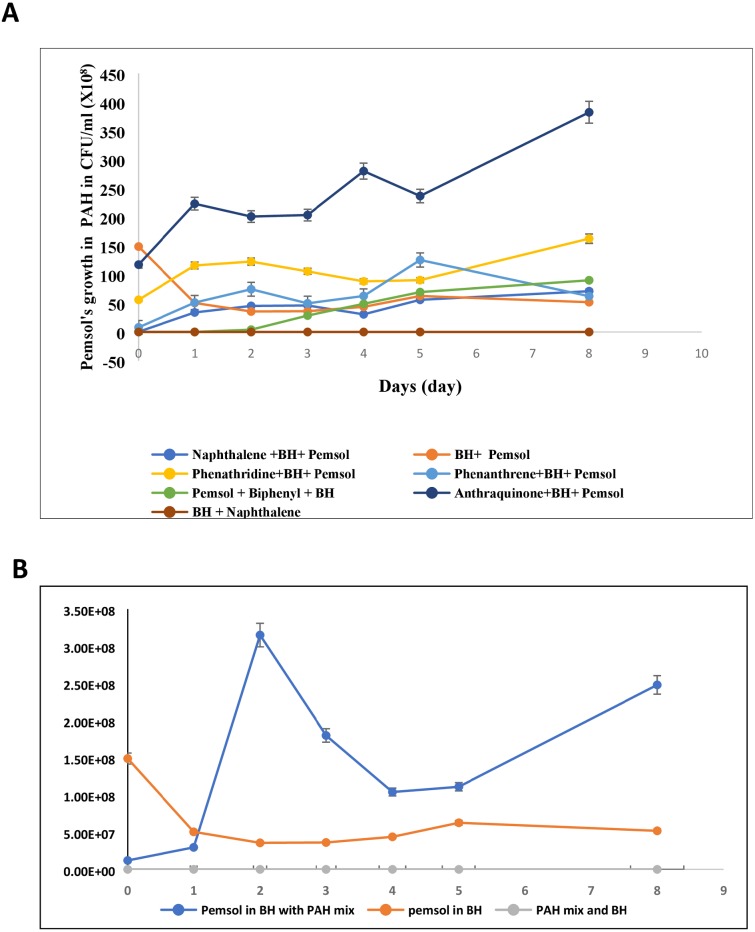
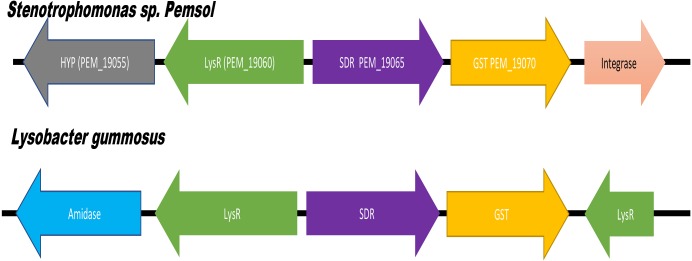
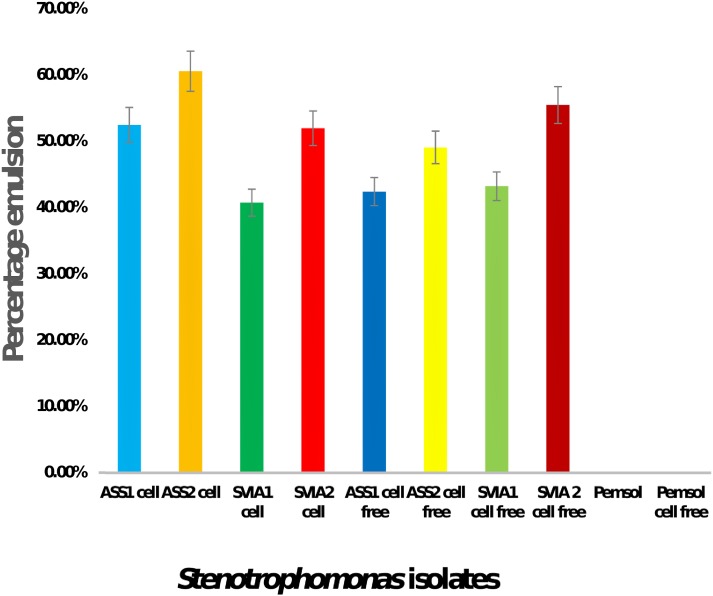
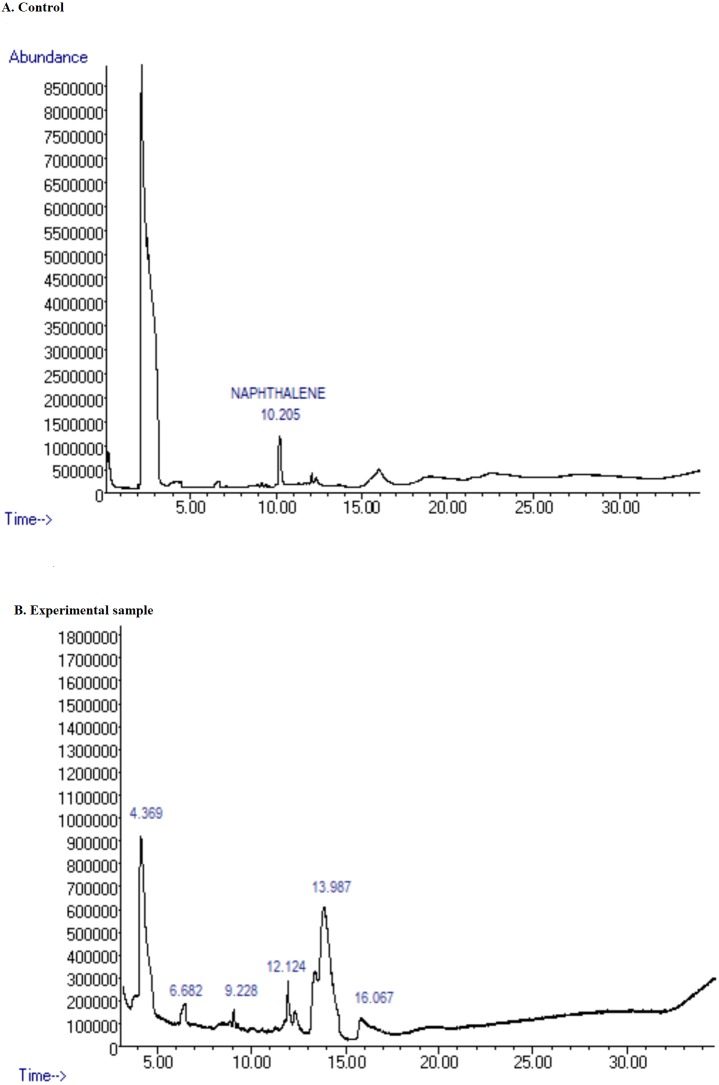
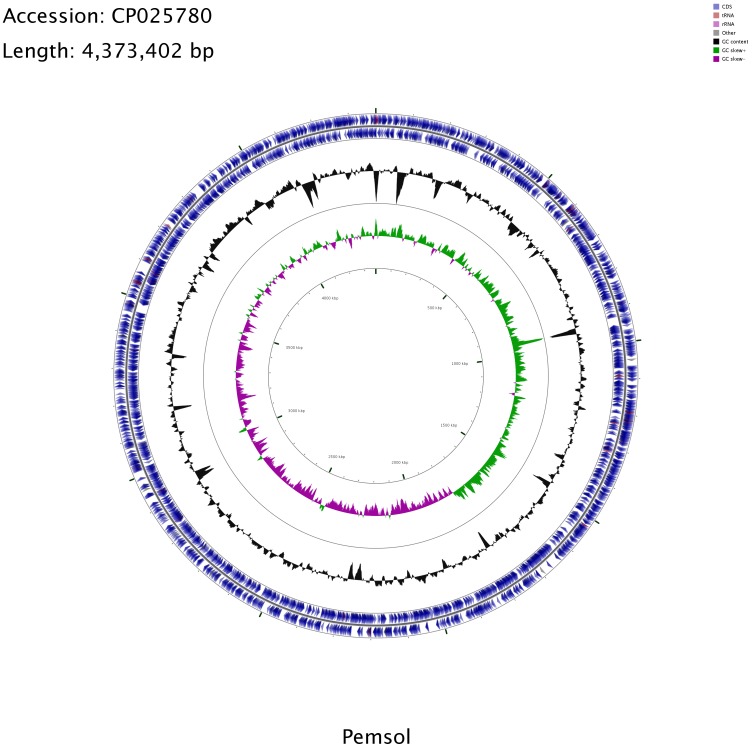
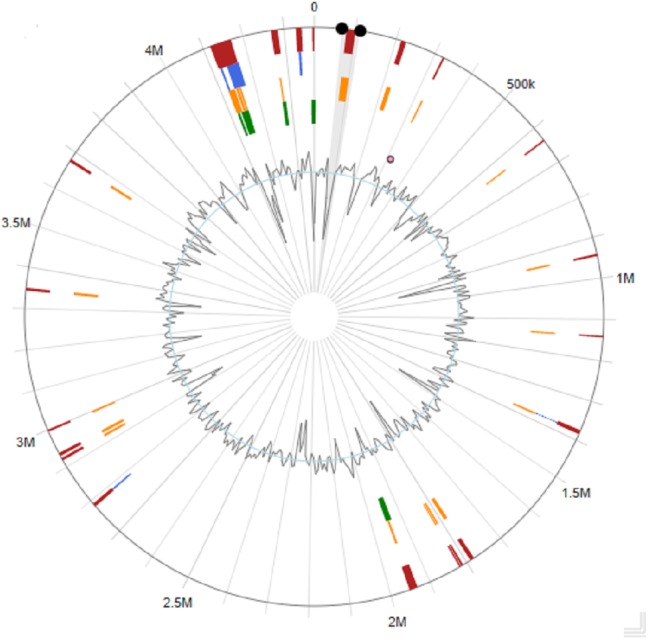
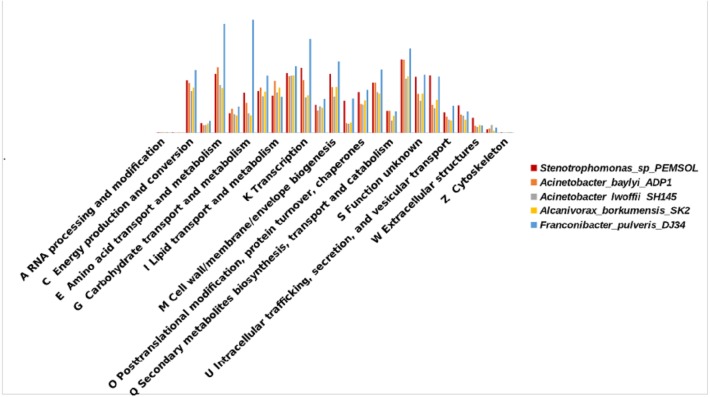
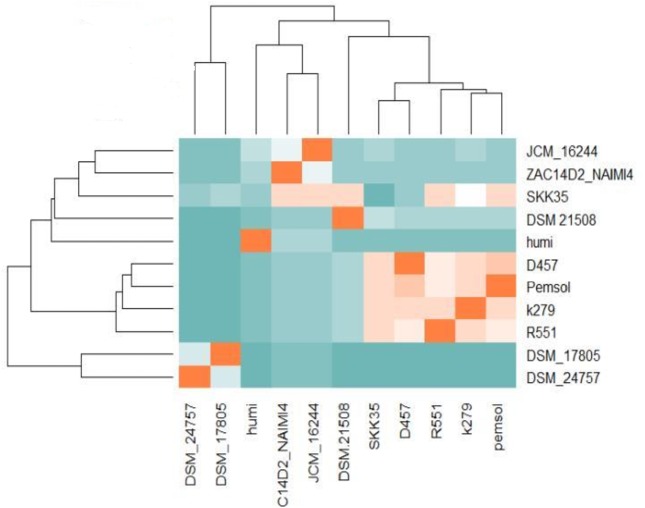
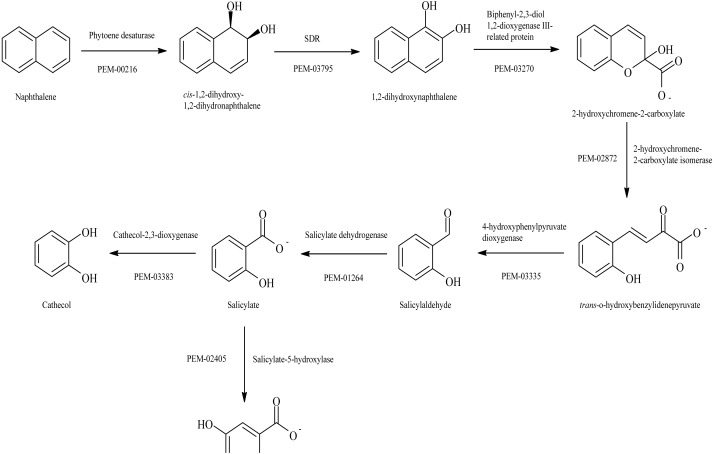
Anthraquinone, biphenyl, naphthalene, phenanthrene, and phenanthridine except xylene can be used as sole carbon sources for Pemsol's growth in Bushnell Hass medium. The degradation of naphthalene at a concentration of 1 mg/mL within 30 days was tested. A newly formed catechol peak and the disappearance of naphthalene peak detected on the UPLC-MS, and GC-MS analyses spectra respectively confirmed the complete degradation of naphthalene. Pemsol does not produce biosurfactant and neither bio-emulsify PAHs. The whole genome was sequenced and assembled into one scaffold with a length of 4,373,402 bp. A total of 145 genes involved in the degradation of PAHs were found in its genome, some of which are Pemsol-specific as compared with other 11 genomes. Most specific genes are located on the genomic islands. sp. Pemsol's possession of few genes that are associated with bio-emulsification gives the genetic basis for its inability to bio-emulsify PAH. A possible degradation pathway for naphthalene in Pemsol was proposed following the analysis of Pemsol's genome. ANI and GGDH analysis indicated that Pemsol is likely a new species of It is the first report on a complete genome sequence analysis of a PAHdegrading . sp. Pemsol possesses features that make it a good bacterium for genetic engineering and will be an excellent tool for the remediation of crude oil or PAH-contaminated soil.
是无处不在的革兰氏阴性菌,可在多种环境中生存。它们能利用多种物质生长,且已知对多种抗菌剂具有内在抗性。它们已被测试用于生物技术应用、生物修复和抗菌剂生产。
从原油污染土壤中分离出Pemsol。在以多环芳烃(PAH)作为唯一碳源的布什内尔·哈斯培养基中,评估该分离株耐受和降解蒽醌、联苯、萘、菲、菲啶和二甲苯等多环芳烃的能力。使用傅里叶变换红外光谱(FTIR)、超高效液相色谱 - 质谱联用(UPLC - MS)和气相色谱 - 质谱联用(GC - MS)分析Pemsol对萘进行30天降解后形成的代谢产物。还对Pemsol的基因组进行了测序和分析。
在布什内尔·哈斯培养基中,除二甲苯外,蒽醌、联苯、萘、菲和菲啶可作为Pemsol生长的唯一碳源。测试了Pemsol在30天内对浓度为1 mg/mL的萘的降解情况。UPLC - MS和GC - MS分析谱图上分别检测到新形成的儿茶酚峰和萘峰的消失,证实了萘的完全降解。Pemsol不产生生物表面活性剂,也不生物乳化多环芳烃。全基因组测序并组装成一个长度为4,373,402 bp的支架。在其基因组中总共发现了145个参与多环芳烃降解的基因,与其他11个基因组相比,其中一些是Pemsol特有的。大多数特定基因位于基因组岛上。 sp. Pemsol拥有很少与生物乳化相关的基因,这为其无法生物乳化多环芳烃提供了遗传基础。在对Pemsol的基因组进行分析后,提出了Pemsol中萘可能的降解途径。ANI和GGDH分析表明,Pemsol可能是 的一个新物种。这是关于降解多环芳烃的 sp. 的全基因组序列分析的首次报道。Pemsol具有使其成为基因工程良好细菌的特性,将是修复原油或多环芳烃污染土壤的优秀工具。