Department of Psychology, College of Arts and Sciences, University of Oregon, Eugene, OR 97403, USA.
Department of Food Science and Human Nutrition, College of Agricultural and Life Sciences, University of Florida, Gainesville, FL 32611, USA.
Nutrients. 2020 Jan 7;12(1):167. doi: 10.3390/nu12010167.
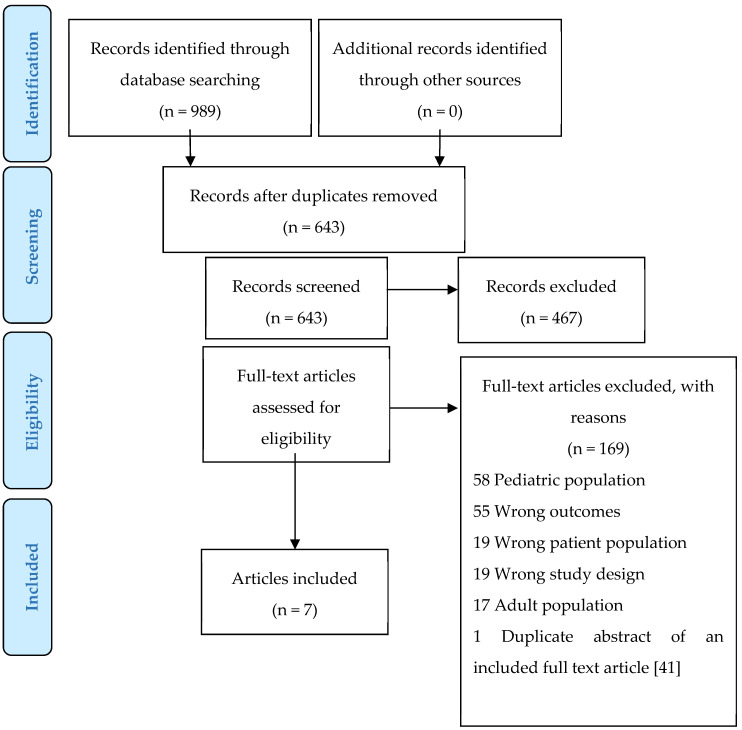
Eating behaviors, including unhealthy snacking or excessive snacking leading to excess calorie consumption, may contribute to obesity among adolescents. Socioeconomic status (SES) also significantly influences eating behaviors, and low SES is associated with increased risk for obesity. However, little is known regarding the relationship between snacking behavior and SES among adolescents and how this may contribute to obesity-related outcomes. The primary objective of this scoping review was to review the literature to assess and characterize the relationship between SES and snacking in adolescents. The secondary objective was to assess weight-related outcomes and their relation to snacking habits. Included articles were published between January 2000 and May 2019; written in English, Portuguese, or Spanish; and focused on adolescents (13-17 years). In total, 14 bibliographic databases were searched, and seven studies met the inclusion criteria. Preliminary evidence from the seven included studies suggests a weak but potential link between SES and snacking. Additionally, these dietary patterns seemed to differ by sex and income type of country. Finally, only three of the included studies addressed weight-related outcomes, but the overall available evidence suggests that snacking does not significantly affect weight-related outcomes. Due to the small number of included studies, results should be interpreted with caution.
饮食习惯,包括不健康的零食或过量零食导致摄入过多卡路里,可能导致青少年肥胖。社会经济地位(SES)也会显著影响饮食习惯,低 SES 与肥胖风险增加有关。然而,关于青少年中零食行为与 SES 之间的关系以及这如何导致与肥胖相关的结果,人们知之甚少。本范围综述的主要目的是审查文献,评估和描述 SES 与青少年零食之间的关系。次要目的是评估与体重相关的结果及其与零食习惯的关系。纳入的文章发表于 2000 年 1 月至 2019 年 5 月;用英语、葡萄牙语或西班牙语撰写;并集中于青少年(13-17 岁)。总共搜索了 14 个书目数据库,有 7 项研究符合纳入标准。这 7 项纳入研究的初步证据表明 SES 和零食之间存在微弱但潜在的联系。此外,这些饮食模式似乎因性别和国家的收入类型而异。最后,只有 3 项纳入的研究涉及与体重相关的结果,但现有证据总体表明,零食不会显著影响与体重相关的结果。由于纳入研究的数量较少,结果应谨慎解释。