Salas-Lais Angel Gustavo, Robles-Contreras Atzín, Balderas-López José Abraham, Bautista-de Lucio Victor Manuel
Departamento de Microbiología y Proteómica Ocular de la Unidad de Investigación del Instituto de Oftalmología "Fundación de Asistencia Privada Conde de Valenciana I.A.P.", Chimalpopoca 14, Obrera, Ciudad de Mexico 06800, Mexico.
Laboratorio de Técnicas Fototérmicas, Departamento de Ciencias Básicas, Unidad Profesional Interdisciplinaria de Biotecnología del Instituto Politécnico Nacional, Acueducto 550, La Laguna Ticomán, Ciudad de Mexico 07340, Mexico.
Microorganisms. 2020 Jan 14;8(1):113. doi: 10.3390/microorganisms8010113.
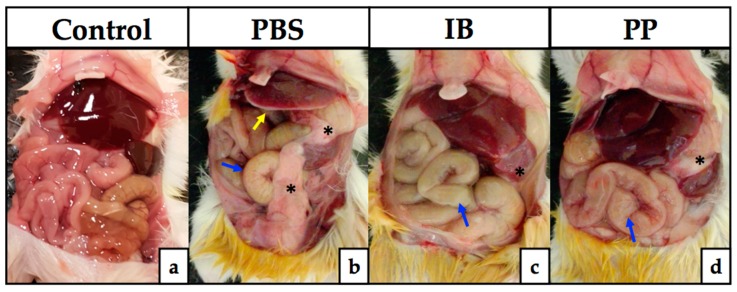
One of the main characteristics of probiotics is their ability to stimulate and modulate the immune response regardless of their viability. (Lc) can stimulate local and systemic immunity, in addition to the activation of macrophages at sites distant from the intestine. Activated macrophages limit the replication of intracellular protozoa, such as , through the production of nitric oxide. The present study aimed to evaluate the protection generated by treatment with viable and non-viable Lc in the murine systemic toxoplasmosis model. CD1 male mice were treated with viable Lc (immunobiotic) and non-viable Lc (paraprobiotic), infected with tachyzoites of RH strain. The reduction of the parasitic load, activation of peritoneal macrophages, inflammatory cytokines, and cell populations was evaluated at 7 days post-infection, in addition to the survival. The immunobiotic and paraprobiotic reduced the parasitic load, but only the immunobiotic increased the activation of peritoneal macrophages, and the production of interferon-gamma (IFN-γ), tumor necrosis factor (TNF), and interleukin-6 (IL-6) while the paraprobiotic increased the production of monocyte chemoattractant protein-1 (MCP-1) and T CD4CD44 lymphocytes. Viable and non-viable Lc increases survival but does not prevent the death of animals. The results provide evidence about the remote immunological stimulation of viable and non-viable Lc in an in vivo parasitic model.
益生菌的主要特性之一是无论其生存能力如何,都能够刺激和调节免疫反应。除了激活远离肠道部位的巨噬细胞外,(Lc)还能刺激局部和全身免疫。活化的巨噬细胞通过产生一氧化氮来限制细胞内原生动物(如)的复制。本研究旨在评估在小鼠全身弓形虫病模型中,活的和灭活的Lc治疗所产生的保护作用。用活的Lc(免疫益生菌)和灭活的Lc(副益生菌)处理CD1雄性小鼠,然后用RH株速殖子感染。在感染后7天评估寄生虫负荷的降低、腹膜巨噬细胞的活化、炎性细胞因子和细胞群体,以及生存率。免疫益生菌和副益生菌都降低了寄生虫负荷,但只有免疫益生菌增加了腹膜巨噬细胞的活化以及干扰素-γ(IFN-γ)、肿瘤坏死因子(TNF)和白细胞介素-6(IL-6)的产生,而副益生菌增加了单核细胞趋化蛋白-1(MCP-1)和T CD4CD44淋巴细胞的产生。活的和灭活的Lc都能提高生存率,但不能防止动物死亡。这些结果为活的和灭活的Lc在体内寄生虫模型中的远程免疫刺激提供了证据。