Latvian Biomedical Research and Study Centre, Ratsupites 1, Riga, 1067, Latvia.
Institute of Microbiology and Biotechnology, University of Latvia, Jelgavas 1, Riga, 1004, Latvia.
Nat Commun. 2020 Jan 20;11(1):388. doi: 10.1038/s41467-019-14205-y.
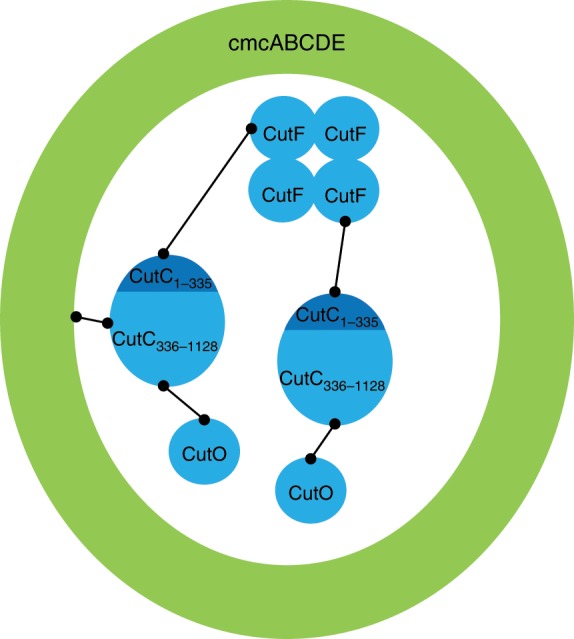
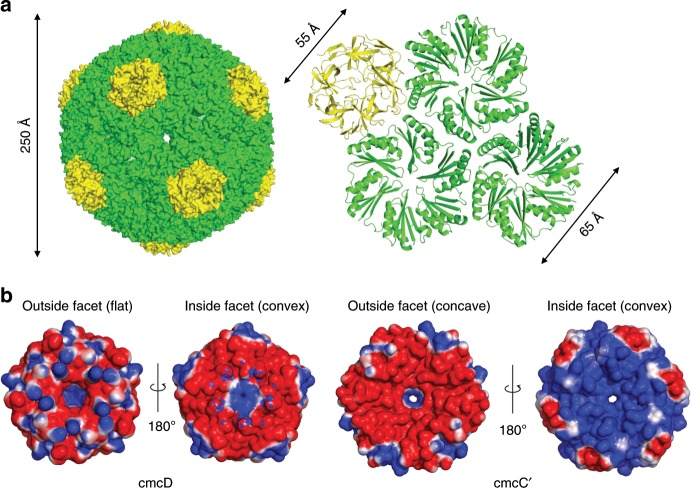
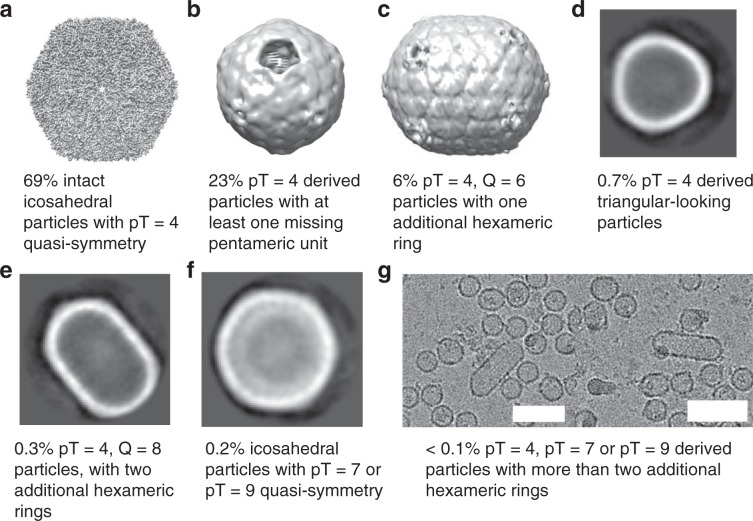
Bacterial microcompartments (BMCs) are prokaryotic organelles consisting of a protein shell and an encapsulated enzymatic core. BMCs are involved in several biochemical processes, such as choline, glycerol and ethanolamine degradation and carbon fixation. Since non-native enzymes can also be encapsulated in BMCs, an improved understanding of BMC shell assembly and encapsulation processes could be useful for synthetic biology applications. Here we report the isolation and recombinant expression of BMC structural genes from the Klebsiella pneumoniae GRM2 locus, the investigation of mechanisms behind encapsulation of the core enzymes, and the characterization of shell particles by cryo-EM. We conclude that the enzymatic core is encapsulated in a hierarchical manner and that the CutC choline lyase may play a secondary role as an adaptor protein. We also present a cryo-EM structure of a pT = 4 quasi-symmetric icosahedral shell particle at 3.3 Å resolution, and demonstrate variability among the minor shell forms.
细菌微室(BMCs)是由蛋白质外壳和包裹的酶核心组成的原核细胞器。BMCs 参与了几种生化过程,如胆碱、甘油和乙醇胺的降解以及碳固定。由于非天然酶也可以被包裹在 BMCs 中,因此更好地了解 BMC 外壳的组装和包裹过程可能对合成生物学的应用有用。在这里,我们报告了从肺炎克雷伯氏菌 GRM2 基因座中分离和重组表达 BMC 结构基因,研究了核心酶包裹背后的机制,并通过 cryo-EM 对壳颗粒进行了表征。我们得出结论,酶的核心是分层包裹的,而 CutC 胆碱裂解酶可能作为一种衔接蛋白发挥次要作用。我们还展示了一个分辨率为 3.3 Å 的 pT=4 拟准二十面体 icosahedral shell 颗粒的 cryo-EM 结构,并证明了次要壳形式之间的可变性。