State Key Laboratory of Tea Plant Biology and Utilization, Anhui Agricultural University, Hefei, China.
Tea Research Institute, Anhui Academy of Agricultural Sciences, Huangshan, China.
Sci Rep. 2020 Jan 22;10(1):933. doi: 10.1038/s41598-020-57805-1.
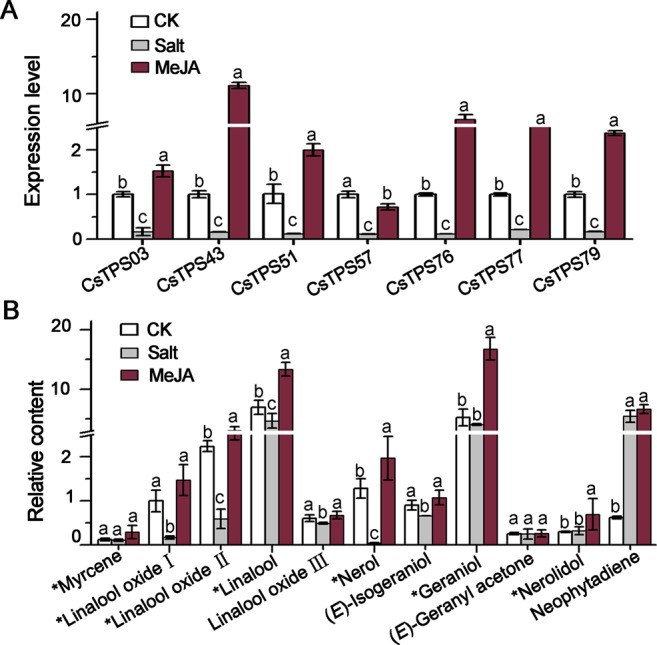
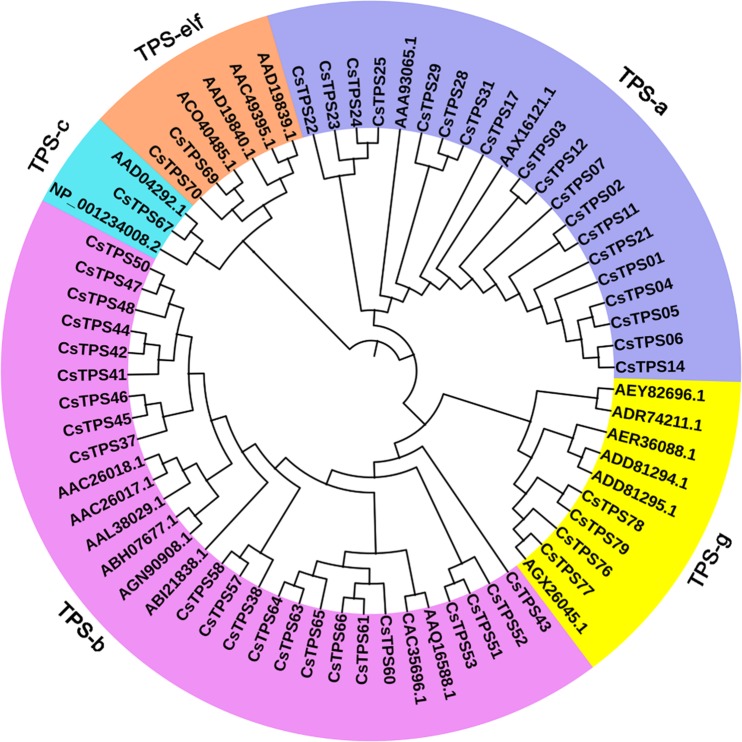
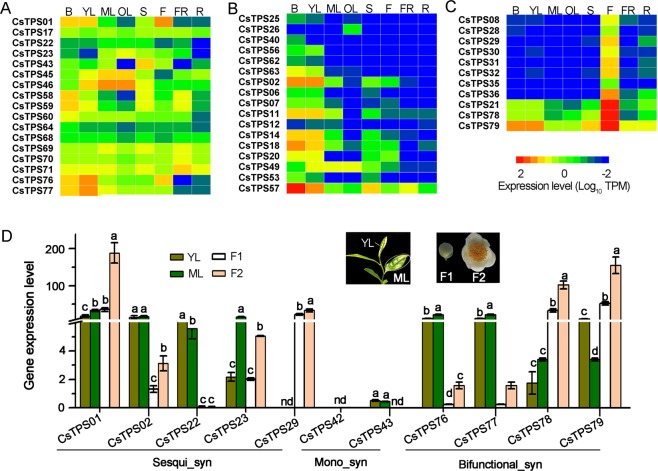
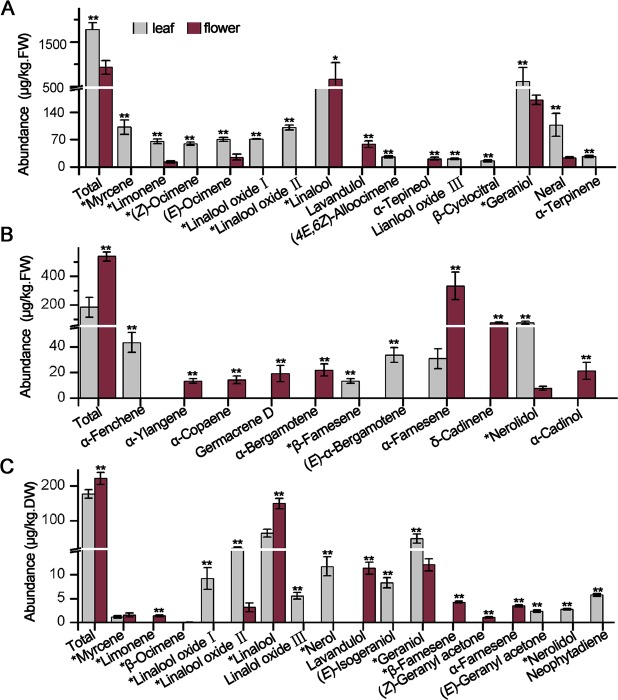
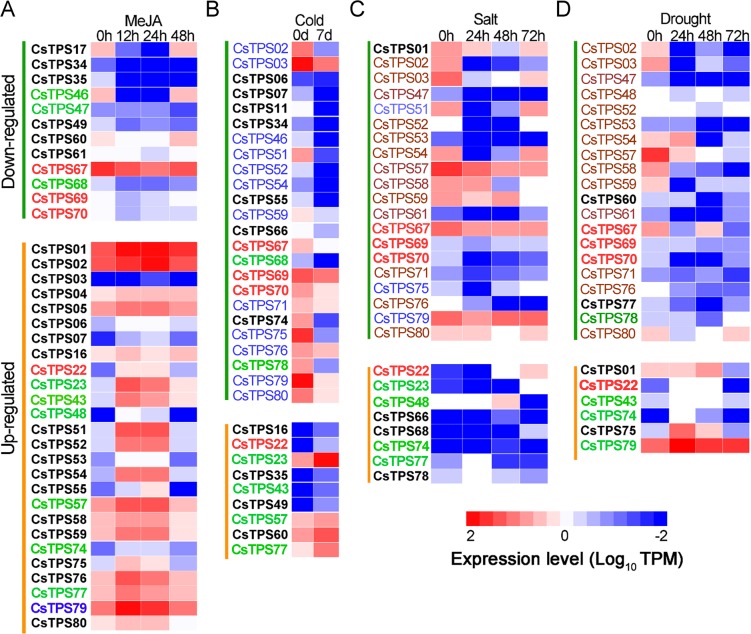
For a better understanding terpenoid volatile production in Camellia sinensis, global terpenoid synthase gene (TPS) transcription analysis was conducted based on transcriptomic data combined with terpenoid metabolic profiling under different abiotic stress conditions. Totally 80 TPS-like genes were identified. Twenty-three CsTPS genes possessed a complete coding sequence and most likely were functional. The remaining 57 in the currently available database lack essential gene structure or full-length transcripts. Distinct tempo-spatial expression patterns of CsTPS genes were found in tea plants. 17 genes were substantially expressed in all the tested organs with a few exceptions. The other 17 were predominantly expressed in leaves whereas additional eight were primarily expressed in flowers. Under the treatments of cold acclimation, salt and polyethylene glycol, CsTPS67, -69 and -71 were all suppressed and the inhibited expression of many others were found in multiple stress treatments. However, methyl jasmonate resulted in the enhanced expression of the majority of CsTPS genes. These transcription data were largely validated using qPCR. Moreover, volatile terpenoid profiling with leaves, flowers and stress-treated plants revealed a general association between the abundances of mono- and sesqui-terpenoids and some CsTPS genes. These results provide vital information for future studies on CsTPS regulation of terpenoid biosynthesis.
为了更好地理解茶树萜类挥发物的产生,本研究基于转录组数据并结合不同非生物胁迫条件下的萜类代谢谱分析,对全球萜类合酶基因(TPS)的转录进行了分析。共鉴定出 80 个类 TPS 基因。23 个 CsTPS 基因具有完整的编码序列,很可能具有功能。目前数据库中剩余的 57 个基因缺乏必要的基因结构或全长转录本。茶树中 CsTPS 基因的时空表达模式存在明显差异。17 个基因在所有测试器官中均大量表达,仅有少数例外。另外 17 个基因主要在叶片中表达,而另外 8 个基因主要在花中表达。在低温驯化、盐和聚乙二醇处理下,CsTPS67、-69 和 -71 均被抑制,在多种胁迫处理中发现许多其他基因的表达受到抑制。然而,茉莉酸甲酯导致大多数 CsTPS 基因的表达增强。这些转录数据使用 qPCR 进行了大量验证。此外,对叶片、花朵和胁迫处理植物的挥发性萜类化合物进行分析,揭示了单萜和倍半萜的丰度与一些 CsTPS 基因之间的普遍相关性。这些结果为今后研究 CsTPS 对萜类生物合成的调控提供了重要信息。