College of Horticulture, Gansu Agricultural University, Lanzhou 730070, China.
Gansu Provincial Key Laboratory of Aridland Crop Science, Gansu Agricultural University, Lanzhou 730070, China.
Int J Mol Sci. 2020 Jan 24;21(3):774. doi: 10.3390/ijms21030774.
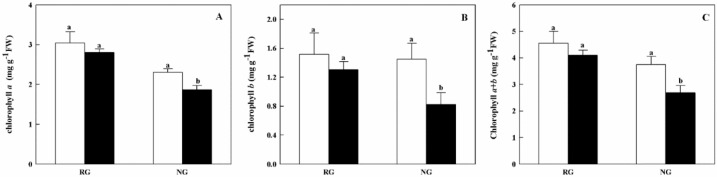
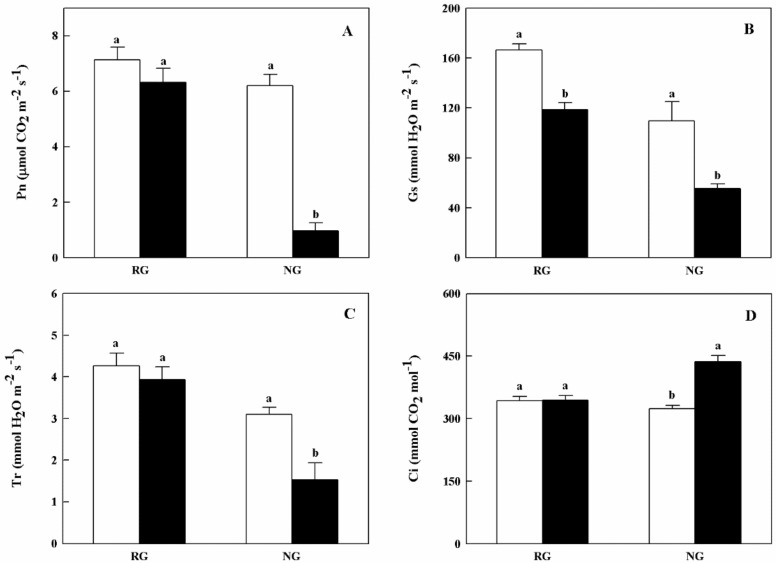
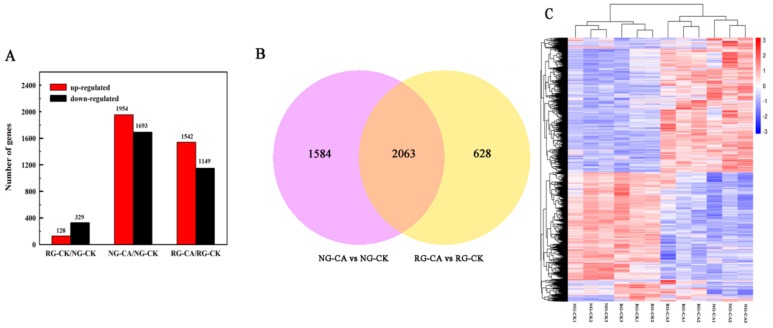
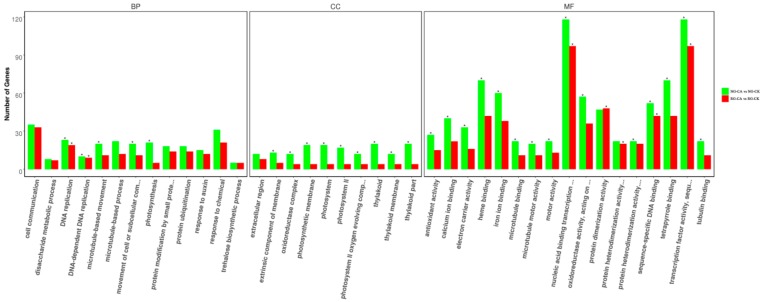
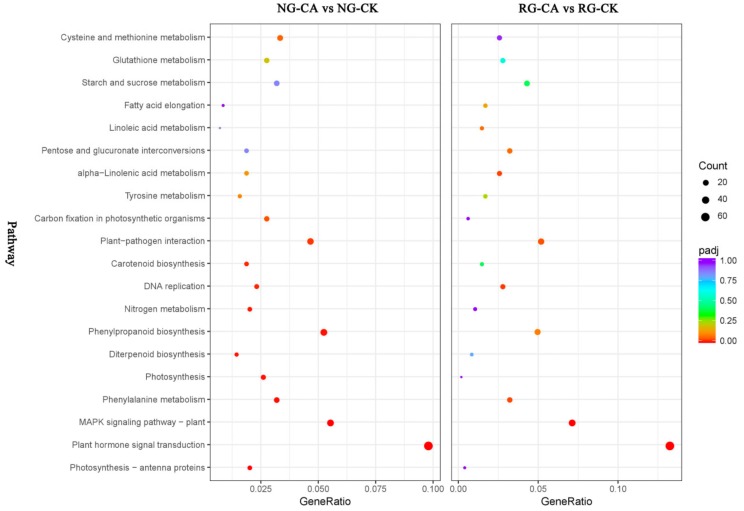
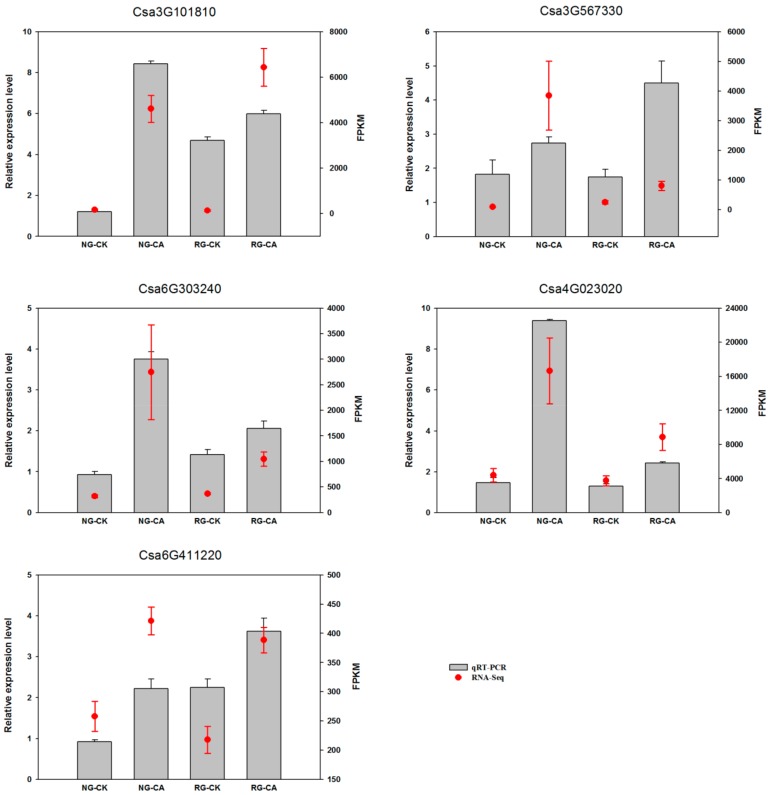
Autotoxicity of root exudates is one of the main reasons for consecutive monoculture problem (CMP) in cucumber under greenhouse cultivation. Rootstock grafting may improve the tolerance of cucumber plants to autotoxic stress. To verify the enhanced tolerance to autotoxic stress and illuminate relevant molecular mechanism, a transcriptomic comparative analysis was performed between rootstock grafted (RG) and non-grafted (NG) cucumber plants by a simulation of exogenous cinnamic acid (CA). The present study confirmed that relatively stable plant growth, biomass accumulation, chlorophyll content, and photosynthesis was observed in RG than NG under CA stress. We identified 3647 and 2691 differentially expressed genes (DEGs) in NG and RG cucumber plants when compared to respective control, and gene expression patterns of RNA-seq was confirmed by qRT-PCR. Functional annotations revealed that DEGs response to CA stress were enriched in pathways of plant hormone signal transduction, MAPK signaling pathway, phenylalanine metabolism, and plant-pathogen interaction. Interestingly, the significantly enriched pathway of photosynthesis-related, carbon and nitrogen metabolism only identified in NG, and most of DEGs were down-regulated. However, most of photosynthesis, Calvin cycle, glycolysis, TCA cycle, and nitrogen metabolism-related DEGs exhibited not or slightly down-regulated in RG. In addition, several stress-related transcription factor families of AP2/ERF, bHLH, bZIP, MYB. and NAC were uniquely triggered in the grafted cucumbers. Overall, the results of this study suggest that rootstock grafting improve the tolerance of cucumber plants to autotoxic stress by mediating down-regulation of photosynthesis, carbon, and nitrogen metabolism-related DEGs and activating the function of stress-related transcription factor. The transcriptome dataset provides an extensive sequence resource for further studies of autotoxic mechanism at molecular level.
根系分泌物的自毒作用是温室栽培黄瓜连作障碍(CMP)的主要原因之一。砧木嫁接可能会提高黄瓜植株对自毒胁迫的耐受性。为了验证嫁接对自毒胁迫的增强耐受性和阐明相关分子机制,通过模拟外源肉桂酸(CA),对嫁接(RG)和未嫁接(NG)黄瓜植株进行了转录组比较分析。本研究证实,在 CA 胁迫下,RG 黄瓜的相对稳定的植物生长、生物量积累、叶绿素含量和光合作用强于 NG。与各自的对照相比,我们在 NG 和 RG 黄瓜植株中分别鉴定出 3647 和 2691 个差异表达基因(DEGs),并通过 qRT-PCR 验证了 RNA-seq 的基因表达模式。功能注释表明,对 CA 胁迫的 DEGs 响应富集在植物激素信号转导、MAPK 信号通路、苯丙氨酸代谢和植物-病原体相互作用途径中。有趣的是,仅在 NG 中鉴定到与光合作用相关、碳氮代谢显著富集的途径,并且大多数 DEGs 下调。然而,在 RG 中,大多数与光合作用、卡尔文循环、糖酵解、三羧酸循环和氮代谢相关的 DEGs 没有或几乎没有下调。此外,嫁接黄瓜中独特地触发了几个与应激相关的转录因子家族,如 AP2/ERF、bHLH、bZIP、MYB 和 NAC。总体而言,本研究结果表明,砧木嫁接通过下调与光合作用、碳和氮代谢相关的 DEGs 并激活与应激相关的转录因子的功能,提高了黄瓜植株对自毒胁迫的耐受性。该转录组数据集为进一步研究分子水平的自毒机制提供了广泛的序列资源。