Bolton Clarke Research Institute, Level 1.01, 973 Nepean Hwy, Bentleigh, Victoria, 3204, Australia.
Austin Health Clinical School, University of Melbourne, Heidelberg, Victoria, Australia.
Int J Equity Health. 2020 Jan 28;19(1):16. doi: 10.1186/s12939-020-1124-x.
The health and aged care workforce must understand and support the diverse needs of older people to enhance their care experience. We previously identified five principles of diversity training for this workforce: awareness of unconscious bias and prejudice; promotion of inclusion; access and equity; appropriate engagement; and intersectionality. This study aims to explore how these principles are considered from the perspectives of older Australians.
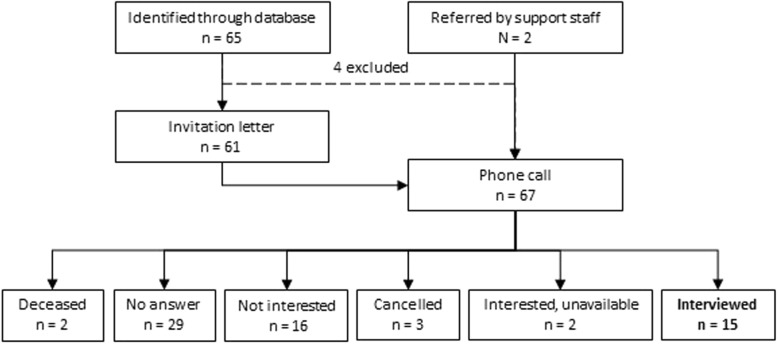
Older people (≥65 years) receiving home care and nursing services based in Victoria, Australia were invited to participate in a home-based semi-structured interview about their experience of, or with, diversity. Interviews were thematically analysed using a priori categories based on our previous work on principles of diversity training, and themes were interpreted and expanded upon based on the participants' experiences and understanding of diversity concepts and their care needs.
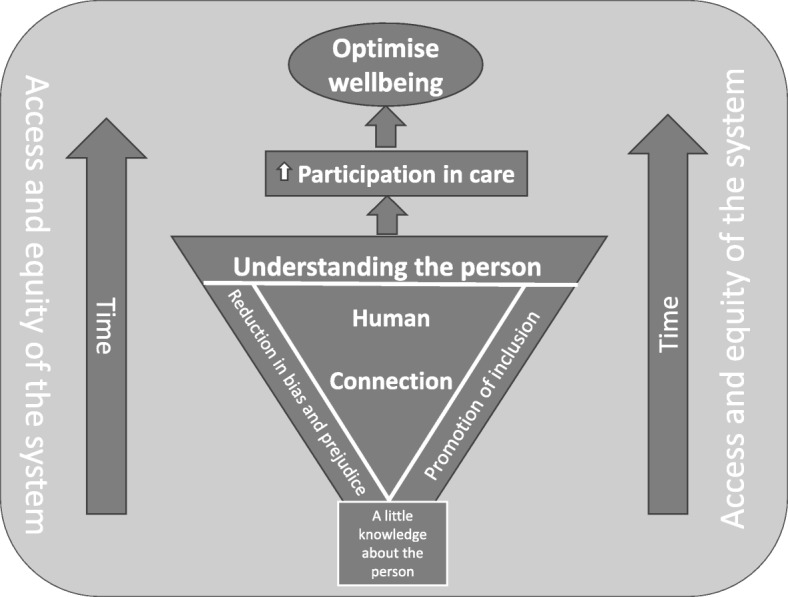
Fifteen older people (seven female, eight male), mean age 76 years (range 71-85 years), were interviewed. Five themes were drawn from the data. It was found that human connection through building (1) trust and rapport was highly valued as an approach by older people, crucial as a first step to understanding what is important to the older person. Identifying with (2) intersectionality, that is, the different intersecting aspects of who they are and their experiences was understood by the participants as an important framework to meet their needs. The participants were aware of (3) unconscious bias and prejudice by health professionals and its impact on their care. Participants also noted that (4) promotion of inclusion through language was important to for a positive relationship with the healthcare worker. The participants understood that to facilitate human connection, these four principles of human interaction were critical, underpinned by (5) access and equity of the system. A model articulating these relationships was developed.
Health and aged care training should incorporate the five diversity principles to support older people to participate in their own care.
医疗保健工作者必须了解和支持老年人的多样化需求,以提升他们的护理体验。我们之前确定了针对这一劳动力群体的多样性培训的五项原则:认识到无意识的偏见和歧视;促进包容;获得机会和公平;适当的参与;以及交叉性。本研究旨在从澳大利亚老年人的角度探讨这些原则是如何被考虑的。
澳大利亚维多利亚州接受家庭护理和护理服务的老年人(≥65 岁)受邀参加一项基于家庭的半结构化访谈,内容涉及他们对多样性的体验或与多样性相关的经历。访谈采用基于我们之前关于多样性培训原则工作的先验类别进行主题分析,并根据参与者对多样性概念及其护理需求的经验和理解,对主题进行解释和扩展。
共采访了 15 名老年人(7 名女性,8 名男性),平均年龄 76 岁(范围 71-85 岁)。从数据中得出了五个主题。研究发现,通过建立(1)信任和融洽关系来建立人际联系的方法受到老年人的高度重视,这是了解对老年人重要的事情的关键第一步。参与者理解到(2)交叉性,即他们是谁以及他们的经历的不同交叉方面,是满足他们需求的重要框架。参与者意识到(3)卫生专业人员的无意识偏见和歧视及其对他们护理的影响。参与者还指出,(4)通过语言促进包容对与医疗保健工作者建立积极关系很重要。参与者明白,为了促进人际联系,这四个原则是至关重要的,由(5)系统的准入和公平性作为支撑。还制定了一个阐述这些关系的模型。
医疗和老年护理培训应纳入这五项多样性原则,以支持老年人参与自己的护理。