Laboratory of Brain and Cognition, National Institute of Mental Health, National Institutes of Health, Bethesda, MD, 20892, USA.
Commun Biol. 2020 Jan 29;3(1):48. doi: 10.1038/s42003-020-0771-1.
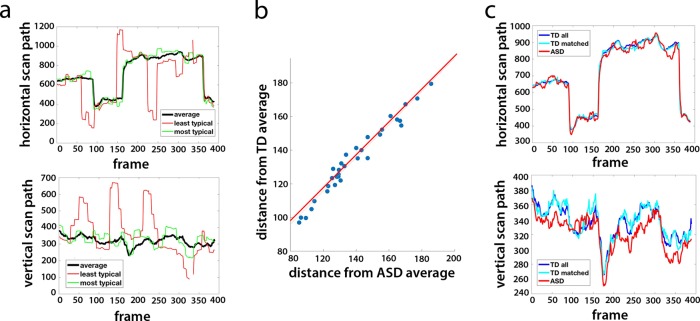
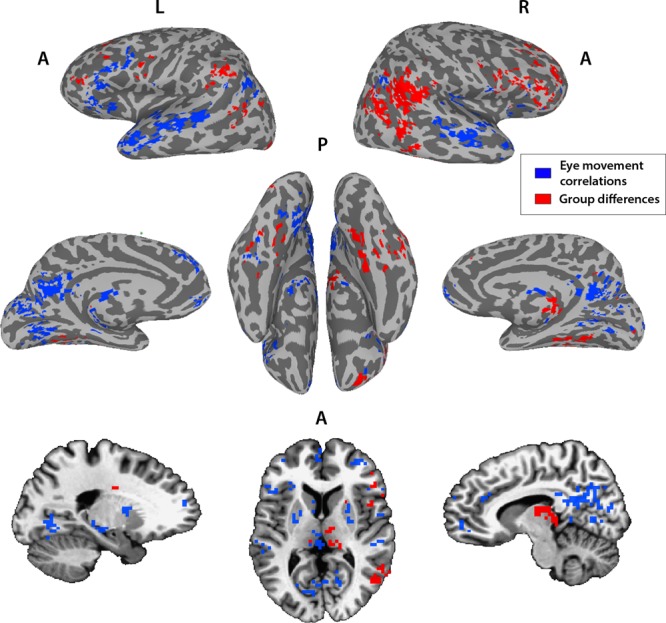
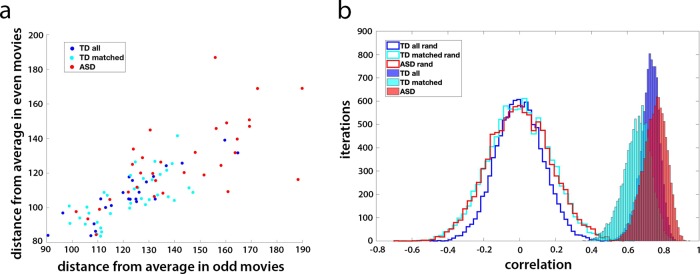
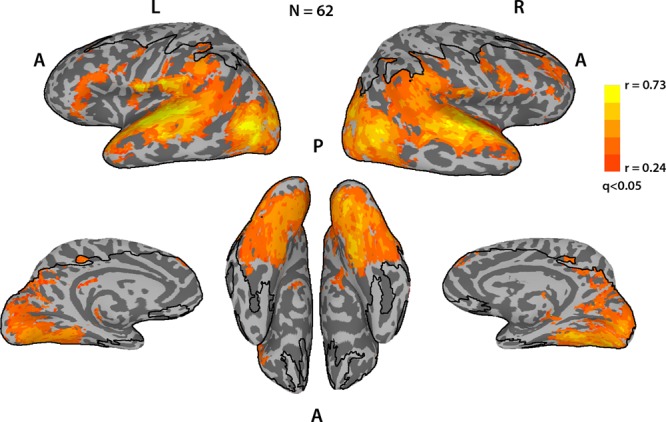
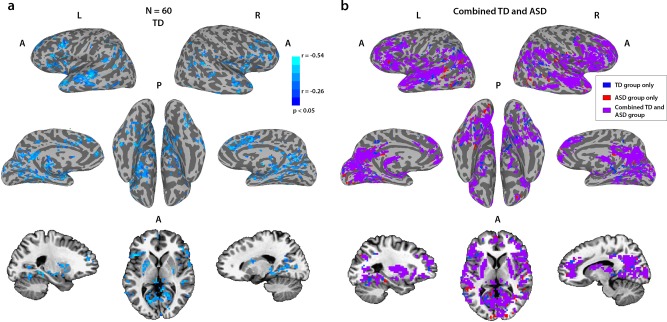
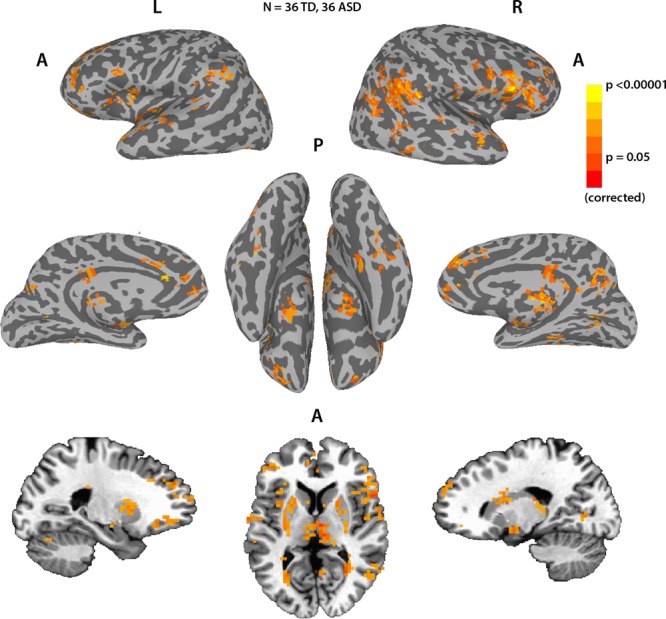
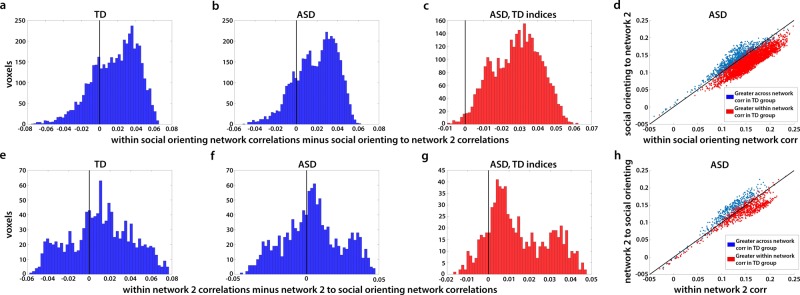
Extensive study of typically developing individuals and those on the autism spectrum has identified a large number of brain regions associated with our ability to navigate the social world. Although it is widely appreciated that this so-called "social brain" is composed of distinct, interacting systems, these component parts have yet to be clearly elucidated. Here we used measures of eye movement and neural typicality-based on the degree to which subjects deviated from the norm-while typically developing (N = 62) and individuals with autism (N = 36) watched a large battery of movies depicting social interactions. Our findings provide clear evidence for distinct, but overlapping, neural systems underpinning two major components of the "social brain," social orienting, and inferring the mental state of others.
对典型发展个体和自闭症谱系个体的广泛研究已经确定了大量与我们在社交世界中导航的能力相关的大脑区域。尽管人们普遍认识到,所谓的“社交大脑”由不同的、相互作用的系统组成,但这些组成部分尚未得到明确阐明。在这里,我们使用眼动测量和基于神经典型性的方法(基于受试者偏离规范的程度),在典型发展(N=62)和自闭症个体(N=36)观看一系列描述社交互动的电影时,对其进行了研究。我们的研究结果为“社交大脑”的两个主要组成部分,即社交定向和推断他人心理状态的基础,提供了明确的证据,证明了这两个部分存在着不同但又有重叠的神经机制。