Yan Fenfen, Li Na, Yue Yingxue, Wang Chengfeng, Zhao Li, Evivie Smith Etareri, Li Bailiang, Huo Guicheng
Key Laboratory of Dairy Science, Ministry of Education, Northeast Agricultural University, Harbin, China.
Food College, Northeast Agricultural University, Harbin, China.
Front Microbiol. 2020 Jan 10;10:2855. doi: 10.3389/fmicb.2019.02855. eCollection 2019.
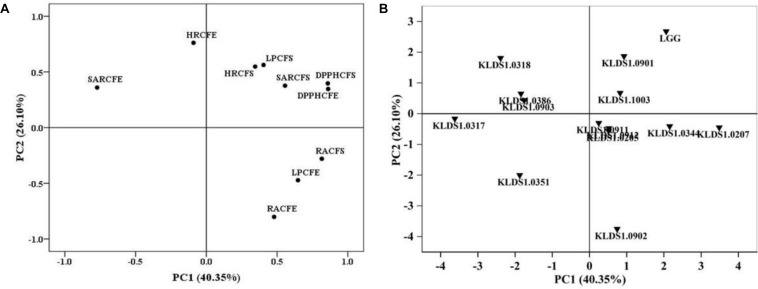
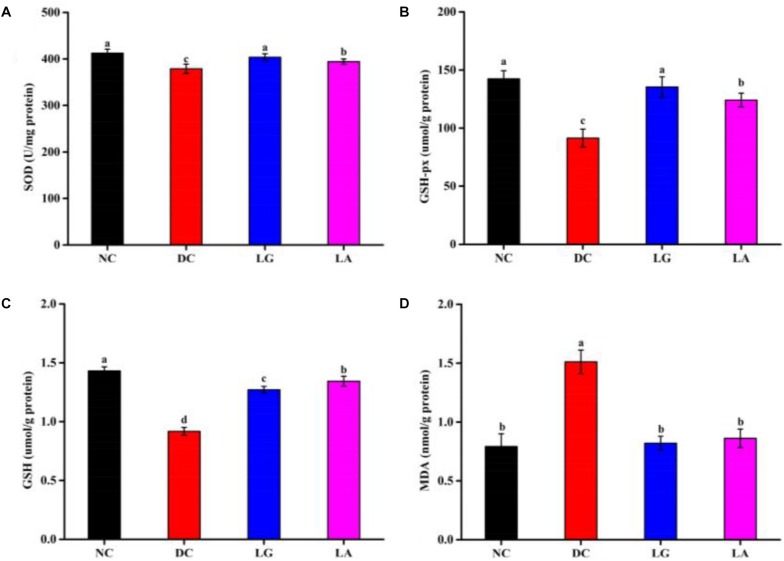
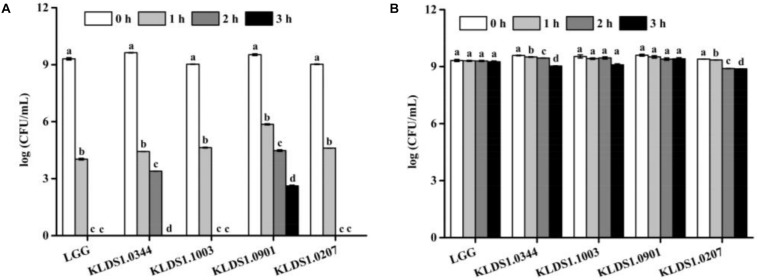
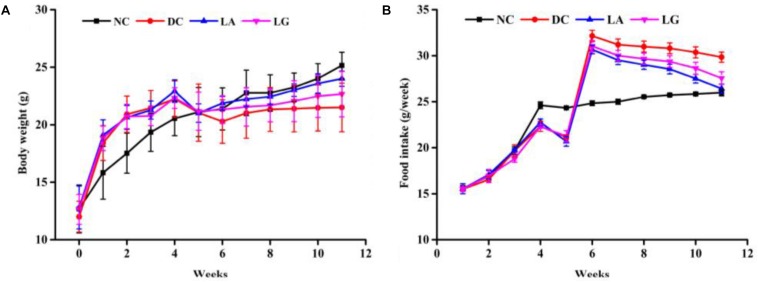
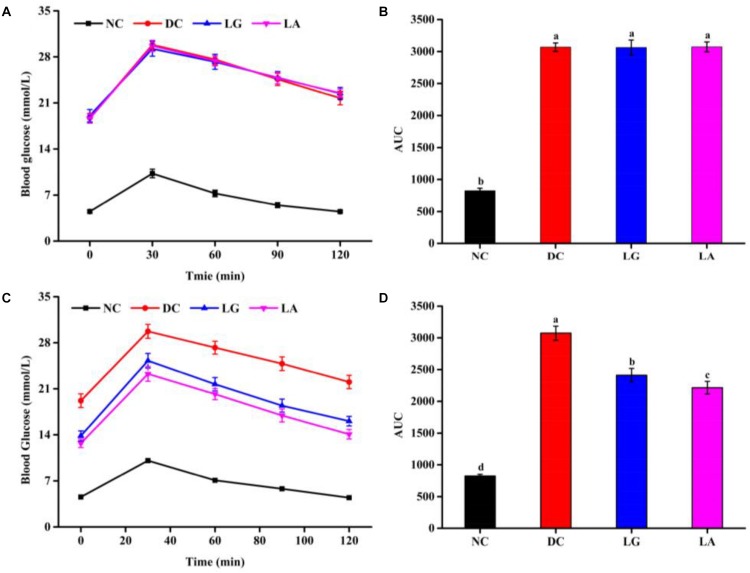
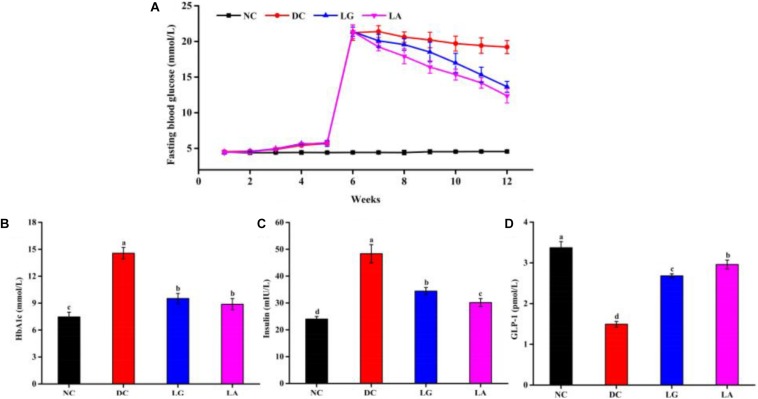
Diabetes has become the second most severe disease to human health. Probiotics are important for maintaining gastrointestinal homeostasis and energy balance and have been demonstrated to play a positive role in the prevention and treatment of metabolic syndromes, such as obesity, inflammation, dyslipidemia, and hyperglycemia. The objective of this study was to screen potential antidiabetic strains and evaluate its effects . For the section, dipeptidyl peptidase IV (DPP-IV) inhibitory and antioxidant activities of 14 candidate spp. strains were tested. Then hydrophobicity and acid and bile salt tolerance assays were determined. The most promising strain was further evaluated for its antidiabetic properties using type 2 diabetes mice induced by high-fat diet and intraperitoneal injection of streptozotocin (STZ). The reference strain for this study was GG. Results showed that cell-free excretory supernatants and cell-free extracts of KLDS1.0901 had better DPP-IV inhibitory activity, antioxidative activities, and biological characteristics than other strains. At the end of the treatment, we found that KLDS1.0901 administration decreased the levels of fasting blood glucose (FBG), glycosylated hemoglobin, insulin in serum and AUC, and increased the level of glucagon-like peptide 1 in serum compared with diabetic mice ( < 0.05). Moreover, KLDS1.0901 supplementation increased the activities of superoxide dismutase, glutathione peroxidase, the level of glutathione, and reduced the level of malondialdehyde in serum. These results indicated that KLDS1.0901 could be used as a potential antidiabetic strain; its application as food supplement and drug ingredient is thus recommended.
糖尿病已成为对人类健康危害第二大的严重疾病。益生菌对于维持胃肠道稳态和能量平衡至关重要,并且已被证明在预防和治疗代谢综合征(如肥胖、炎症、血脂异常和高血糖)中发挥积极作用。本研究的目的是筛选潜在的抗糖尿病菌株并评估其效果。对于该部分,测试了14株候选双歧杆菌属菌株的二肽基肽酶IV(DPP-IV)抑制活性和抗氧化活性。然后测定了其疏水性以及对酸和胆盐的耐受性。使用高脂饮食和腹腔注射链脲佐菌素(STZ)诱导的2型糖尿病小鼠,对最有前景的双歧杆菌菌株的抗糖尿病特性进行了进一步评估。本研究的参考菌株是鼠李糖乳杆菌GG。结果表明,与其他菌株相比,KLDS1.0901的无细胞分泌上清液和无细胞提取物具有更好的DPP-IV抑制活性、抗氧化活性和生物学特性。在治疗结束时,我们发现与糖尿病小鼠相比,给予KLDS1.0901可降低空腹血糖(FBG)、糖化血红蛋白、血清胰岛素水平和AUC,并增加血清中胰高血糖素样肽1的水平(P<0.05)。此外,补充KLDS1.0901可提高超氧化物歧化酶、谷胱甘肽过氧化物酶的活性、血清中谷胱甘肽的水平,并降低丙二醛的水平。这些结果表明,KLDS1.0901可作为一种潜在的抗糖尿病菌株;因此建议将其用作食品补充剂和药物成分。