Department of Molecular Biology, University of Wyoming, Laramie, Wyoming.
Wiley Interdiscip Rev Dev Biol. 2020 Sep;9(5):e376. doi: 10.1002/wdev.376. Epub 2020 Jan 31.
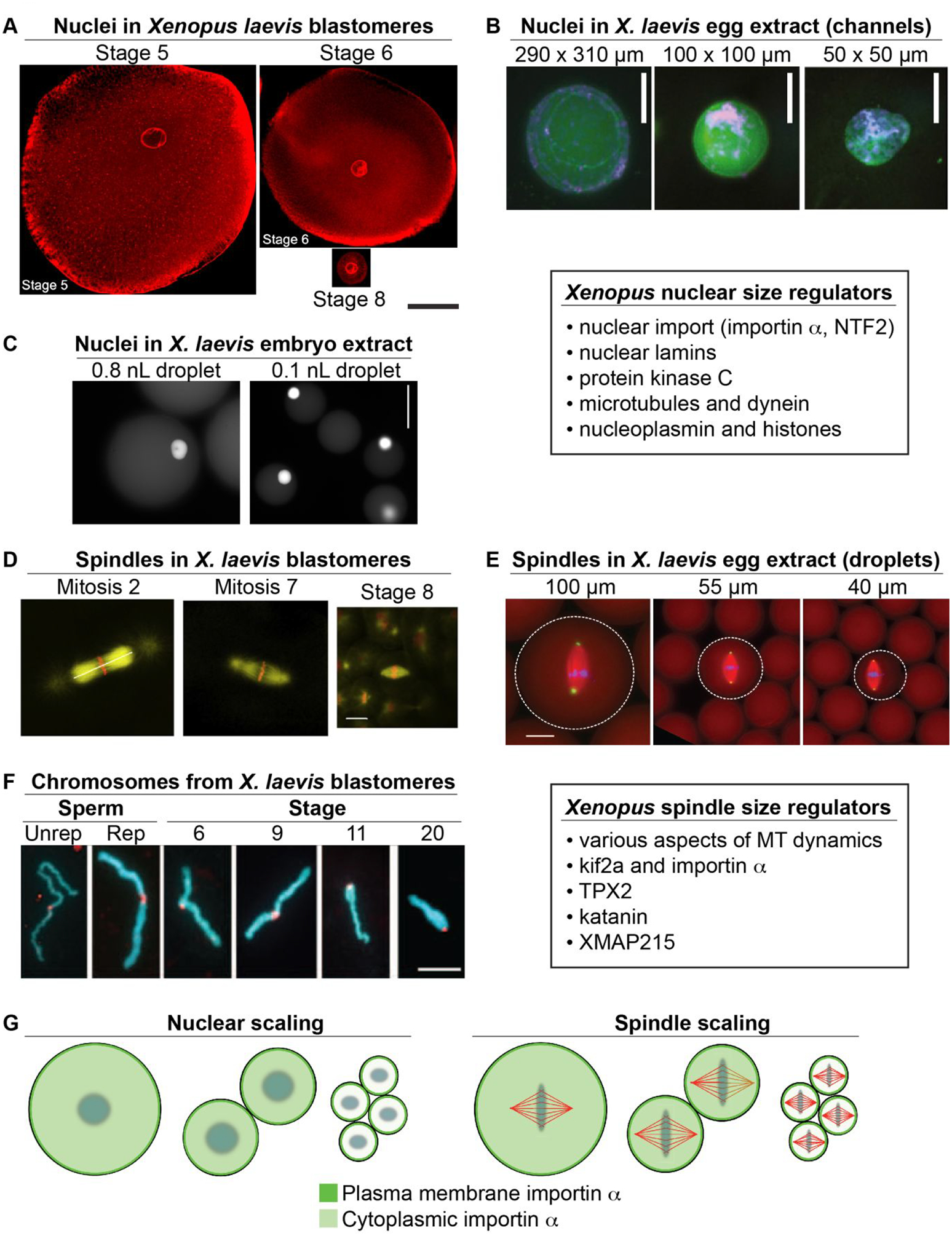
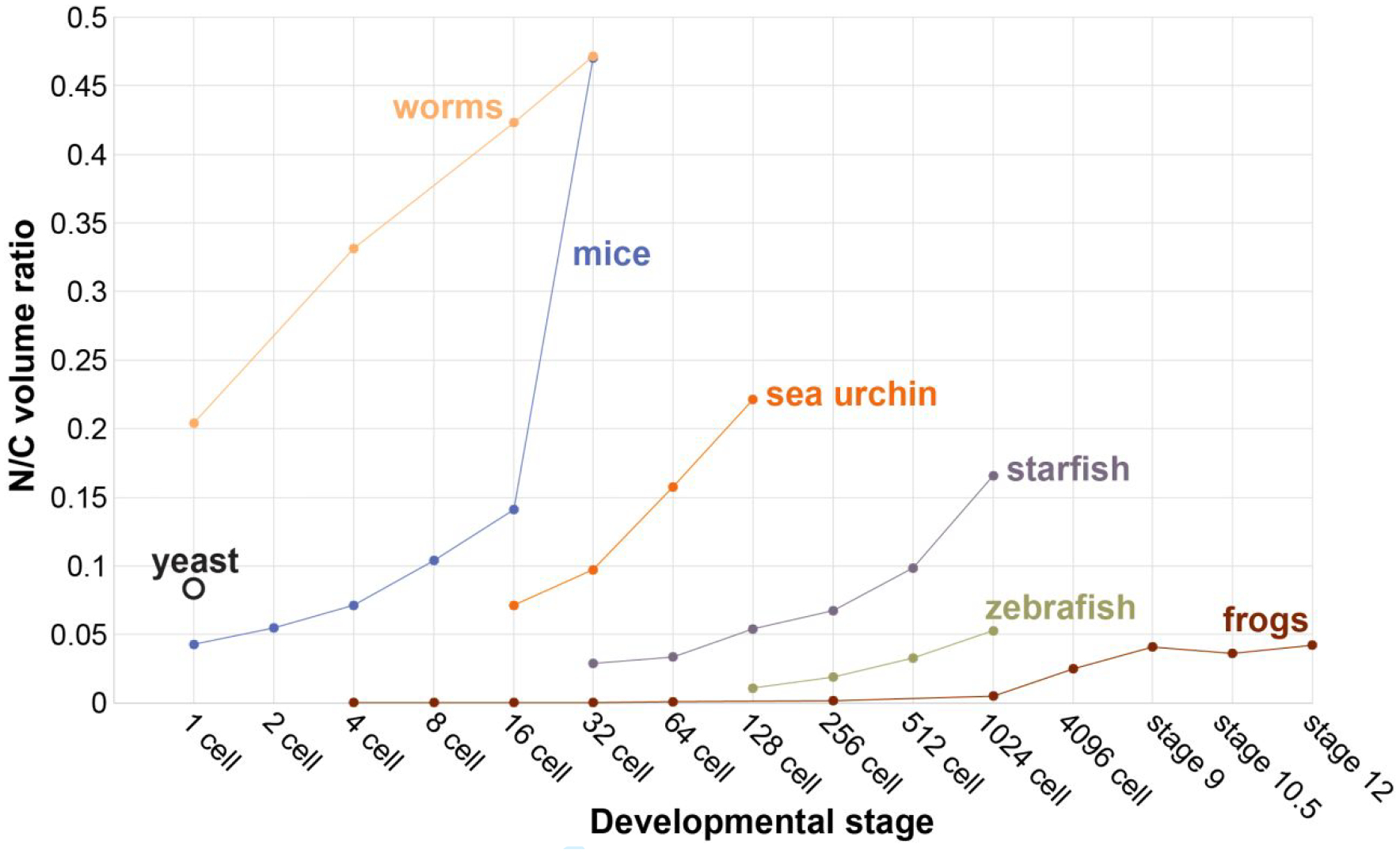
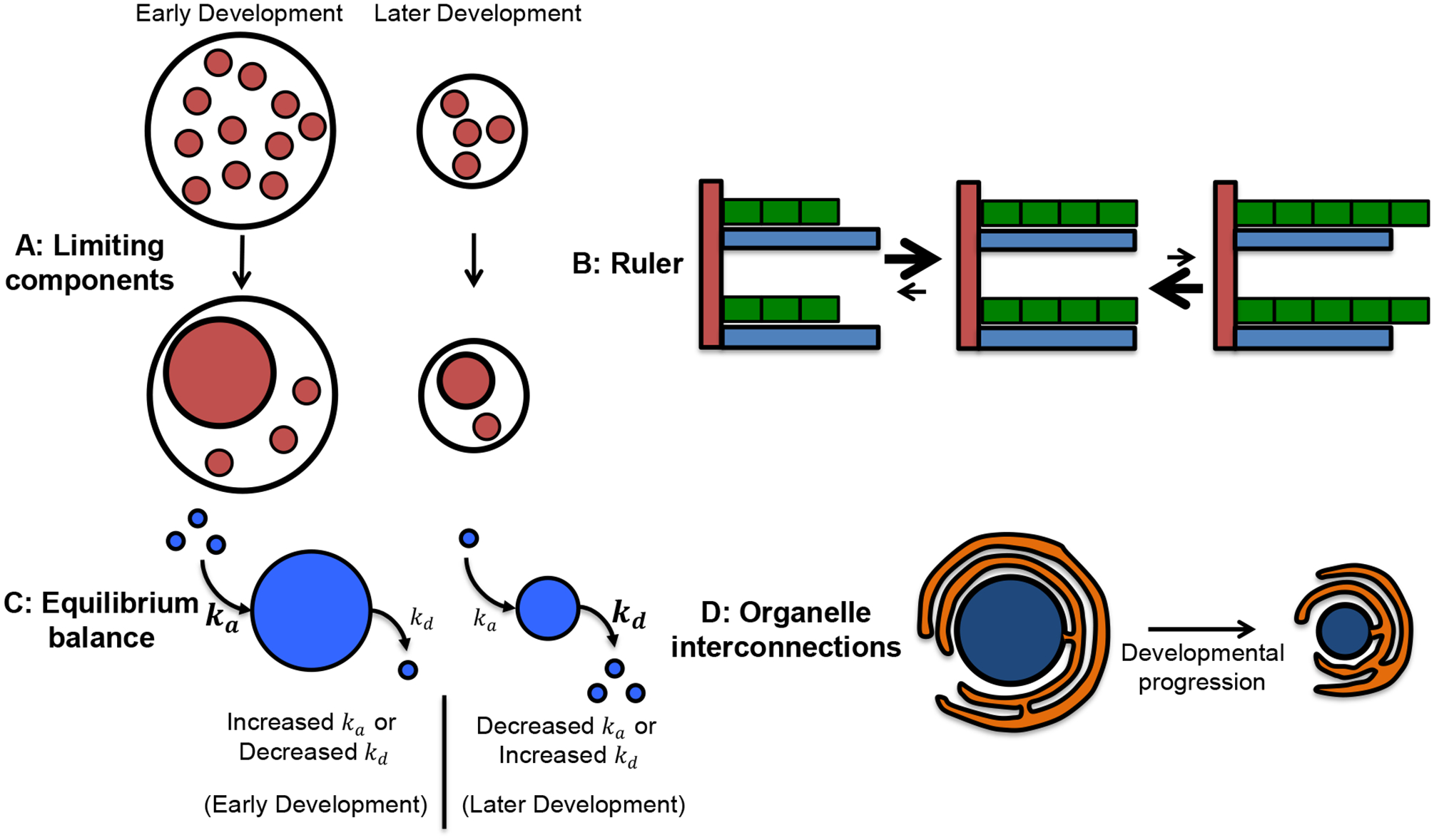
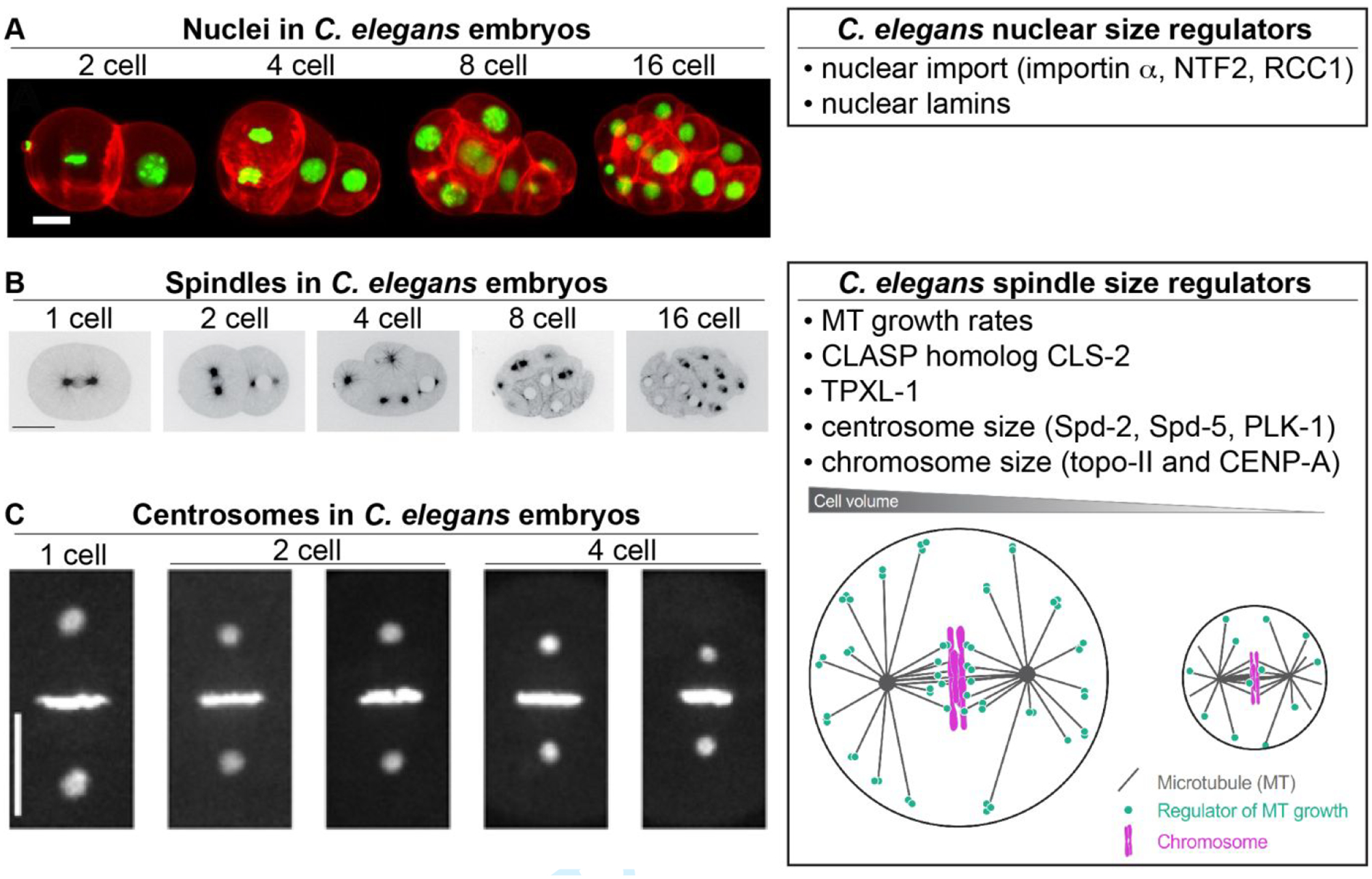
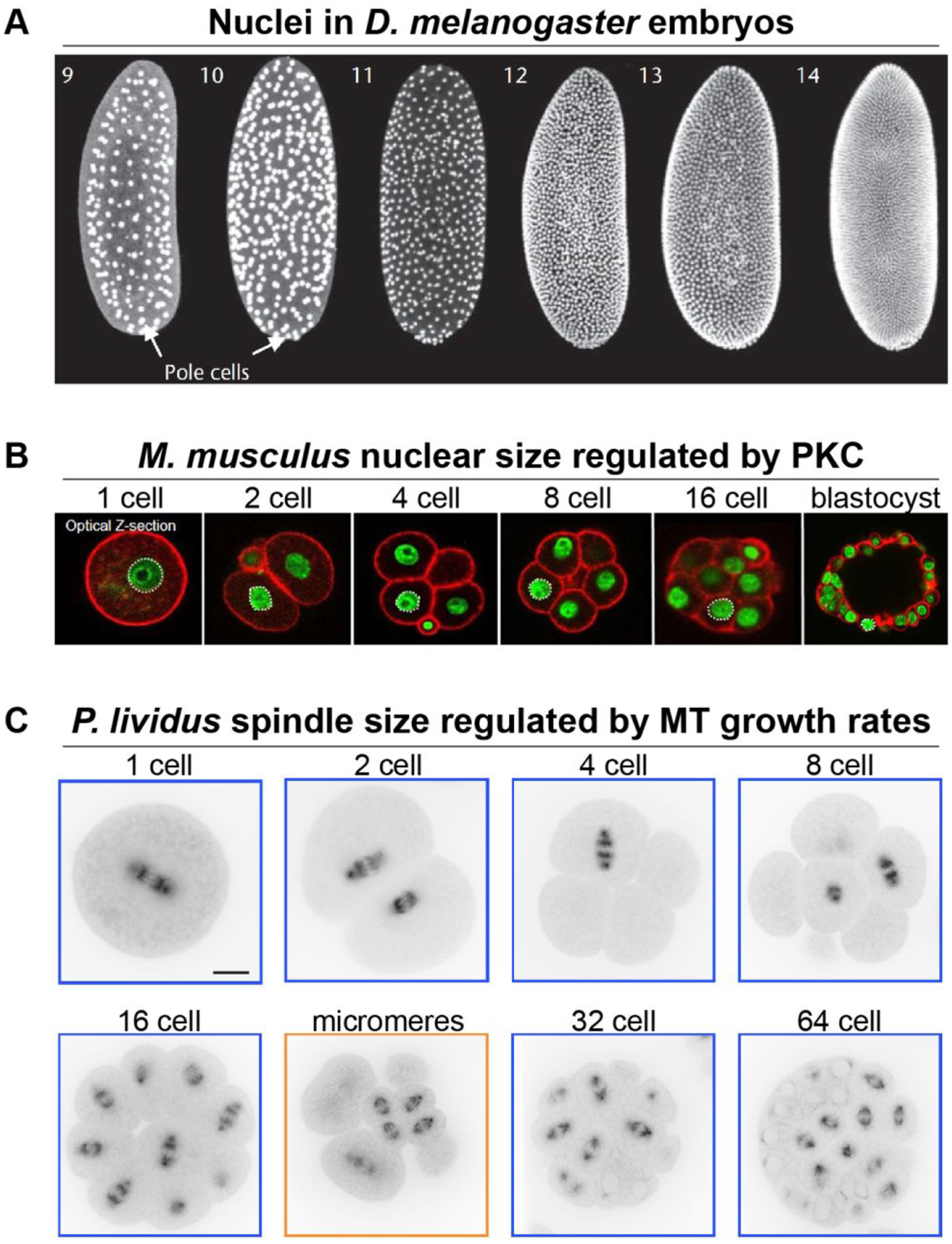
Cell division without growth results in progressive cell size reductions during early embryonic development. How do the sizes of intracellular structures and organelles scale with cell size and what are the functional implications of such scaling relationships? Model organisms, in particular Caenorhabditis elegans worms, Drosophila melanogaster flies, Xenopus laevis frogs, and Mus musculus mice, have provided insights into developmental size scaling of the nucleus, mitotic spindle, and chromosomes. Nuclear size is regulated by nucleocytoplasmic transport, nuclear envelope proteins, and the cytoskeleton. Regulators of microtubule dynamics and chromatin compaction modulate spindle and mitotic chromosome size scaling, respectively. Developmental scaling relationships for membrane-bound organelles, like the endoplasmic reticulum, Golgi, mitochondria, and lysosomes, have been less studied, although new imaging approaches promise to rectify this deficiency. While models that invoke limiting components and dynamic regulation of assembly and disassembly can account for some size scaling relationships in early embryos, it will be exciting to investigate the contribution of newer concepts in cell biology such as phase separation and interorganellar contacts. With a growing understanding of the underlying mechanisms of organelle size scaling, future studies promise to uncover the significance of proper scaling for cell function and embryonic development, as well as how aberrant scaling contributes to disease. This article is categorized under: Establishment of Spatial and Temporal Patterns > Regulation of Size, Proportion, and Timing Early Embryonic Development > Fertilization to Gastrulation Comparative Development and Evolution > Model Systems.
细胞分裂而不生长会导致胚胎早期发育过程中细胞体积逐渐减小。细胞内结构和细胞器的大小如何与细胞大小成比例,以及这种比例关系有什么功能意义?模式生物,特别是秀丽隐杆线虫、黑腹果蝇、非洲爪蟾和小家鼠,为核、有丝分裂纺锤体和染色体的发育大小比例提供了深入的见解。核的大小受核质转运、核膜蛋白和细胞骨架的调节。微管动力学和染色质紧缩的调节剂分别调节纺锤体和有丝分裂染色体大小比例。尽管新的成像方法有望纠正这一不足,但对于膜结合细胞器(如内质网、高尔基体、线粒体和溶酶体)的发育比例关系的研究较少。虽然调用限制成分和组装与拆卸的动态调节的模型可以解释早期胚胎中的一些大小比例关系,但研究细胞生物学中的新概念(如相分离和细胞器间接触)的贡献将是令人兴奋的。随着对细胞器大小比例的潜在机制的理解不断加深,未来的研究有望揭示适当比例对细胞功能和胚胎发育的重要性,以及异常比例如何导致疾病。本文属于以下类别:空间和时间模式的建立 > 大小、比例和时间的调节 早期胚胎发育 > 受精到原肠胚形成 比较发育与进化 > 模型系统。