Ibañez Sara, Luebke Jennifer I, Chang Wayne, Draguljić Danel, Weaver Christina M
Department of Mathematics, Franklin and Marshall College, Lancaster, PA, United States.
Department of Anatomy and Neurobiology, Boston University School of Medicine, Boston, MA, United States.
Front Comput Neurosci. 2020 Jan 17;13:89. doi: 10.3389/fncom.2019.00089. eCollection 2019.
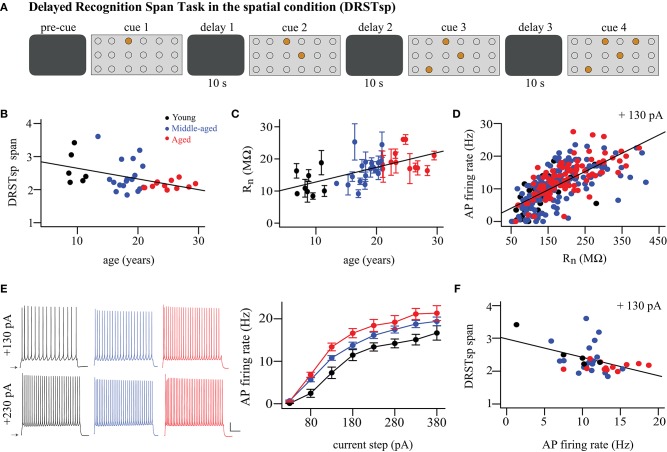
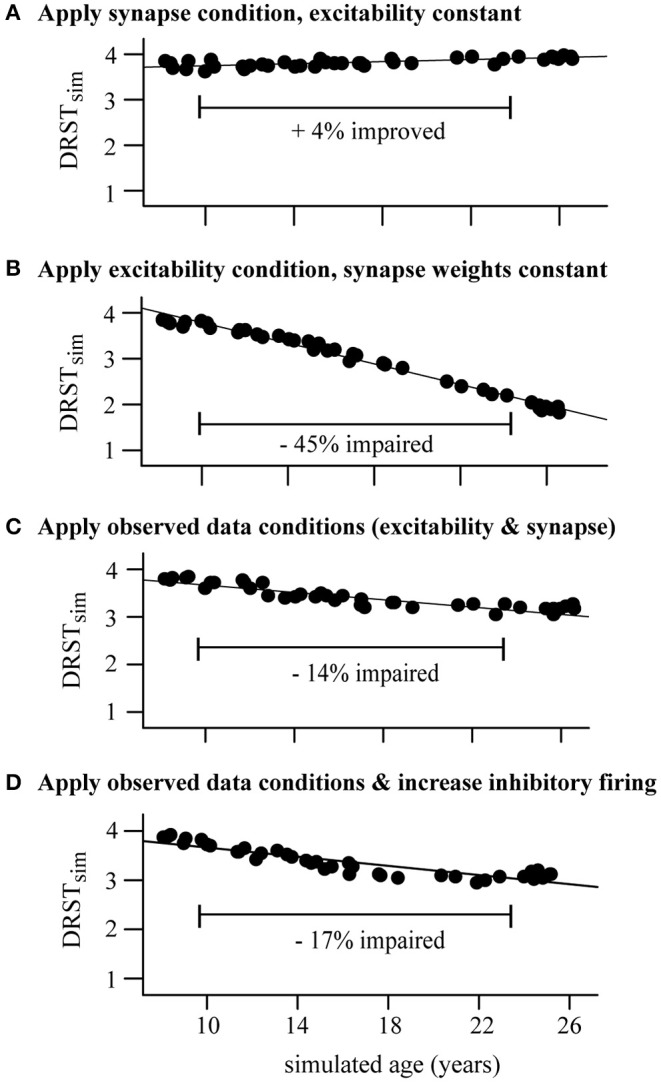
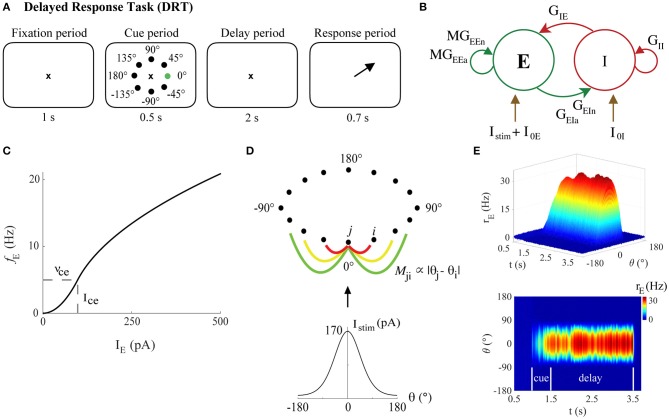
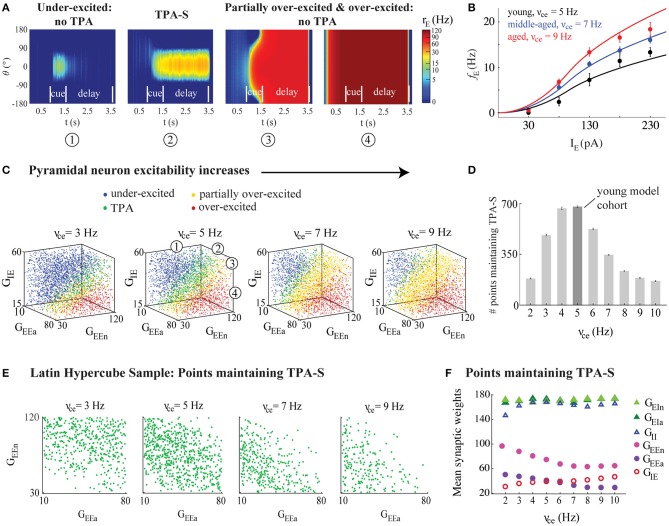
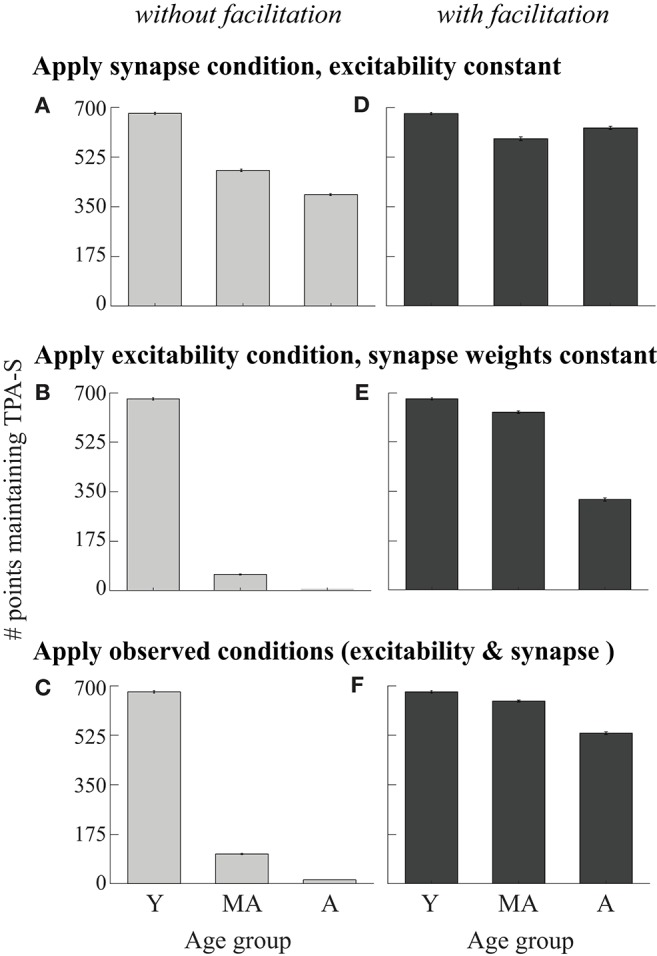
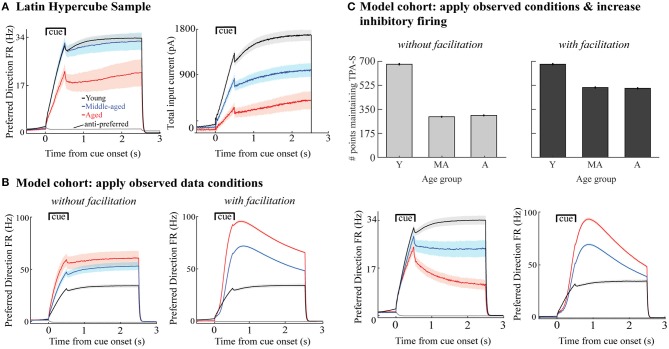
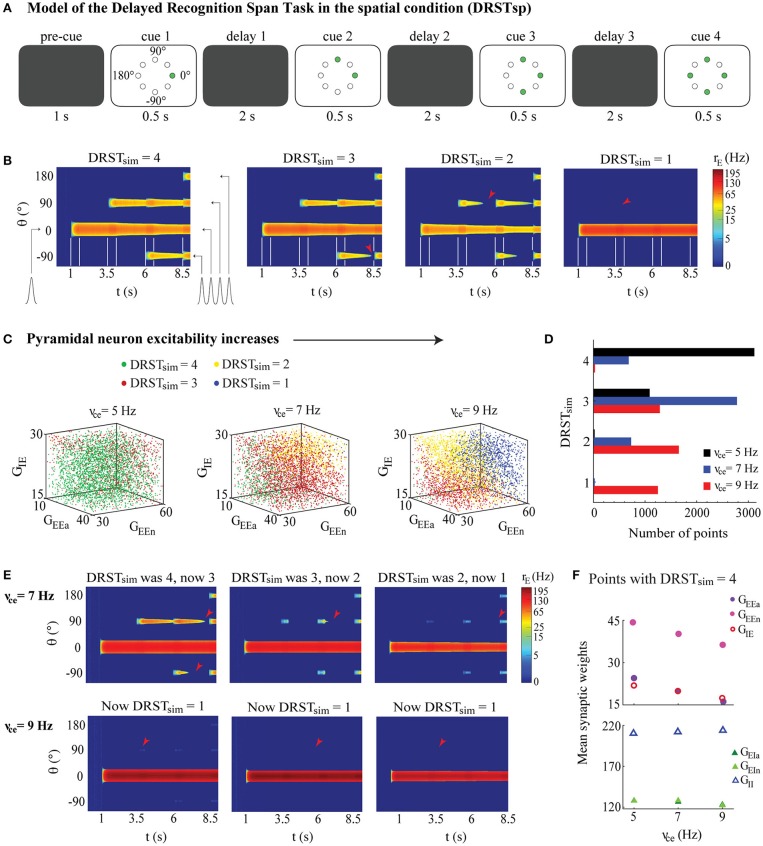
Behavioral studies have shown spatial working memory impairment with aging in several animal species, including humans. Persistent activity of layer 3 pyramidal dorsolateral prefrontal cortex (dlPFC) neurons during delay periods of working memory tasks is important for encoding memory of the stimulus. studies have shown that these neurons undergo significant age-related structural and functional changes, but the extent to which these changes affect neural mechanisms underlying spatial working memory is not understood fully. Here, we confirm previous studies showing impairment on the Delayed Recognition Span Task in the spatial condition (DRSTsp), and increased action potential firing rates (hyperexcitability), across the adult life span of the rhesus monkey. We use a bump attractor model to predict how empirically observed changes in the aging dlPFC affect performance on the Delayed Response Task (DRT), and introduce a model of memory retention in the DRSTsp. Persistent activity-and, in turn, cognitive performance-in both models was affected much more by hyperexcitability of pyramidal neurons than by a loss of synapses. Our DRT simulations predict that additional changes to the network, such as increased firing of inhibitory interneurons, are needed to account for lower firing rates during the DRT with aging reported . Synaptic facilitation was an essential feature of the DRSTsp model, but it did not compensate fully for the effects of the other age-related changes on DRT performance. Modeling pyramidal neuron hyperexcitability and synapse loss simultaneously led to a partial recovery of function in both tasks, with the simulated level of DRSTsp impairment similar to that observed in aging monkeys. This modeling work integrates empirical data across multiple scales, from synapse counts to cognitive testing, to further our understanding of aging in non-human primates.
行为研究表明,包括人类在内的几种动物随着年龄增长会出现空间工作记忆受损的情况。在工作记忆任务的延迟期,前额叶背外侧皮质第3层锥体神经元的持续活动对于刺激记忆的编码很重要。研究表明,这些神经元会发生显著的与年龄相关的结构和功能变化,但这些变化对空间工作记忆潜在神经机制的影响程度尚未完全明确。在这里,我们证实了先前的研究结果,即恒河猴在整个成年期,在空间条件下的延迟识别跨度任务(DRSTsp)中表现受损,且动作电位发放率增加(兴奋性过高)。我们使用一个凸起吸引子模型来预测在衰老的背外侧前额叶皮质中通过实验观察到的变化如何影响延迟反应任务(DRT)的表现,并引入了一个DRSTsp中的记忆保持模型。在这两个模型中,持续活动以及相应的认知表现受锥体神经元兴奋性过高的影响远大于突触丧失的影响。我们的DRT模拟预测,需要对网络进行额外的改变,例如增加抑制性中间神经元的发放,才能解释随着年龄增长DRT期间较低的发放率。突触易化是DRSTsp模型的一个基本特征,但它并不能完全补偿其他与年龄相关的变化对DRT表现的影响。同时对锥体神经元兴奋性过高和突触丧失进行建模,导致两个任务的功能部分恢复,模拟的DRSTsp受损水平与在衰老猴子中观察到的相似。这项建模工作整合了从突触计数到认知测试等多个尺度的实证数据,以加深我们对非人类灵长类动物衰老的理解。