National Medical Research Center for Obstetrics, Gynecology and Perinatology named after Academician V.I. Kulakov of the Ministry of Healthcare of Russian Federation, Moscow 117997, Russia.
Moscow Institute of Physics and Technology, Moscow 141701, Russia.
Int J Mol Sci. 2020 Jan 30;21(3):914. doi: 10.3390/ijms21030914.
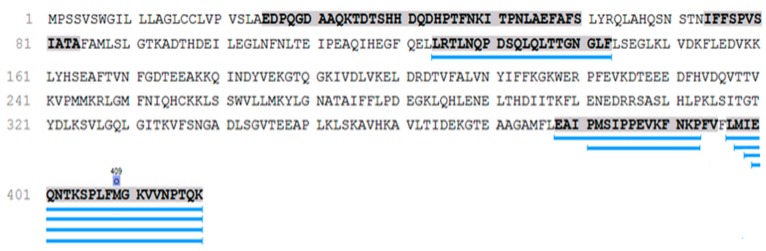
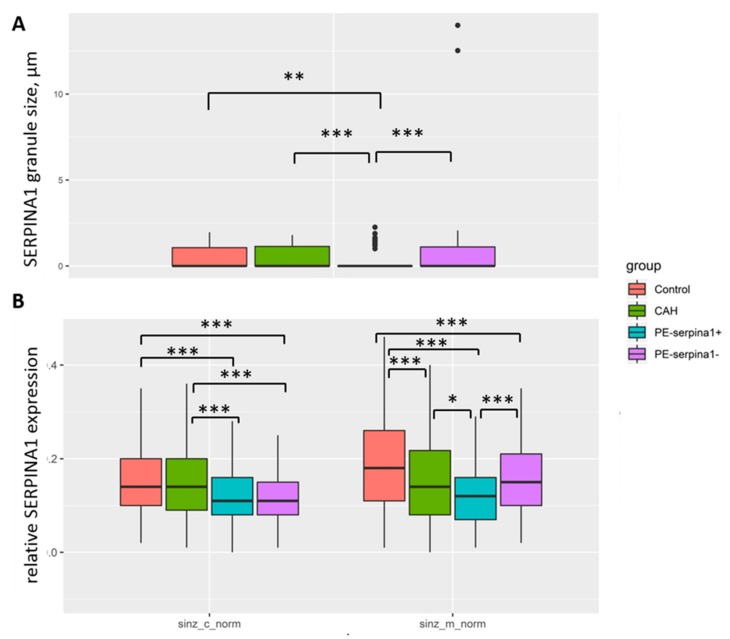
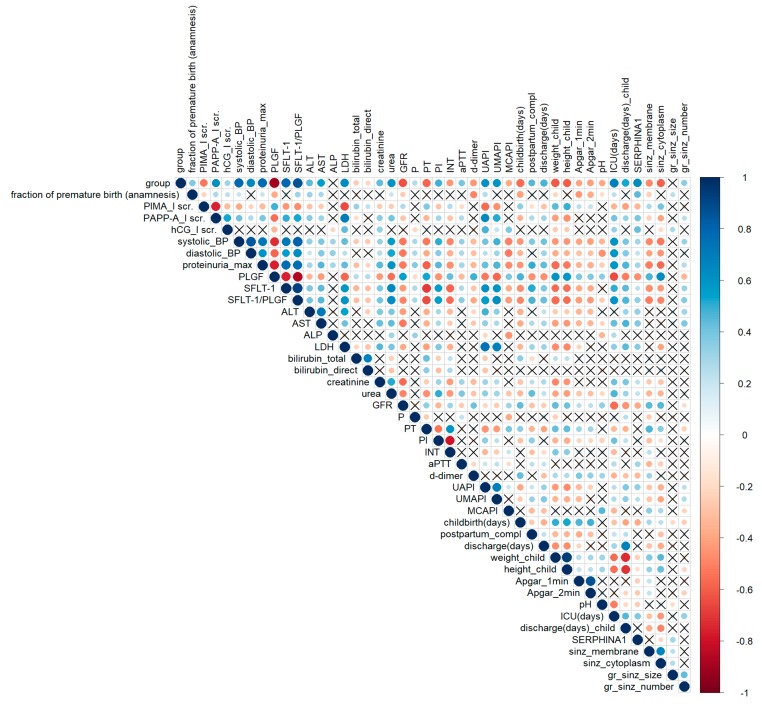
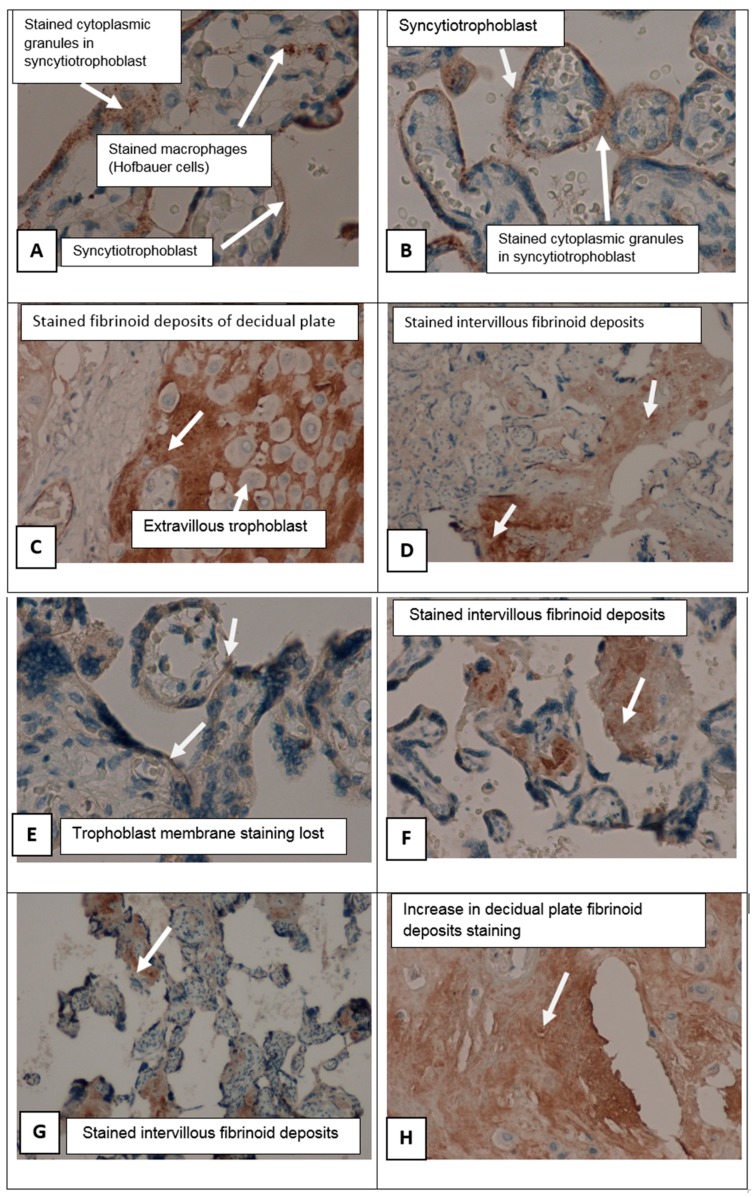
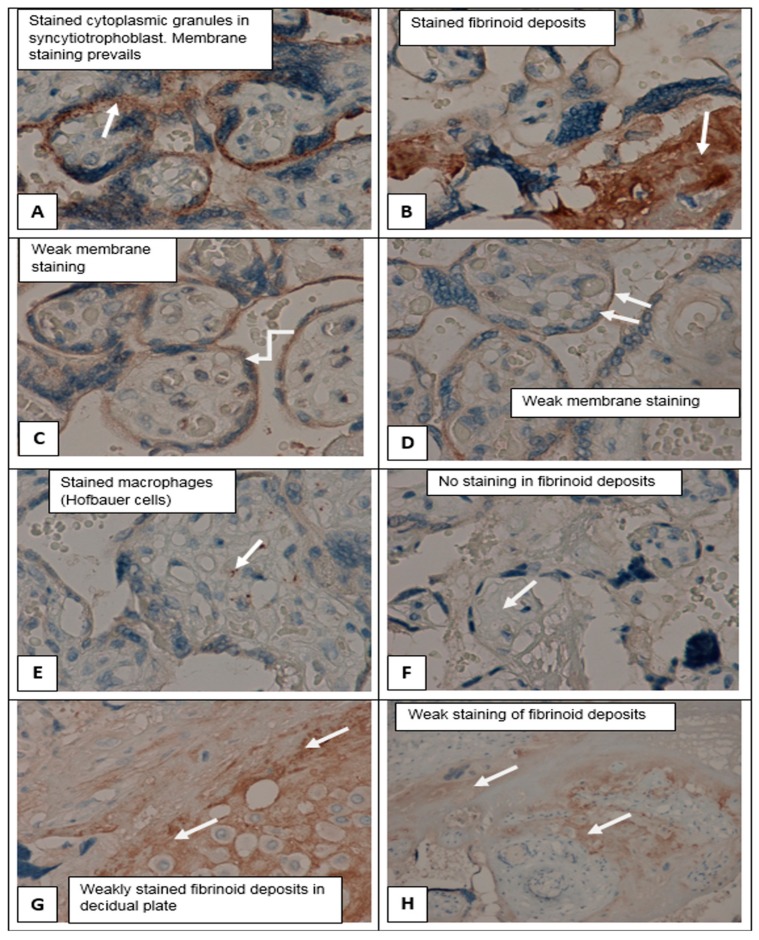
Preeclampsia (PE) is a multisystem disorder associated with pregnancy and its frequency varies from 5 to 20 percent of pregnancies. Although a number of preeclampsia studies have been carried out, there is no consensus about disease etiology and pathogenesis so far. Peptides of 1-antitrypsin) in urine remain one of the most promising peptide markers of PE. In this study the diagnostic potential of urinary α1-antitrypsin peptides in PE was evaluated. The urinary peptidome composition of 79 pregnant women with preeclampsia (PE), chronic arterial hypertension (CAH), and a control group was investigated. Mann-Whitney U-test ( < 0.05) revealed seven PE specific peptides demonstrating 52% sensitivity and 100% specificity. in urine has been associated with the most severe forms of preeclampsia ( = 0.014), in terms of systolic hypertension ( = 0.01) and proteinuria ( = 0.006). According to Spearman correlation analysis, the normalized intensity of urinary peptides has a similar diagnostic pattern with known diagnostic PE markers, such as sFLT/PLGF. peptides were not urinary excreted in superimposed PE (PE with CAH), which is a milder form of PE. An increase in expression of in the structural elements of the placenta during preeclampsia reflects a protective mechanism against hypoxia. Increased synthesis of in the trophoblast leads to protein accumulation in fibrinoid deposits. It may block syncytial knots and placenta villi, decreasing trophoblast invasion. Excretion of PE specific peptides is associated with syncytiotrophoblast membrane destruction degradation and increased staining. It confirms that the placenta could be the origin of peptides in urine. Significant correlation ( < 0.05) of expression in syncytiotrophoblast membrane and cytoplasm with the main clinical parameters of severe PE proves the role of in PE pathogenesis. Estimation of peptides in urine can be used as a diagnostic test of the severity of the condition to determine further treatment, particularly the need for urgent surgical delivery.
子痫前期(PE)是一种与妊娠相关的多系统疾病,其发病率在 5%至 20%之间。尽管已经进行了许多子痫前期的研究,但迄今为止,对于疾病的病因和发病机制尚未达成共识。尿中 1 抗胰蛋白酶(1-AT)肽仍然是最有前途的 PE 肽标志物之一。本研究评估了尿中 α1-抗胰蛋白酶肽在 PE 中的诊断潜力。研究人员对 79 例患有子痫前期(PE)、慢性动脉高血压(CAH)和对照组的孕妇尿液中的肽组进行了研究。Mann-Whitney U 检验(<0.05)显示,7 种 PE 特异性肽具有 52%的敏感性和 100%的特异性。在尿中的表达与最严重形式的子痫前期有关(=0.014),表现在收缩压升高(=0.01)和蛋白尿(=0.006)。根据 Spearman 相关分析,尿中肽的归一化强度与已知的 PE 诊断标志物(如 sFLT/PLGF)具有相似的诊断模式。在叠加的 PE(PE 与 CAH)中,这些肽并未在尿中排泄,这是一种较轻形式的 PE。在子痫前期期间,1-AT 在胎盘的结构元件中的表达增加反映了对缺氧的保护机制。滋养层中 1-AT 的合成增加导致纤维蛋白样沉积物中的蛋白质积累。它可能会阻止合胞体结和胎盘绒毛,减少滋养层细胞的浸润。PE 特异性肽的排泄与合体滋养层膜的破坏和降解以及 1-AT 染色增加有关。这证实胎盘可能是尿液中 1-AT 肽的来源。在合胞滋养层膜和细胞质中 1-AT 的表达与严重 PE 的主要临床参数之间存在显著相关性(<0.05),这证明了 1-AT 在 PE 发病机制中的作用。尿中 1-AT 肽的估计可用作确定进一步治疗,特别是紧急手术分娩的严重程度的诊断测试。