Department of Radiology, Johns Hopkins University School of Medicine, Baltimore, Maryland.
F.M. Kirby Research Center for Functional Brain Imaging, Kennedy Krieger Institute, Baltimore, Maryland.
NMR Biomed. 2020 May;33(5):e4207. doi: 10.1002/nbm.4207. Epub 2020 Feb 5.
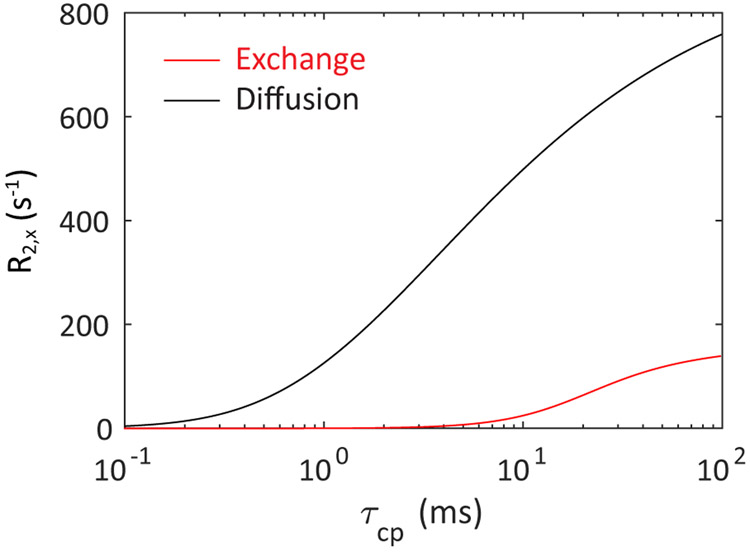
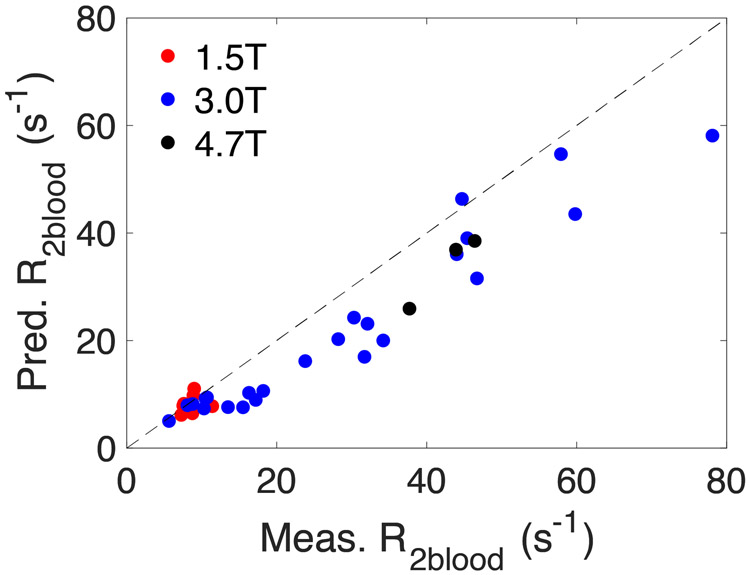
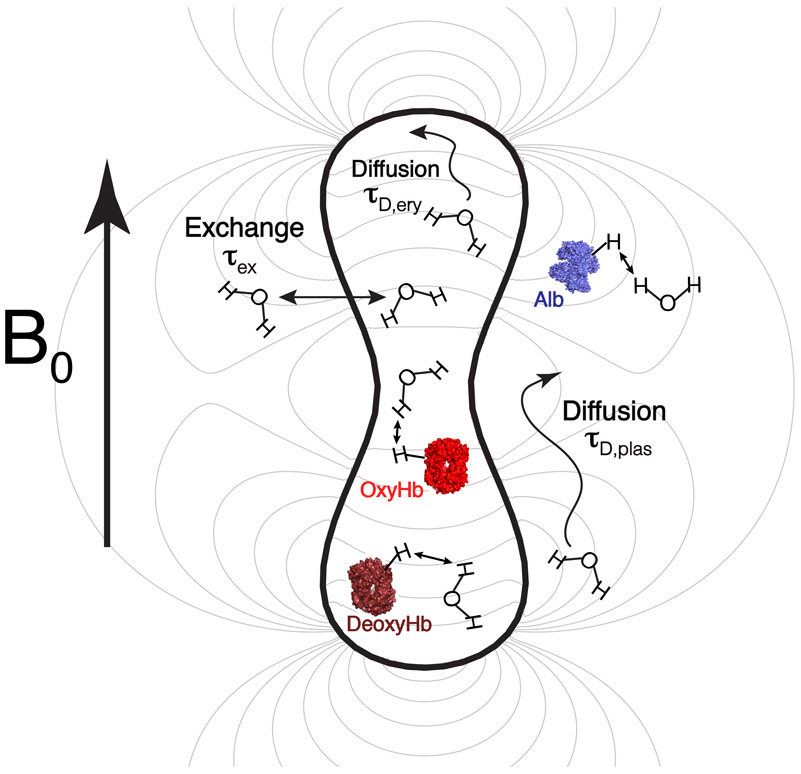
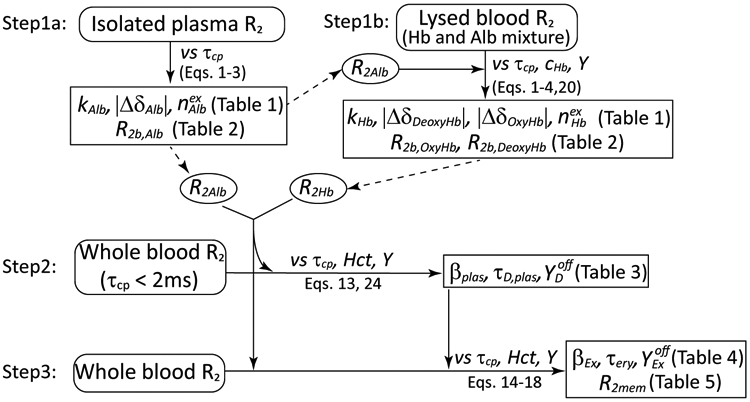
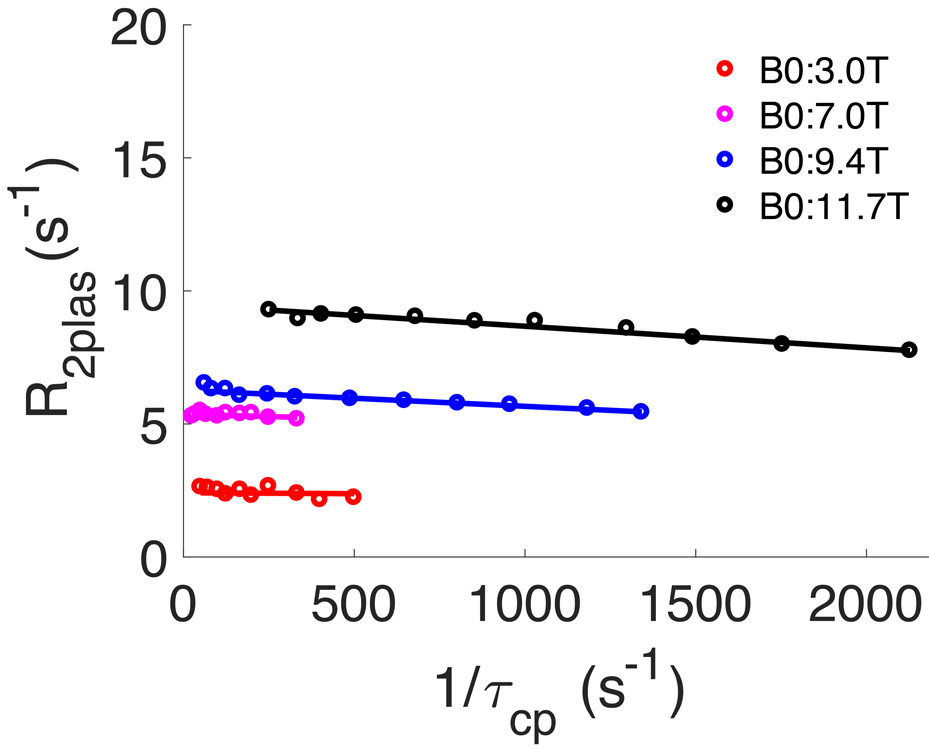
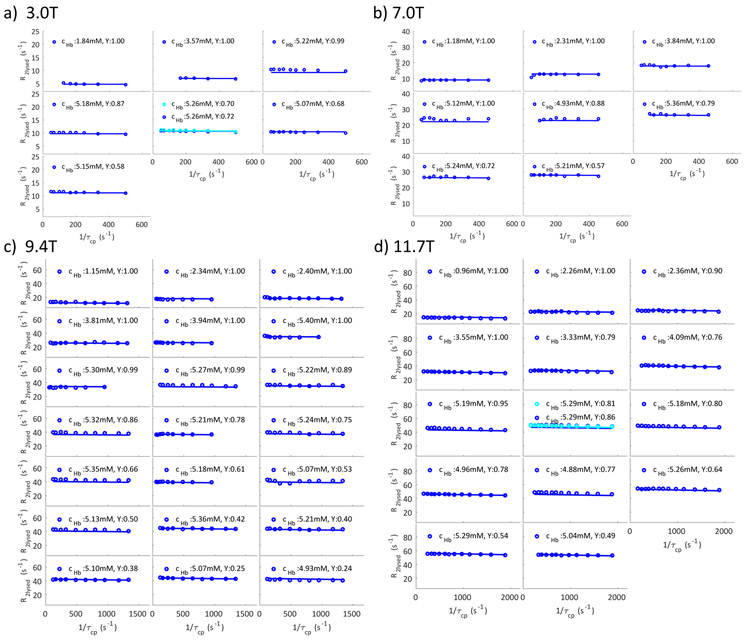
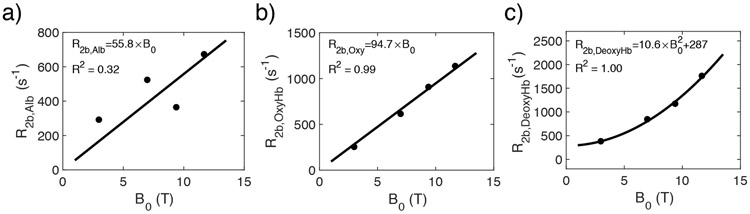
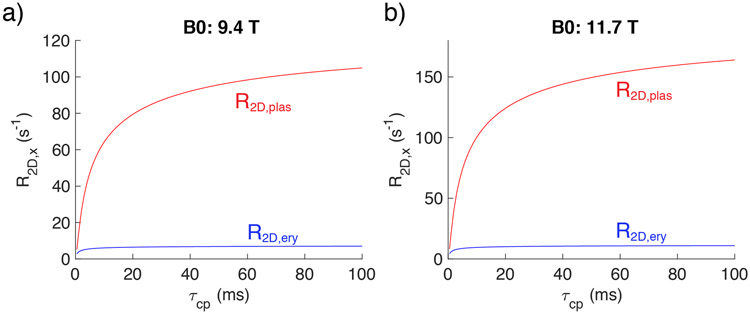
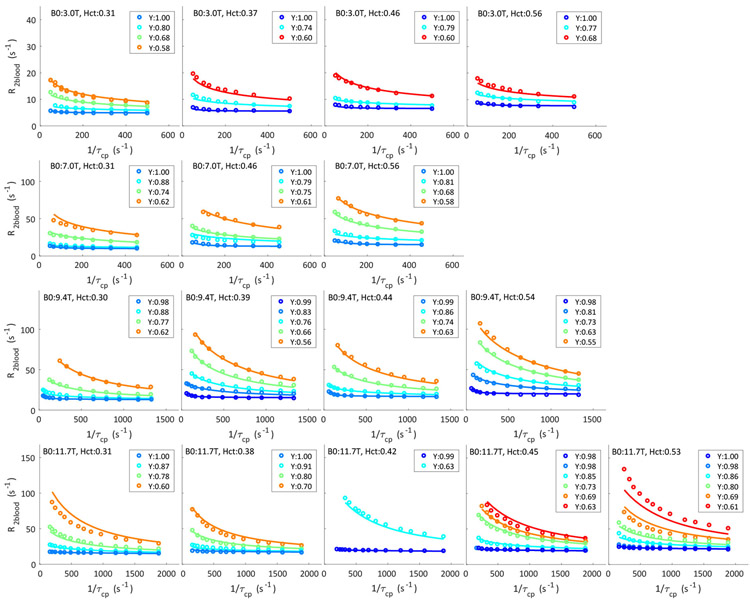
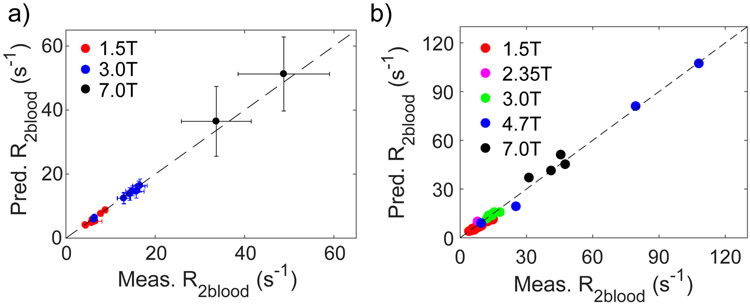
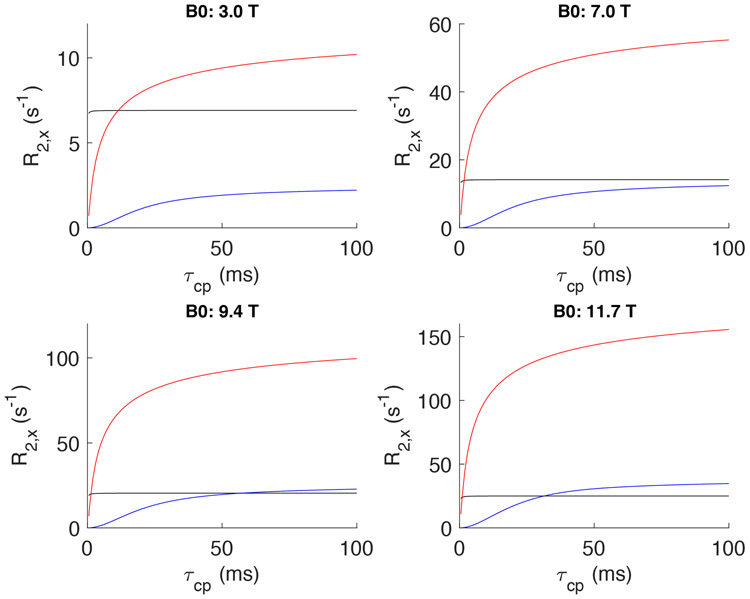
An integrative model is proposed to describe the dependence of the transverse relaxation rate of blood water protons (R = 1/T ) on hematocrit fraction and oxygenation fraction (Y). This unified model takes into account (a) the diamagnetic effects of albumin, hemoglobin and the cell membrane; (b) the paramagnetic effect of hemoglobin; (c) the effect of compartmental exchange between plasma and erythrocytes under both fast and slow exchange conditions that vary depending on field strength and compartmental relaxation rates and (d) the effect of diffusion through field gradients near the erythrocyte membrane. To validate the model, whole-blood and lysed-blood R data acquired previously using Carr-Purcell-Meiboom-Gill measurements as a function of inter-echo spacing τ at magnetic fields of 3.0, 7.0, 9.4 and 11.7 T were fitted to determine the lifetimes (field-independent physiological constants) for water diffusion and exchange, as well as several physical constants, some of which are field-independent (magnetic susceptibilities) and some are field-dependent (relaxation rates for water protons in solutions of albumin and oxygenated and deoxygenated hemoglobin, ie, blood plasma and erythrocytes, respectively). This combined exchange-diffusion model allowed excellent fitting of the curve of the τ -dependent relaxation rate dispersion at all four fields using a single average erythrocyte water lifetime, τ = 9.1 ± 1.4 ms, and an averaged diffusional correlation time, τ = 3.15 ± 0.43 ms. Using this model and the determined physiological time constants and relaxation parameters, blood T values published by multiple groups based on measurements at magnetic field strengths of 1.5 T and higher could be predicted correctly within error. Establishment of this theory is a fundamental step for quantitative modeling of the BOLD effect underlying functional MRI.
提出了一个综合模型来描述血液水质子的横向弛豫率(R=1/T)与血球比容分数和氧合分数(Y)的依赖性。该统一模型考虑了:(a)白蛋白、血红蛋白和细胞膜的抗磁性效应;(b)血红蛋白的顺磁性效应;(c)在快交换和慢交换条件下,血浆和红细胞之间的隔室交换的影响,这取决于场强和隔室弛豫率;(d)通过红细胞膜附近的磁场梯度扩散的影响。为了验证该模型,使用 Carr-Purcell-Meiboom-Gill 测量法获得的全血和溶血血 R 数据作为磁场强度为 3.0、7.0、9.4 和 11.7 T 时的回波间隔 τ 的函数,拟合确定水扩散和交换的寿命(与场无关的生理常数),以及一些物理常数,其中一些与场无关(磁化率),而另一些与场有关(白蛋白和氧合及去氧血红蛋白溶液中质子的弛豫率,即血桨和红细胞)。这种组合的交换-扩散模型允许使用单个平均红细胞水寿命 τ=9.1±1.4 ms 和平均扩散相关时间 τ=3.15±0.43 ms 对所有四个场的 τ 相关弛豫率弥散曲线进行出色拟合。使用该模型和确定的生理时间常数和弛豫参数,可以正确预测多个组基于磁场强度为 1.5 T 及更高的测量值发表的血液 T 值,误差在可接受范围内。该理论的建立是对功能磁共振成像所基于的 BOLD 效应进行定量建模的基本步骤。