van der Merwe Marie, Sharma Sunita, Caldwell Jade L, Smith Nicholas J, Gomes Charles K, Bloomer Richard J, Buddington Randal K, Pierre Joseph F
School of Health Studies, University of Memphis, Memphis, TN, USA.
Department of Pediatrics, University of Tennessee Health Science Center, Memphis, TN, USA.
Curr Dev Nutr. 2020 Jan 3;4(2):nzz145. doi: 10.1093/cdn/nzz145. eCollection 2020 Feb.
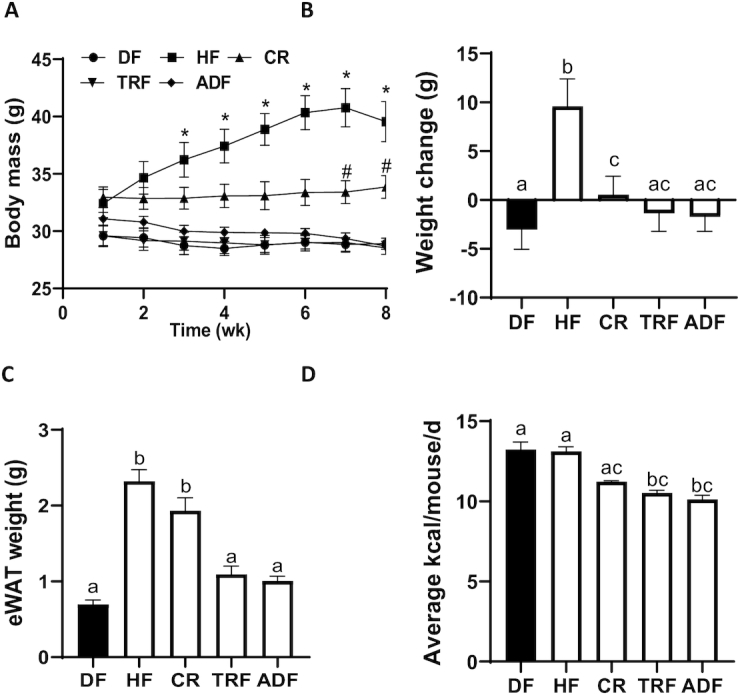
Fasting and timed feeding strategies normalize obesity parameters even under high-fat dietary intake. Although previous work demonstrated that these dietary strategies reduce adiposity and improve metabolic health, limited work has examined intestinal microbial communities.
We determined whether timed feeding modifies the composition of the intestinal microbiome and mycobiome (yeast and fungi).
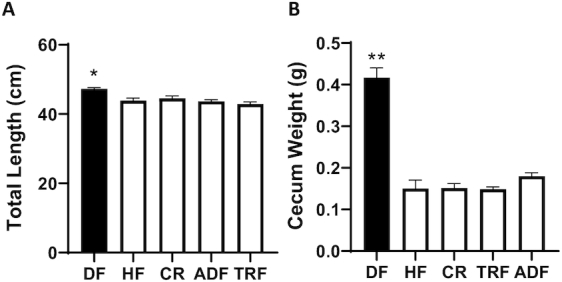
Male C57BL/6 mice were fed a high-fat diet (HF) for 6 wk. Animals were then randomly assigned to the following groups ( = 8-10/group): ) HF ad libitum; ) purified high-fiber diet (Daniel Fast, DF); ) HF-time-restricted feeding (TRF) (6 h); ) HF-alternate-day fasting (ADF); or ) HF at 80% total caloric restriction (CR). After 8 wk, obesity and gut parameters were characterized. We also examined changes to the gut microbiome and mycobiome before, during, and following dietary interventions.
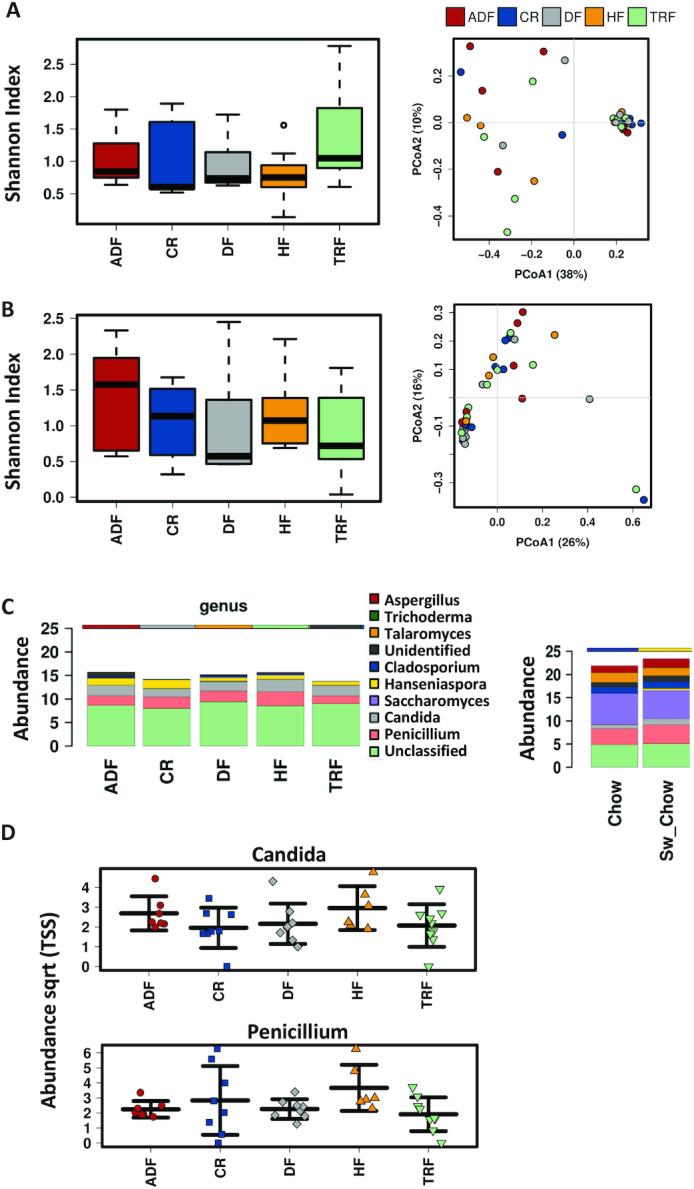
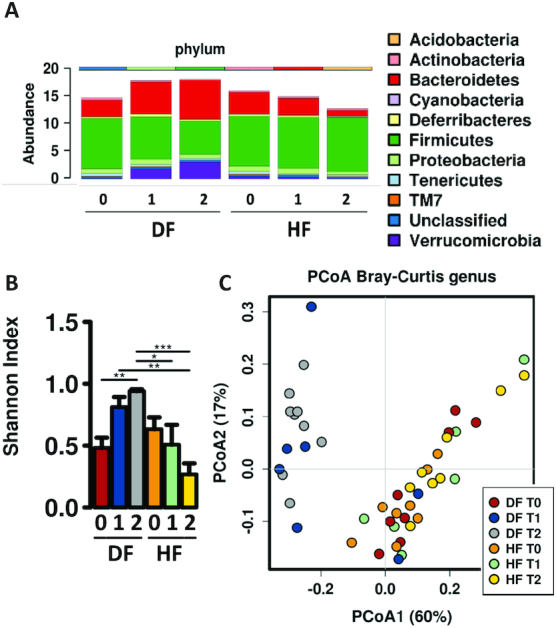
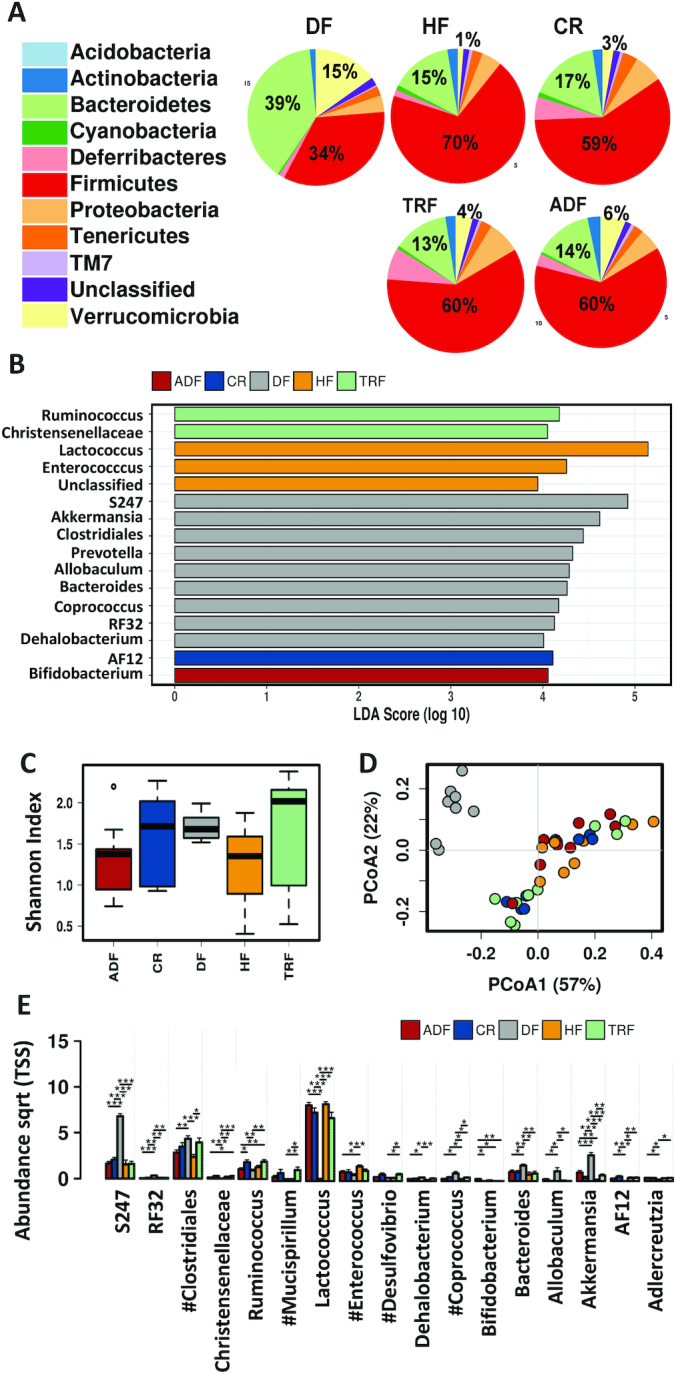
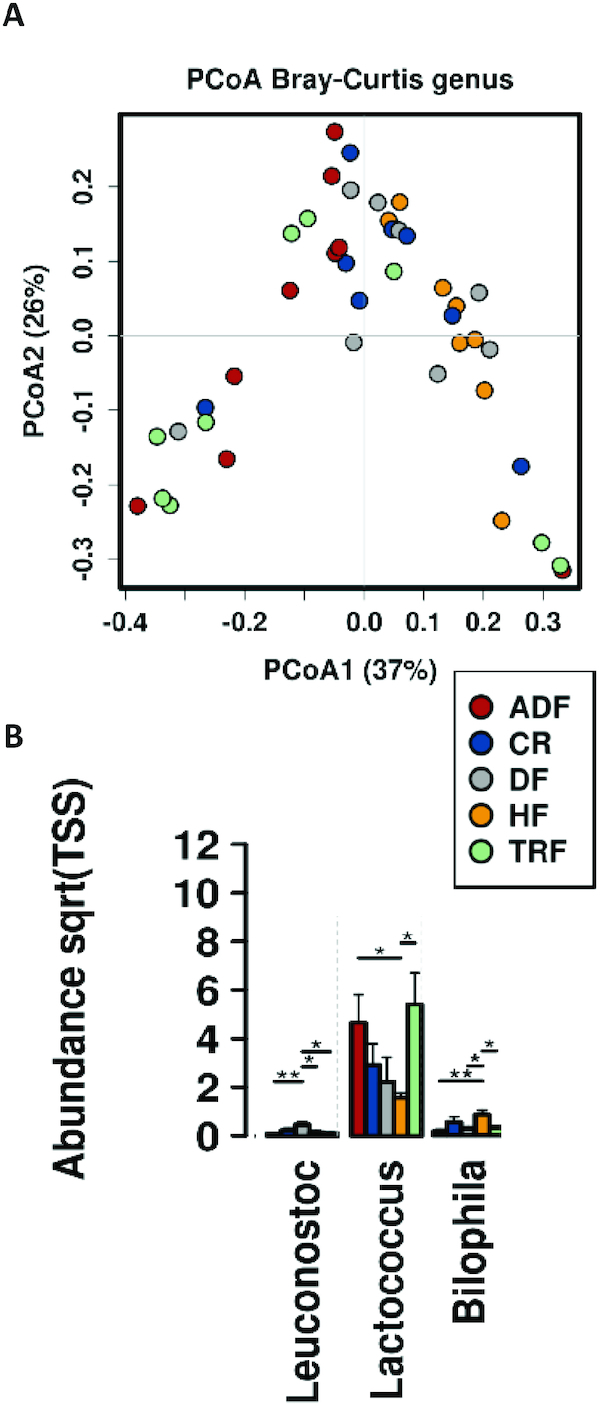
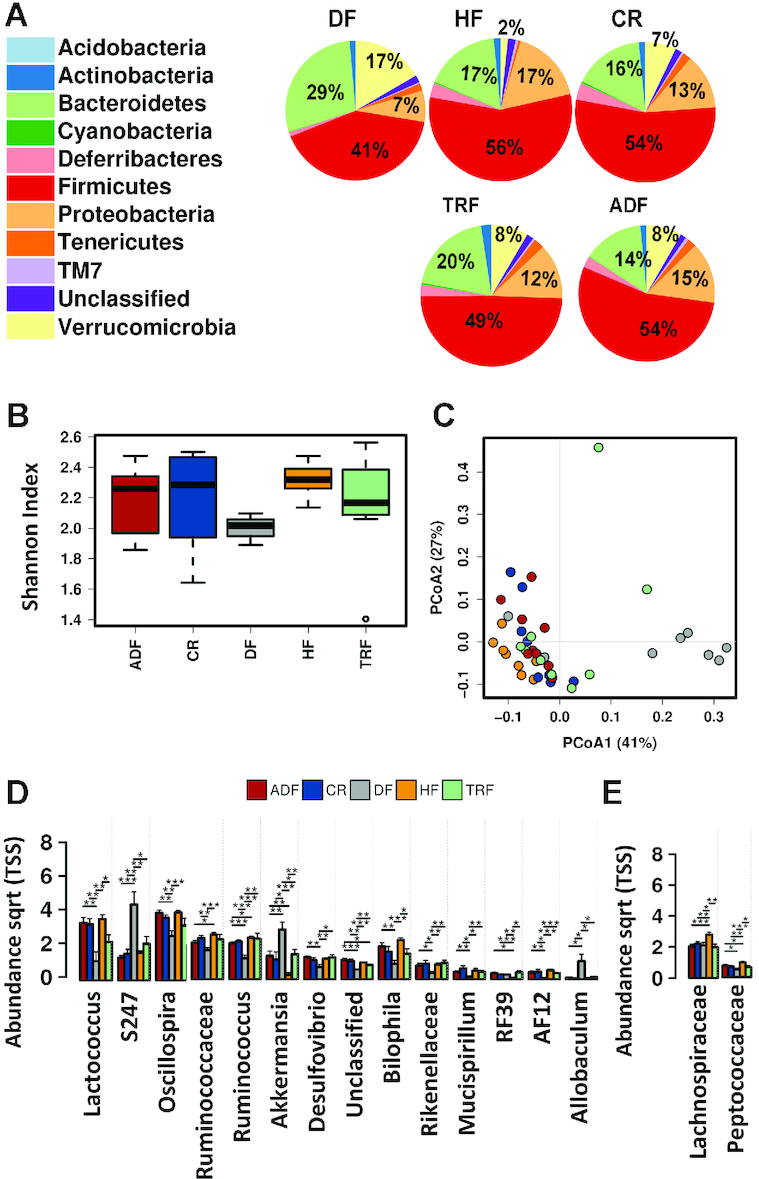
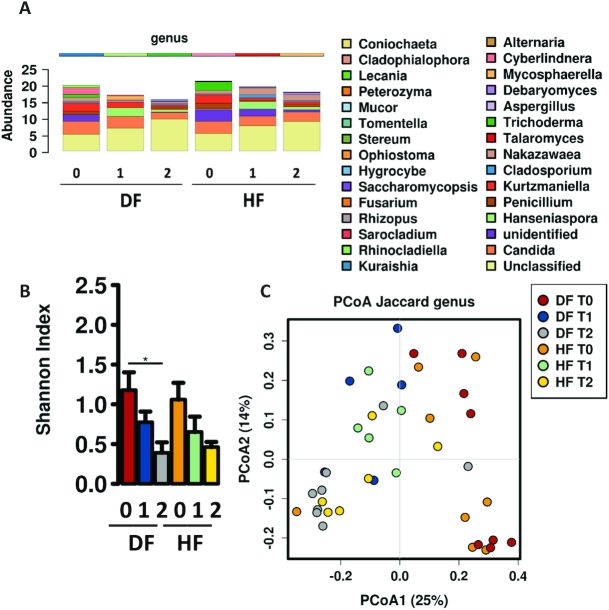
Body mass gain was reduced with all restricted dietary groups. HF-fed microbiota displayed lower α-diversity along with reduced phylum levels of and increased . Animals switched from HF to DF demonstrated a rapid transition in bacterial taxonomic composition, α-, and β-diversity that initially resembled HF, but was distinct after 4 and 8 wk of DF feeding. Time-or calorie-restricted HF-fed groups did not show changes at the phylum level, but α-diversity was increased, with specific genera altered. Six weeks of HF feeding reduced various fungal populations, particularly , , , and , and increased , , . However, 8 wk of intervention did not change the fungal populations, with the most abundant genera being , , and .
These data suggest that timed-feeding protocols and diet composition do not significantly affect the gut fungal community, despite inducing measurable shifts in the bacterial population that coincide with improvements in metabolism.
即使在高脂饮食摄入的情况下,禁食和限时进食策略也能使肥胖参数正常化。尽管先前的研究表明这些饮食策略可减少肥胖并改善代谢健康,但对肠道微生物群落的研究较少。
我们确定限时进食是否会改变肠道微生物组和真菌组(酵母和真菌)的组成。
雄性C57BL/6小鼠接受高脂饮食(HF)喂养6周。然后将动物随机分为以下几组(每组n = 8 - 10):)自由采食高脂饮食组;)纯化高纤维饮食组(丹尼尔禁食法,DF);)高脂限时进食组(TRF)(6小时);)高脂隔日禁食组(ADF);或)总热量限制80%的高脂饮食组(CR)。8周后,对肥胖和肠道参数进行表征。我们还在饮食干预前、期间和之后检查了肠道微生物组和真菌组的变化。
所有限制饮食组的体重增加均减少。高脂喂养的微生物群显示出较低的α-多样性,同时门水平的[具体菌门名称未给出]减少,[具体菌门名称未给出]增加。从高脂饮食转换为高纤维饮食的动物在细菌分类组成、α-和β-多样性方面表现出快速转变,最初类似于高脂饮食,但在高纤维饮食喂养4周和8周后有所不同。限时或热量限制的高脂喂养组在门水平上没有变化,但α-多样性增加,特定属发生改变。高脂饮食喂养6周减少了各种真菌种群,特别是[具体真菌属名称未给出]、[具体真菌属名称未给出]、[具体真菌属名称未给出]和[具体真菌属名称未给出],并增加了[具体真菌属名称未给出]、[具体真菌属名称未给出]、[具体真菌属名称未给出]。然而,8周的干预并未改变真菌种群,最丰富的属为[具体真菌属名称未给出]、[具体真菌属名称未给出]和[具体真菌属名称未给出]。
这些数据表明,尽管限时进食方案和饮食组成会引起细菌种群的可测量变化,且这些变化与代谢改善相吻合,但它们对肠道真菌群落没有显著影响。